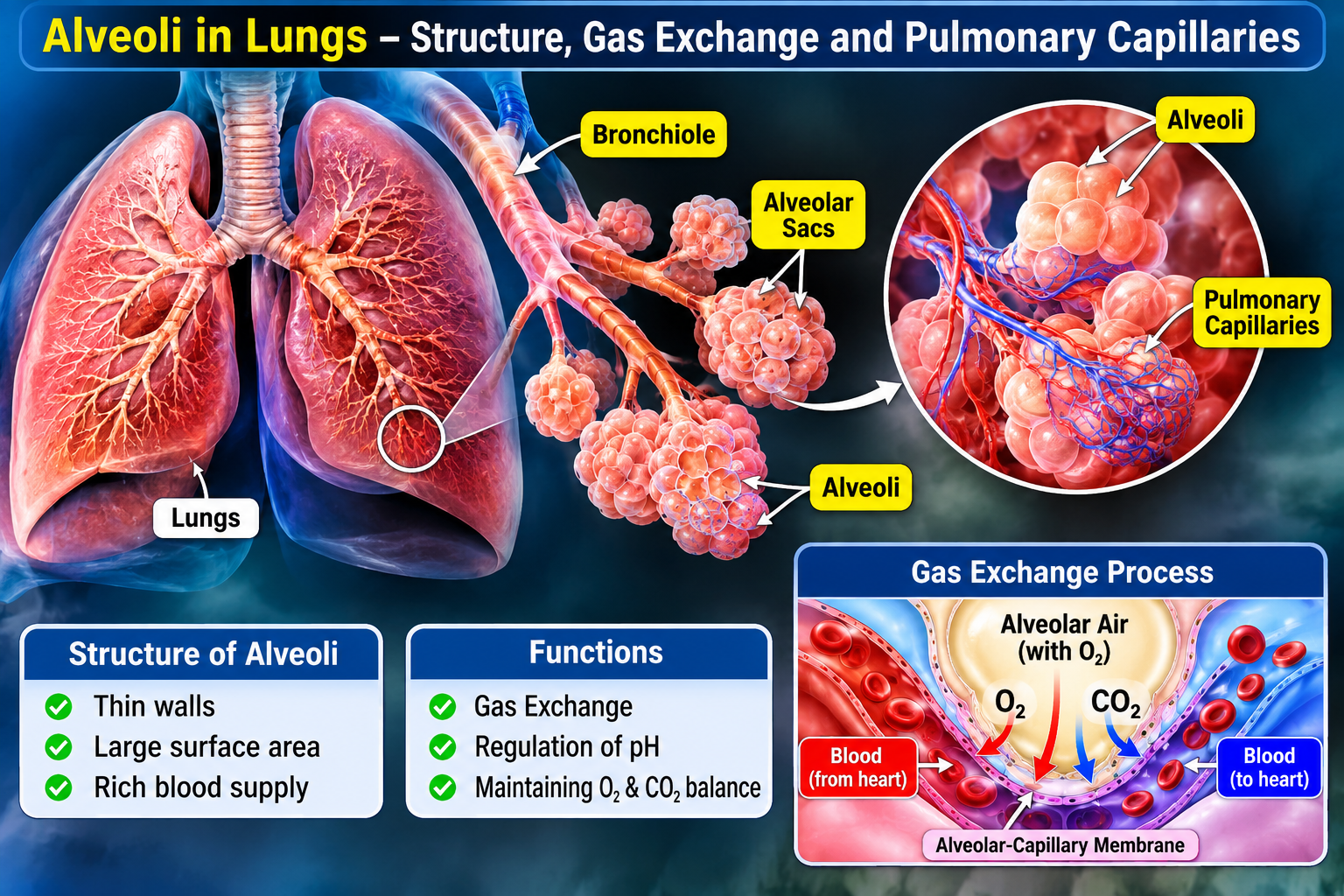


https://animalscienceveterinaryresearchcentre.com/alveoli-lungs-functions
Alveoli की मूल संरचना एवं Anatomy
ये प्रश्न Alveoli की location, respiratory zone, alveolar ducts, sacs, capillaries, respiratory membrane और basic anatomy पर आधारित हैं। तथ्य veterinary histology तथा respiratory anatomy के मानक स्रोतों के अनुरूप हैं। ICAR-IVRI+2 Alveoli in Lungs: 10 Amazing Facts, Structure & Functions
Section A: Basic Anatomy (1–10)
Q1. Alveoli का मुख्य कार्य क्या है?
A. भोजन का पाचन
B. गैसों का आदान-प्रदान
C. रक्त कोशिकाओं का निर्माण
D. हार्मोन का स्राव
सही उत्तर: B. गैसों का आदान-प्रदान।
व्याख्या: Alveoli में ऑक्सीजन रक्त में प्रवेश करती है और कार्बन डाइऑक्साइड बाहर निकलती है।
Q2. Alveoli किस अंग में पाए जाते हैं?
A. Liver
B. Kidney
C. Lungs
D. Spleen
सही उत्तर: C. Lungs।
व्याख्या: Alveoli फेफड़ों की सूक्ष्म वायुकोषिकाएँ हैं।
Q3. Alveolus का सही अर्थ क्या है?
A. एक वायुकोषिका
B. एक रक्त धमनी
C. एक तंत्रिका
D. एक लसीका ग्रंथि
सही उत्तर: A. एक वायुकोषिका।
व्याख्या: Alveoli बहुवचन है, जबकि Alveolus एकवचन है।
Q4. Alveoli श्वसन तंत्र के किस भाग में आती हैं?
A. Conducting zone
B. Respiratory zone
C. Upper digestive tract
D. Pleural cavity
सही उत्तर: B. Respiratory zone।
व्याख्या: Respiratory zone में गैसों का आदान-प्रदान होता है।
Q5. Alveoli तक हवा किस संरचना के माध्यम से पहुँचती है?
A. Ureter
B. Esophagus
C. Alveolar ducts
D. Bile duct
सही उत्तर: C. Alveolar ducts।
व्याख्या: Alveolar ducts, alveolar sacs और alveoli तक वायु पहुँचाने वाले मार्ग का हिस्सा हैं।
Q6. Alveoli की दीवार सामान्यतः कैसी होती है?
A. बहुत मोटी
B. पतली
C. हड्डी से बनी
D. उपास्थि से बनी
सही उत्तर: B. पतली।
व्याख्या: पतली दीवार गैसों के तीव्र diffusion में मदद करती है।
Q7. Alveoli के चारों ओर कौन-सी रक्त वाहिकाएँ होती हैं?
A. Pulmonary capillaries
B. Coronary arteries only
C. Portal veins only
D. Renal arteries
सही उत्तर: A. Pulmonary capillaries।
व्याख्या: इन केशिकाओं के रक्त और alveolar air के बीच गैसों का आदान-प्रदान होता है।
Q8. Alveoli में ऑक्सीजन किस दिशा में जाती है?
A. रक्त से alveoli में हमेशा
B. Alveoli से रक्त में
C. Kidney से alveoli में
D. Liver से trachea में
सही उत्तर: B. Alveoli से रक्त में।
व्याख्या: सामान्य परिस्थितियों में ऑक्सीजन के partial pressure का अंतर इसे रक्त में जाने के लिए प्रेरित करता है।
Q9. Alveoli में कार्बन डाइऑक्साइड सामान्यतः किस दिशा में जाती है?
A. Alveoli से रक्त में
B. रक्त से alveoli में
C. पेट से रक्त में
D. हड्डियों से त्वचा में
सही उत्तर: B. रक्त से alveoli में।
व्याख्या: कार्बन डाइऑक्साइड साँस छोड़ने के साथ बाहर निकलती है।
Q10. Alveoli की तुलना सामान्यतः किससे की जाती है?
A. अंगूर के गुच्छे
B. हड्डियों के जोड़
C. गुर्दे की नलिकाएँ
D. मांसपेशियों के तंतु
सही उत्तर: A. अंगूर के गुच्छे।
व्याख्या: Alveolar sacs में अनेक छोटी वायुकोषिकाएँ गुच्छे जैसी दिखाई देती हैं।
Section B: Respiratory Pathway (11–20) Alveoli in Lungs: 10 Amazing Facts, Structure & Functions
Q11. साँस के दौरान वायु का सामान्य मार्ग कौन-सा है?
A. Trachea → bronchi → bronchioles → respiratory region
B. Kidney → ureter → bladder
C. Esophagus → stomach → intestine
D. Heart → artery → vein
सही उत्तर: A।
व्याख्या: हवा conducting airways से गुजरकर respiratory region तक पहुँचती है।
Q12. Trachea का मुख्य कार्य क्या है?
A. गैसों का अधिकांश exchange
B. हवा को आगे पहुँचाना
C. रक्त को filter करना
D. भोजन का absorption
सही उत्तर: B. हवा को आगे पहुँचाना।
व्याख्या: Trachea हवा को bronchi की ओर ले जाती है।
Q13. Bronchioles का प्रमुख कार्य क्या है?
A. वायु प्रवाह का वितरण और नियमन
B. मूत्र निर्माण
C. पित्त निर्माण
D. रक्त कोशिकाओं का निर्माण
सही उत्तर: A।
व्याख्या: Bronchioles का व्यास बदलने से airflow प्रभावित हो सकता है।
Q14. Respiratory bronchioles की विशेषता क्या है?
A. इनमें कभी गैस exchange नहीं होता
B. ये respiratory zone की शुरुआत का हिस्सा हैं
C. ये digestive tract में होती हैं
D. ये हड्डियों से बनी होती हैं
सही उत्तर: B।
व्याख्या: Respiratory bronchioles में alveoli उपस्थित हो सकती हैं और गैस exchange शुरू होता है।
Q15. Alveolar sacs किससे मिलकर बनते हैं?
A. अनेक alveoli के समूह से
B. अनेक neurons से
C. अनेक bones से
D. अनेक renal tubules से
सही उत्तर: A।
व्याख्या: Alveolar sacs में कई alveoli खुलती हैं।
Q16. Conducting zone का प्रमुख कार्य क्या है?
A. हवा का संचालन और conditioning
B. RBC निर्माण
C. Urine filtration
D. भोजन का पाचन
सही उत्तर: A।
व्याख्या: यह हवा को आगे पहुँचाने, गर्म करने, नम बनाने और कणों को हटाने में मदद करता है।
Q17. इनमें से कौन-सी संरचना मुख्य gas-exchange site है?
A. Trachea
B. Main bronchus
C. Alveolus
D. Larynx
सही उत्तर: C. Alveolus।
व्याख्या: Alveoli और आसपास की pulmonary capillaries गैसों के आदान-प्रदान का प्रमुख स्थान हैं।
Q18. Alveolar duct किसके साथ सीधे जुड़ा होता है?
A. Alveolar sacs और alveoli
B. Urinary bladder
C. Esophagus
D. Bile duct
सही उत्तर: A।
व्याख्या: Alveolar ducts respiratory passages के distal भाग में स्थित होती हैं।
Q19. Alveoli की संख्या और आकार में अंतर क्यों हो सकता है?
A. केवल बालों के रंग के कारण
B. प्रजाति, फेफड़ों के आकार और मापन विधि के कारण
C. केवल दाँतों की संख्या के कारण
D. केवल रक्त समूह के कारण
सही उत्तर: B।
व्याख्या: अलग-अलग species के फेफड़ों की संरचना और dimensions अलग होते हैं।
Q20. सामान्य स्तनधारियों में गैस exchange का प्रमुख अंतिम क्षेत्र कौन-सा है?
A. Alveolar region
B. Nasal vestibule
C. Larynx
D. Trachea
सही उत्तर: A. Alveolar region।
व्याख्या: स्तनधारियों में alveolar region गैस विनिमय के लिए विशेषीकृत होता है।
Section C: Alveolar Wall & Membrane (21–30) Alveoli in Lungs: 10 Amazing Facts, Structure & Functions
Q21. Alveoli की lining मुख्यतः किस प्रकार की epithelium से बनी होती है?
A. Simple squamous epithelium
B. Stratified keratinized epithelium
C. Transitional epithelium
D. Stratified cuboidal epithelium
सही उत्तर: A।
व्याख्या: पतली squamous lining diffusion distance कम करती है।
Q22. Type I pneumocytes का प्रमुख कार्य क्या है?
A. Gas exchange में सहायता
B. Bile secretion
C. Urine concentration
D. Insulin production
सही उत्तर: A।
व्याख्या: ये पतली कोशिकाएँ alveolar surface का अधिकांश क्षेत्र ढकती हैं।
Q23. Type II pneumocytes का मुख्य कार्य क्या है?
A. Surfactant secretion
B. Hemoglobin synthesis
C. Bile storage
D. Bone formation
सही उत्तर: A।
व्याख्या: ये pulmonary surfactant बनाती हैं और alveolar epithelial repair में योगदान करती हैं।
Q24. Air-blood barrier कहाँ स्थित होती है?
A. Alveolar air और capillary blood के बीच
B. Stomach और intestine के बीच
C. Skin और hair के बीच
D. Bone और tendon के बीच
सही उत्तर: A।
व्याख्या: यह पतली बाधा गैसों को alveoli और रक्त के बीच पार जाने देती है।
Q25. Alveolar septum में कौन-सी संरचना पाई जाती है?
A. Pulmonary capillaries
B. केवल cartilage rings
C. केवल skeletal muscle
D. केवल tooth enamel
सही उत्तर: A।
व्याख्या: Septum में capillaries, epithelial cells और सहायक connective tissue शामिल होते हैं।
Q26. Alveoli के बीच मौजूद सूक्ष्म संपर्क छिद्र क्या कहलाते हैं?
A. Pores of Kohn
B. Haversian canals
C. Volkmann canals
D. Crypts of Lieberkühn
सही उत्तर: A।
व्याख्या: Pores of Kohn पड़ोसी alveoli के बीच वायु के आवागमन में सहायता कर सकते हैं।
Q27. Alveolar walls में elastic fibres का क्या कार्य है?
A. फैलने और recoil करने में सहायता
B. रक्त में glucose बनाना
C. भोजन को तोड़ना
D. हड्डियों को mineralize करना
सही उत्तर: A।
व्याख्या: Elastic fibres फेफड़ों के विस्तार और passive recoil में योगदान देते हैं।
Q28. Alveolar-capillary barrier को पतला रखने का लाभ क्या है?
A. Diffusion तेज होता है
B. Urine अधिक बनता है
C. Digestion तेज होता है
D. हड्डियाँ मोटी होती हैं
सही उत्तर: A।
व्याख्या: कम diffusion distance गैस विनिमय को प्रभावी बनाती है।
Q29. Alveoli के अंदर की सतह पर कौन-सा पदार्थ surface tension कम करता है?
A. Surfactant
B. Bile
C. Saliva
D. Synovial fluid
सही उत्तर: A।
व्याख्या: Surfactant alveoli के collapse की संभावना घटाता है।
Q30. Alveolar macrophages का दूसरा सामान्य नाम क्या है?
A. Dust cells
B. Kupffer cells
C. Paneth cells
D. Goblet cells
सही उत्तर: A।
व्याख्या: ये inhaled particles और microbes को phagocytosis द्वारा हटाने में मदद करती हैं।
Alveoli in Lungs: 10 Amazing Facts, Structure & Functions
Section D: Gas Exchange & Physiology (31–40) Alveoli in Lungs: 10 Amazing Facts, Structure & Functions
Q31. Alveoli और रक्त के बीच गैसें मुख्यतः किस प्रक्रिया से गुजरती हैं?
A. Diffusion
B. Active pumping by skeletal muscle
C. Filtration through kidney
D. Peristalsis
सही उत्तर: A. Diffusion।
व्याख्या: गैसें अपने partial-pressure gradients के अनुसार चलती हैं।
Q32. सामान्य परिस्थितियों में oxygen alveoli से रक्त में क्यों जाती है?
A. Alveolar oxygen partial pressure अधिक होता है
B. रक्त में oxygen का partial pressure हमेशा अधिक होता है
C. Oxygen केवल active transport से जाती है
D. Oxygen का कोई pressure gradient नहीं होता
सही उत्तर: A।
व्याख्या: Partial-pressure gradient oxygen diffusion की दिशा निर्धारित करता है।
Q33. रक्त में oxygen का अधिकांश भाग किससे जुड़ा रहता है?
A. Hemoglobin
B. Albumin only
C. Fibrinogen only
D. Platelets
सही उत्तर: A. Hemoglobin।
व्याख्या: Hemoglobin लाल रक्त कोशिकाओं में oxygen transport करता है।
Q34. साँस छोड़ते समय मुख्यतः कौन-सी गैस शरीर से बाहर निकलती है?
A. Carbon dioxide
B. Hemoglobin
C. Nitrogen only
D. Calcium
सही उत्तर: A. Carbon dioxide।
व्याख्या: CO₂ metabolism से बनती है और रक्त इसे फेफड़ों तक लाता है।
Q35. Gas exchange की दर को कौन प्रभावित करता है?
A. Surface area
B. Membrane thickness
C. Partial-pressure gradient
D. उपरोक्त सभी
सही उत्तर: D. उपरोक्त सभी।
व्याख्या: ये सभी diffusion की दक्षता को प्रभावित करते हैं।
Q36. Alveoli में fluid जमा होने पर oxygen exchange क्यों घट सकता है?
A. Diffusion distance बढ़ सकती है
B. Hemoglobin हड्डी बन जाता है
C. Trachea digestive organ बन जाती है
D. रक्त का प्रवाह हमेशा बंद हो जाता है
सही उत्तर: A।
व्याख्या: Pulmonary edema गैसों के विसरण को बाधित कर सकती है।
Q37. External respiration किसके बीच होता है?
A. Alveoli और pulmonary blood
B. Body cells और systemic blood only
C. Stomach और blood
D. Kidney और bladder
सही उत्तर: A।
व्याख्या: External respiration फेफड़ों में होने वाला gas exchange है।
Q38. Internal respiration किसके बीच गैस विनिमय को कहते हैं?
A. Systemic blood और body tissues
B. Alveolar air और pulmonary blood only
C. Trachea और bronchi
D. Stomach और liver
सही उत्तर: A।
व्याख्या: ऊतकों में oxygen रक्त से कोशिकाओं की ओर जाती है और CO₂ विपरीत दिशा में जाती है।
Q39. Alveolar ventilation घटने पर सामान्यतः क्या हो सकता है?
A. CO₂ का निष्कासन घट सकता है
B. CO₂ हमेशा शून्य हो जाती है
C. सभी alveoli हड्डी बन जाती हैं
D. Hemoglobin गायब हो जाता है
सही उत्तर: A।
व्याख्या: अपर्याप्त alveolar ventilation से रक्त में CO₂ बढ़ सकती है।
Q40. Alveoli में गैसों के आदान-प्रदान के लिए आवश्यक है कि—
A. Alveolar ventilation और blood perfusion उचित हों
B. केवल हड्डियों का विकास हो
C. पेट में acid बने
D. Kidney में urine जमा हो
सही उत्तर: A।
व्याख्या: प्रभावी gas exchange के लिए हवा की उपलब्धता और रक्त प्रवाह दोनों आवश्यक हैं।
Alveoli in Lungs: 10 Amazing Facts, Structure & Functions
Section E: Veterinary & Clinical Basics (41–50) Alveoli in Lungs: 10 Amazing Facts, Structure & Functions
Q41. पशुओं में pneumonia के दौरान alveoli में क्या जमा हो सकता है?
A. Inflammatory cells और fluid
B. केवल bile
C. केवल urine
D. Tooth enamel
सही उत्तर: A।
व्याख्या: Alveolar exudate गैस विनिमय को बाधित कर सकता है।
Q42. Pulmonary edema का अर्थ क्या है?
A. फेफड़ों में असामान्य fluid accumulation
B. हड्डियों का टूटना
C. पेट में भोजन जमा होना
D. Kidney में पथरी
सही उत्तर: A।
व्याख्या: फेफड़ों में द्रव जमा होने से श्वसन प्रभावित हो सकता है।
Q43. Emphysema में कौन-सा बदलाव हो सकता है?
A. Alveolar walls का विनाश
B. केवल tracheal cartilage का निर्माण
C. Kidney tubules का विस्तार
D. Liver bile का जमना
सही उत्तर: A।
व्याख्या: Alveolar wall destruction से gas-exchange surface कम हो सकता है।
Q44. Alveolar macrophages का मुख्य रक्षा कार्य क्या है?
A. Phagocytosis
B. Oxygen का निर्माण
C. Hemoglobin का निर्माण
D. Surfactant को हमेशा नष्ट करना
सही उत्तर: A।
व्याख्या: ये inhaled particles और microbes को निगलकर हटाने में मदद करती हैं।
Q45. Type II pneumocytes क्षतिग्रस्त alveolar epithelium की मरम्मत में कैसे योगदान देती हैं?
A. विभाजित होकर epithelial cells को replace करने में
B. हड्डियाँ बनाकर
C. bile बनाकर
D. urine छानकर
सही उत्तर: A।
व्याख्या: Type II cells progenitor-like भूमिका निभा सकती हैं और Type I cells को replace कर सकती हैं।
Q46. सामान्य स्तनधारी फेफड़ों में gas exchange की मूल इकाई कौन-सी है?
A. Alveolar region
B. Tracheal cartilage
C. Nasal bone
D. Pleural cavity
सही उत्तर: A।
व्याख्या: Alveoli तथा संबंधित capillary network gas exchange के लिए विशेषीकृत हैं।
Q47. Birds के फेफड़ों में स्तनधारियों जैसी alveoli होती हैं?
A. हाँ, सभी पक्षियों में समान alveoli होती हैं
B. नहीं, पक्षियों में parabronchi और air capillaries गैस exchange करती हैं
C. केवल पंखों में होती हैं
D. केवल air sacs में mammalian alveoli होती हैं
सही उत्तर: B।
व्याख्या: पक्षियों का respiratory system स्तनधारियों से संरचनात्मक रूप से अलग होता है। ICAR-IVRI+1
Q48. Ruminants जैसे cattle और buffalo में alveoli का प्रमुख कार्य क्या है?
A. Gas exchange
B. Rumen fermentation
C. Milk synthesis
D. Urine storage
सही उत्तर: A।
व्याख्या: Rumen पाचन में काम करता है, जबकि alveoli फेफड़ों में gas exchange करती हैं।
Q49. नवजातों में pulmonary surfactant की कमी किस समस्या से जुड़ी हो सकती है?
A. Respiratory distress
B. Bone fracture
C. Dental caries only
D. Intestinal obstruction only
सही उत्तर: A।
व्याख्या: Surfactant की कमी से alveolar surface tension बढ़ सकता है और फेफड़ों का फैलना कठिन हो सकता है।
Q50. Veterinary Histology में alveoli का अध्ययन क्यों महत्वपूर्ण है?
A. फेफड़ों की कोशिकीय संरचना और respiratory diseases समझने के लिए
B. केवल दाँतों की उम्र जानने के लिए
C. केवल rumen की pH मापने के लिए
D. केवल हड्डियों की लंबाई मापने के लिए
सही उत्तर: A।
व्याख्या: Alveolar histology गैस विनिमय, cellular function और lung pathology को समझने में मदद करती है।
भाग 2 — Alveolar Cells एवं Histology Alveoli in Lungs: 10 Amazing Facts, Structure & Functions
Alveoli in Lungs: 10 Amazing Facts, Structure & Functions
Q51. Alveolar epithelium का सबसे बड़ा सतही क्षेत्र किस प्रकार की कोशिकाएँ ढकती हैं?
A. Type I Pneumocytes
B. Type II Pneumocytes
C. Alveolar Macrophages
D. Goblet Cells
सही उत्तर: A. Type I Pneumocytes
व्याख्या: Type I Pneumocytes अत्यंत पतली squamous cells हैं और alveolar surface के अधिकांश क्षेत्र को cover करती हैं। इनका प्रमुख संबंध gas exchange से है।
Q52. Type I Pneumocytes का दूसरा नाम क्या है?
A. Granular pneumocytes
B. Squamous pneumocytes
C. Dust cells
D. Clara cells
सही उत्तर: B. Squamous pneumocytes
व्याख्या: Type I cells पतली squamous epithelial cells होती हैं, इसलिए इन्हें squamous pneumocytes भी कहा जाता है।
Q53. Type I Pneumocytes का प्रमुख कार्य क्या है?
A. Surfactant synthesis
B. Gas exchange के लिए पतली barrier बनाना
C. Phagocytosis
D. Mucus secretion
सही उत्तर: B. Gas exchange के लिए पतली barrier बनाना
व्याख्या: इनकी पतली संरचना oxygen और carbon dioxide के diffusion के लिए उपयुक्त होती है।
Q54. Type I Pneumocytes की प्रमुख विशेषता क्या है?
A. मोटी cuboidal cells
B. पतली squamous cells
C. Ciliated columnar cells
D. Stratified cells
सही उत्तर: B. पतली squamous cells
व्याख्या: Type I cells का cytoplasm बहुत पतला होता है, जिससे diffusion distance कम रहती है।
Q55. Type I Pneumocyte का nucleus सामान्यतः कहाँ prominent दिखाई देता है?
A. अत्यंत मोटे alveolar wall में
B. Cell body के relatively thicker portion में
C. Blood plasma में
D. Alveolar lumen के बीच स्वतंत्र रूप से
सही उत्तर: B. Cell body के relatively thicker portion में
व्याख्या: Type I cell का अधिकांश cytoplasm बहुत पतला होता है, जबकि nucleus वाला भाग अपेक्षाकृत मोटा होता है।
Q56. Type II Pneumocytes को किस नाम से भी जाना जाता है?
A. Granular pneumocytes
B. Dust cells
C. Kupffer cells
D. Mesangial cells
सही उत्तर: A. Granular pneumocytes
व्याख्या: Type II pneumocytes में cytoplasmic granules और lamellar bodies पाए जाते हैं, इसलिए इन्हें granular pneumocytes कहा जाता है।
Q57. Type II Pneumocytes का प्रमुख कार्य क्या है?
A. Hemoglobin synthesis
B. Surfactant production
C. Phagocytosis only
D. Bile secretion
सही उत्तर: B. Surfactant production
व्याख्या: Type II pneumocytes pulmonary surfactant का निर्माण और secretion करती हैं।
Alveoli in Lungs: 10 Amazing Facts, Structure & Functions
Q58. Type II Pneumocytes का आकार सामान्यतः कैसा होता है?
A. Flattened squamous
B. Cuboidal
C. Spindle-shaped
D. Columnar ciliated
सही उत्तर: B. Cuboidal
व्याख्या: Type II pneumocytes अपेक्षाकृत गोल/घनाकार cells होती हैं और alveolar septum में दिखाई देती हैं।
Q59. Type II Pneumocytes में कौन-सी intracellular structure surfactant से विशेष रूप से संबंधित है?
A. Lysosomes
B. Lamellar bodies
C. Centrioles
D. Microvilli only
सही उत्तर: B. Lamellar bodies
व्याख्या: Lamellar bodies surfactant के intracellular storage और packaging से संबंधित organelles हैं।
Q60. Lamellar bodies किस cell में विशेष रूप से पाए जाते हैं?
A. Type I Pneumocytes
B. Type II Pneumocytes
C. RBC
D. Neutrophils
सही उत्तर: B. Type II Pneumocytes
व्याख्या: Type II pneumocytes lamellar bodies में surfactant components को store करती हैं।
Lamellar Bodies एवं Surfactant
Q61. Lamellar bodies का मुख्य संबंध किस पदार्थ से है?
A. Hemoglobin
B. Pulmonary Surfactant
C. Bile
D. Mucus
सही उत्तर: B. Pulmonary Surfactant
व्याख्या: Lamellar bodies surfactant lipids और proteins को store तथा secrete करने में महत्वपूर्ण हैं।
Q62. Lamellar bodies alveolar lumen में अपना पदार्थ किस प्रक्रिया से छोड़ते हैं?
A. Exocytosis
B. Phagocytosis
C. Pinocytosis
D. Osmosis
सही उत्तर: A. Exocytosis
व्याख्या: Type II cells lamellar bodies से surfactant को exocytosis द्वारा alveolar surface पर release करती हैं।
Q63. Pulmonary surfactant का प्रमुख physical effect क्या है?
A. Surface tension बढ़ाना
B. Surface tension कम करना
C. Blood pressure बढ़ाना
D. Hemoglobin को तोड़ना
सही उत्तर: B. Surface tension कम करना
व्याख्या: Surfactant alveolar surface tension को कम करके alveolar stability में मदद करता है।
Q64. Alveolar surfactant की कमी से क्या समस्या हो सकती है?
A. Alveolar collapse की tendency बढ़ सकती है
B. Bone formation बढ़ती है
C. Rumen motility बढ़ती है
D. RBC count हमेशा बढ़ता है
सही उत्तर: A. Alveolar collapse की tendency बढ़ सकती है
व्याख्या: Surfactant की कमी से surface tension बढ़ती है, जिससे छोटे alveoli के collapse की संभावना बढ़ती है।
Q65. Surfactant का मुख्य lipid component कौन-सा है?
A. Dipalmitoylphosphatidylcholine
B. Cholesterol only
C. Triglyceride only
D. Glycogen
सही उत्तर: A. Dipalmitoylphosphatidylcholine
व्याख्या: Dipalmitoylphosphatidylcholine (DPPC) pulmonary surfactant का प्रमुख phospholipid component है।
Q66. DPPC का मुख्य कार्य किससे संबंधित है?
A. Alveolar surface tension कम करना
B. Hemoglobin बनाना
C. Mucus digestion
D. Bone mineralization
सही उत्तर: A. Alveolar surface tension कम करना
व्याख्या: DPPC surfactant की surface-tension-lowering activity में महत्वपूर्ण भूमिका निभाता है।
Q67. Pulmonary surfactant मुख्यतः किसके द्वारा synthesized होता है?
A. Type I Pneumocytes
B. Type II Pneumocytes
C. Alveolar macrophages
D. Endothelial cells
सही उत्तर: B. Type II Pneumocytes
व्याख्या: Type II pneumocytes pulmonary surfactant synthesis और secretion की प्रमुख कोशिकाएँ हैं।
Q68. Surfactant alveoli को किस स्थिति से बचाने में सहायता करता है?
A. Excessive collapse
B. Bone fracture
C. Gastric ulcer
D. Renal stone
सही उत्तर: A. Excessive collapse
व्याख्या: Surface tension कम होने के कारण alveoli को खुले रखने में मदद मिलती है।
Q69. Surfactant की उपस्थिति lung compliance को सामान्यतः कैसे प्रभावित करती है?
A. Compliance को support करती है
B. हमेशा शून्य करती है
C. केवल blood viscosity बढ़ाती है
D. कोई संबंध नहीं
सही उत्तर: A. Compliance को support करती है
व्याख्या: Surface tension कम होने से alveoli को expand करना आसान होता है।
Q70. Lamellar bodies microscopic examination में किस प्रकार की संरचना हो सकती हैं?
A. Membrane-bound cytoplasmic organelles
B. Free RBCs
C. Nerve fibres
D. Cartilage plates
सही उत्तर: A. Membrane-bound cytoplasmic organelles
व्याख्या: Lamellar bodies Type II pneumocytes के cytoplasm में पाए जाने वाले specialized membrane-bound organelles हैं।
Alveolar Macrophages
Q71. Alveolar macrophages का प्रमुख कार्य क्या है?
A. Phagocytosis
B. Surfactant synthesis
C. Hemoglobin synthesis
D. Collagen mineralization
सही उत्तर: A. Phagocytosis
व्याख्या: ये inhaled particles, debris और microorganisms को phagocytose करने में सहायता करती हैं।
Q72. Alveolar macrophages को सामान्यतः किस नाम से जाना जाता है?
A. Dust cells
B. Goblet cells
C. Chief cells
D. Parietal cells
सही उत्तर: A. Dust cells
व्याख्या: फेफड़ों में inhaled dust और particulate matter को engulf करने के कारण इन्हें dust cells कहा जाता है।
Q73. Alveolar macrophage किस प्रकार की cell है?
A. Immune cell
B. Muscle cell
C. Bone cell
D. Neuron
सही उत्तर: A. Immune cell
व्याख्या: Macrophages innate immune defense का महत्वपूर्ण हिस्सा हैं।
Q74. Alveolar macrophage किस पदार्थ को phagocytose कर सकती है?
A. Dust particles
B. Microorganisms
C. Cellular debris
D. उपरोक्त सभी
सही उत्तर: D. उपरोक्त सभी
व्याख्या: Alveolar macrophages फेफड़ों में पहुँचने वाले कई प्रकार के particulate और biological materials को हटाने में मदद करती हैं।
Q75. Alveolar macrophages मुख्यतः कहाँ मिल सकती हैं?
A. Alveolar lumen और septal regions
B. केवल bone marrow
C. केवल renal tubules
D. केवल gastric glands
सही उत्तर: A. Alveolar lumen और septal regions
व्याख्या: ये alveolar spaces में patrol कर सकती हैं और septal/interstitial क्षेत्रों में भी मिल सकती हैं।
Q76. Alveolar macrophages का प्रमुख defense mechanism क्या है?
A. Phagocytosis
B. Filtration by kidney
C. Muscle contraction
D. Bone resorption
सही उत्तर: A. Phagocytosis
व्याख्या: Phagocytosis द्वारा ये बाहरी particles और pathogens को engulf करती हैं।
Q77. Alveolar macrophages की activity किससे संबंधित है?
A. Pulmonary innate immunity
B. Bone growth only
C. Digestion only
D. Urine formation only
सही उत्तर: A. Pulmonary innate immunity
व्याख्या: ये फेफड़ों के स्थानीय immune defense में महत्वपूर्ण भूमिका निभाती हैं।
Q78. धूल के कण alveolar macrophages में जमा होने पर वे किस प्रकार की कोशिकाएँ दिखाई दे सकती हैं?
A. Pigmented/dust-laden macrophages
B. RBC
C. Osteocytes
D. Chondrocytes
सही उत्तर: A. Pigmented/dust-laden macrophages
व्याख्या: Particulate matter macrophages के cytoplasm में जमा हो सकता है।
Q79. Alveolar macrophage का कार्य Type II pneumocyte से किस प्रकार अलग है?
A. Macrophage defense में और Type II surfactant production में प्रमुख है
B. दोनों केवल RBC बनाते हैं
C. दोनों केवल mucus बनाते हैं
D. दोनों केवल cartilage बनाते हैं
सही उत्तर: A
व्याख्या: दोनों की भूमिकाएँ अलग लेकिन alveolar homeostasis के लिए महत्वपूर्ण हैं।
Q80. Alveolar macrophages किस प्रकार के defense में विशेष रूप से महत्वपूर्ण हैं?
A. Inhaled particulate defense
B. Bone marrow defense
C. Gastric acid secretion
D. Renal filtration
सही उत्तर: A. Inhaled particulate defense
व्याख्या: साँस के साथ आए particles को हटाने में macrophages महत्वपूर्ण भूमिका निभाती हैं।
Air-Blood Barrier एवं Basement Membrane Alveoli in Lungs: 10 Amazing Facts, Structure & Functions
Q81. Air-blood barrier का मुख्य कार्य क्या है?
A. Air और blood के बीच gas diffusion की अनुमति देना
B. भोजन को absorb करना
C. urine बनाना
D. bile store करना
सही उत्तर: A. Air और blood के बीच gas diffusion की अनुमति देना
व्याख्या: यह barrier बहुत पतली होती है ताकि O₂ और CO₂ आसानी से diffuse कर सकें।
Q82. Air-blood barrier को अन्य किस नाम से जाना जाता है?
A. Respiratory membrane
B. Glomerular membrane
C. Synovial membrane
D. Peritoneal membrane
सही उत्तर: A. Respiratory membrane
व्याख्या: Respiratory membrane alveolar air और pulmonary capillary blood के बीच gas-exchange barrier है।
Q83. Air-blood barrier का सबसे महत्वपूर्ण cellular component कौन-सा है?
A. Type I Pneumocyte
B. Hepatocyte
C. Osteocyte
D. Chondrocyte
सही उत्तर: A. Type I Pneumocyte
व्याख्या: Type I pneumocyte की पतली cytoplasm diffusion barrier का महत्वपूर्ण हिस्सा है।
Q84. Air-blood barrier में capillary side पर कौन-सी cell होती है?
A. Endothelial cell
B. Goblet cell
C. Osteoblast
D. Hepatocyte
सही उत्तर: A. Endothelial cell
व्याख्या: Pulmonary capillary endothelium blood side की cellular lining बनाता है।
Q85. Alveolar और capillary basement membranes का क्या महत्व है?
A. Barrier structure को support करना
B. भोजन पचाना
C. RBC को बनाना
D. Bile को store करना
सही उत्तर: A. Barrier structure को support करना
व्याख्या: Basement membranes structural support और filtration/diffusion barrier के महत्वपूर्ण components हैं।
Q86. Alveolar-capillary barrier में कौन-से दो cell types सीधे महत्वपूर्ण हैं?
A. Type I pneumocyte और capillary endothelial cell
B. Osteocyte और chondrocyte
C. Hepatocyte और neuron
D. Goblet cell और osteoblast
सही उत्तर: A
व्याख्या: Alveolar epithelium और capillary endothelium के बीच का interface gas exchange के लिए महत्वपूर्ण है।
Q87. Alveolar-capillary barrier की मोटाई कम होने का प्रमुख लाभ क्या है?
A. Gas diffusion आसान होता है
B. Blood clotting बढ़ती है
C. Bone growth बढ़ती है
D. Digestion तेज होता है
सही उत्तर: A. Gas diffusion आसान होता है
व्याख्या: Diffusion distance कम होने से गैसों का आदान-प्रदान अधिक प्रभावी होता है।
Q88. यदि respiratory membrane मोटी हो जाए तो क्या प्रभाव पड़ सकता है?
A. Gas diffusion बाधित हो सकता है
B. Surfactant हमेशा बढ़ जाएगा
C. RBC bone cells बन जाएँगी
D. Rumen fermentation बढ़ जाएगी
सही उत्तर: A
व्याख्या: मोटी diffusion barrier O₂ और CO₂ के transfer को धीमा कर सकती है।
Q89. Pulmonary capillary endothelium किस प्रकार की cell layer है?
A. Simple squamous endothelial lining
B. Stratified squamous keratinized
C. Transitional epithelium
D. Simple columnar epithelium
सही उत्तर: A
व्याख्या: Capillaries सामान्यतः simple squamous endothelial cells से lined होती हैं।
Q90. Alveolar epithelium और capillary endothelium के बीच मुख्य उद्देश्य क्या है?
A. Efficient gas exchange
B. Food digestion
C. Urine storage
D. Hormone synthesis
सही उत्तर: A. Efficient gas exchange
व्याख्या: दोनों के बीच अत्यंत पतली respiratory barrier O₂ और CO₂ diffusion को facilitate करती है।
Advanced Histology MCQs Alveoli in Lungs: 10 Amazing Facts, Structure & Functions
Q91. Alveolar septum में निम्न में से कौन-सा component पाया जा सकता है?
A. Capillary network
B. Connective tissue components
C. Elastic fibres
D. उपरोक्त सभी
सही उत्तर: D. उपरोक्त सभी
व्याख्या: Alveolar septum केवल epithelial layer नहीं है; इसमें capillaries, connective tissue और elastic components भी होते हैं।
Q92. Alveolar septum में elastic fibres का महत्व क्या है?
A. Lung recoil में सहायता
B. Hemoglobin बनाना
C. Surfactant को destroy करना
D. Blood clotting करना
सही उत्तर: A. Lung recoil में सहायता
व्याख्या: Elastic tissue inspiration के बाद lung recoil में योगदान करता है।
Q93. Alveolar epithelium की मरम्मत में कौन-सी cell population विशेष महत्व रखती है?
A. Type II Pneumocytes
B. RBC
C. Platelets
D. Osteocytes
सही उत्तर: A. Type II Pneumocytes
व्याख्या: Type II pneumocytes proliferate कर सकती हैं और alveolar epithelial repair में योगदान देती हैं।
Q94. Type I pneumocytes की तुलना में Type II pneumocytes सामान्यतः कैसी होती हैं?
A. अधिक cuboidal और relatively thicker
B. हमेशा अधिक flattened
C. केवल multinucleated
D. बिना nucleus की
सही उत्तर: A
व्याख्या: Type II cells cuboidal होती हैं और Type I cells की तुलना में अधिक मोटी दिखाई देती हैं।
Q95. निम्न में से कौन-सा Alveolar Histology का सही संयोजन है?
A. Type I — gas exchange; Type II — surfactant
B. Type I — bile; Type II — urine
C. Type I — bone; Type II — cartilage
D. Type I — insulin; Type II — glucagon
सही उत्तर: A
व्याख्या: यह alveolar epithelial cell types का मूल functional distinction है।
Q96. Alveolar surface पर surfactant की layer का क्या लाभ है?
A. Surface tension को कम करना
B. Gas diffusion को पूरी तरह रोकना
C. Blood flow रोकना
D. Alveoli को cartilage में बदलना
सही उत्तर: A
व्याख्या: Surfactant surface tension को कम करके alveolar stability बनाए रखने में मदद करता है।
Q97. यदि Type II pneumocytes गंभीर रूप से क्षतिग्रस्त हों, तो कौन-सा कार्य प्रभावित होगा?
A. Surfactant production
B. Hemoglobin transport
C. Bone formation
D. Bile storage
सही उत्तर: A. Surfactant production
व्याख्या: Type II cells surfactant production की प्रमुख कोशिकाएँ हैं।
Q98. Alveoli में oxygen diffusion की दक्षता के लिए कौन-सा combination सबसे उपयुक्त है?
A. Large surface area + thin barrier
B. Thick wall + small surface area
C. Cartilage wall + thick membrane
D. Keratinized epithelium + no capillaries
सही उत्तर: A
व्याख्या: बड़ी surface area और पतली respiratory membrane gas exchange को अधिक प्रभावी बनाती हैं।
Q99. निम्न में से कौन-सा Alveoli की Histological identification में सबसे अधिक उपयोगी है?
A. Thin squamous lining और surrounding capillary network
B. Thick keratinized epithelium
C. Cartilage rings
D. Large skeletal muscle bundles
सही उत्तर: A
व्याख्या: Alveoli की पतली squamous lining और dense capillary network उनकी प्रमुख histological पहचान हैं।
Q100. Alveolar Histology का सबसे उपयुक्त सारांश कौन-सा है?
A. Type I gas exchange, Type II surfactant एवं repair, macrophages defense
B. Type I bile secretion, Type II urine formation, macrophages bone formation
C. सभी alveolar cells का एक ही कार्य है
D. Alveoli केवल mechanical support देती हैं
सही उत्तर: A
व्याख्या: Alveolar tissue में अलग-अलग cell types मिलकर gas exchange, surface stability, epithelial repair और pulmonary defense को बनाए रखते हैं।
भाग 3 — Gas Exchange & Diffusion (प्रश्न 101–150)
101. फेफड़ों की वायुकोषिकाओं में गैसों का आदान-प्रदान मुख्यतः किस प्रक्रिया से होता है?
What is the primary mechanism of gas exchange in pulmonary alveoli?
A. Active transport
B. Simple diffusion
C. Osmosis
D. Filtration
सही उत्तर: B. Simple diffusion
व्याख्या: O₂ और CO₂ अपनी partial pressure के अंतर के कारण alveolar-capillary membrane से diffuse करती हैं। इस प्रक्रिया में सीधे ATP की आवश्यकता नहीं होती।
102. सामान्य परिस्थितियों में Alveoli से रक्त में कौन-सी गैस जाती है?
Which gas normally moves from alveoli into the blood?
A. Carbon dioxide (CO₂)
B. Nitrogen (N₂)
C. Oxygen (O₂)
D. Methane (CH₄)
सही उत्तर: C. Oxygen (O₂)
व्याख्या: Alveoli में oxygen का partial pressure सामान्यतः venous blood से अधिक होता है, इसलिए O₂ रक्त में प्रवेश करती है।
103. Pulmonary capillary blood से Alveoli में कौन-सी गैस जाती है?
Which gas normally diffuses from pulmonary capillary blood into alveoli?
A. Oxygen
B. Carbon dioxide
C. Helium
D. Hydrogen
सही उत्तर: B. Carbon dioxide
व्याख्या: Pulmonary capillaries में आने वाले venous blood का PCO₂ alveolar gas से अधिक होता है। इसलिए CO₂ alveoli में diffuse होकर expiration के दौरान बाहर निकलती है।
104. Diffusion की दिशा मुख्यतः किस पर निर्भर करती है?
The direction of diffusion primarily depends on which factor?
A. गैस के रंग पर
B. Partial pressure gradient पर
C. रक्त के रंग पर
D. शरीर के वजन पर
सही उत्तर: B. Partial pressure gradient
व्याख्या: गैस सामान्यतः उच्च partial pressure से निम्न partial pressure की ओर जाती है, जब तक संबंधित gradient कम न हो जाए।
105. समुद्र तल पर सामान्य वायु में Oxygen का प्रतिशत लगभग कितना होता है?
What is the approximate percentage of oxygen in atmospheric air at sea level?
A. 5%
B. 10%
C. 21%
D. 78%
सही उत्तर: C. 21%
व्याख्या: शुष्क atmospheric air में लगभग 20.9% oxygen और 78% nitrogen होती है। Alveoli में जलवाष्प तथा CO₂ के कारण O₂ का partial pressure कम हो जाता है।
106. समुद्र तल पर सामान्य Alveolar Oxygen Partial Pressure (PAO₂) लगभग कितना होता है?
What is the approximate normal alveolar oxygen partial pressure at sea level?
A. 40 mmHg
B. 60 mmHg
C. 100 mmHg
D. 160 mmHg
सही उत्तर: C. 100 mmHg
व्याख्या: सामान्य वायु, सामान्य ventilation और समुद्र तल की परिस्थितियों में PAO₂ लगभग 100 mmHg होता है। यह अनुमान है और श्वसन की स्थिति के अनुसार बदल सकता है।
107. सामान्य mixed venous blood में PO₂ लगभग कितना होता है?
What is the approximate PO₂ of normal mixed venous blood?
A. 20 mmHg
B. 40 mmHg
C. 80 mmHg
D. 100 mmHg
सही उत्तर: B. 40 mmHg
व्याख्या: शरीर के ऊतकों से लौटने वाले mixed venous blood में PO₂ लगभग 40 mmHg होता है। Alveolar PO₂ अधिक होने के कारण oxygen रक्त में diffuse करती है।
108. Alveoli और pulmonary capillary blood के बीच Oxygen diffusion को कौन-सा अंतर प्रेरित करता है?
Which pressure difference drives oxygen diffusion into pulmonary capillary blood?
A. Alveolar PO₂, venous blood PO₂ से अधिक होना
B. Venous blood PO₂, alveolar PO₂ से अधिक होना
C. दोनों का PO₂ हमेशा शून्य होना
D. केवल रक्त का तापमान
सही उत्तर: A. Alveolar PO₂, venous blood PO₂ से अधिक होना
व्याख्या: सामान्यतः alveolar PO₂ लगभग 100 mmHg और mixed venous PO₂ लगभग 40 mmHg होता है। यह gradient O₂ को रक्त की ओर ले जाता है।
109. Carbon dioxide, oxygen की तुलना में जैविक झिल्लियों में कैसी होती है?
Compared with oxygen, how soluble is carbon dioxide in biological membranes?
A. बहुत कम soluble
B. लगभग insoluble
C. अधिक soluble
D. हमेशा समान
सही उत्तर: C. अधिक soluble
व्याख्या: CO₂ की solubility ऊतकों और जैविक झिल्लियों में O₂ से अधिक होती है। इसलिए कम partial pressure gradient के बावजूद CO₂ प्रभावी रूप से diffuse कर सकती है।
110. Fick’s Law के अनुसार diffusion rate, membrane की surface area बढ़ने पर क्या होता है?
According to Fick’s law, what happens to diffusion rate when membrane surface area increases?
A. बढ़ती है
B. घटती है
C. शून्य हो जाती है
D. हमेशा अपरिवर्तित रहती है
सही उत्तर: A. बढ़ती है
व्याख्या: अन्य सभी कारक समान हों, तो बड़ी surface area अधिक गैसों के आदान-प्रदान की अनुमति देती है। फेफड़ों में असंख्य alveoli इस क्षेत्रफल को बढ़ाते हैं।
111. Fick’s Law के अनुसार membrane की मोटाई बढ़ने पर diffusion rate पर क्या प्रभाव पड़ता है?
What happens to diffusion rate when the respiratory membrane becomes thicker?
A. बढ़ती है
B. घटती है
C. दोगुनी होती है
D. कोई प्रभाव नहीं पड़ता
सही उत्तर: B. घटती है
व्याख्या: गैस को अधिक मोटी membrane पार करनी पड़ती है, इसलिए diffusion धीमी होती है। Pulmonary edema और fibrosis गैसों के आदान-प्रदान को प्रभावित कर सकते हैं।
112. निम्नलिखित में से कौन-सी स्थिति Alveolar-Capillary Membrane को मोटा कर सकती है?
Which condition can increase alveolar-capillary membrane thickness?
A. Pulmonary fibrosis
B. सामान्य ventilation
C. स्वस्थ alveoli
D. सामान्य रक्त प्रवाह
सही उत्तर: A. Pulmonary fibrosis
व्याख्या: Fibrosis में फेफड़ों के interstitial tissue में असामान्य fibrous tissue जमा हो सकता है, जिससे diffusion distance बढ़ती है।
113. Emphysema में गैसों के आदान-प्रदान के लिए उपलब्ध surface area क्यों घटता है?
Why does the available gas-exchange surface area decrease in emphysema?
A. Alveolar walls नष्ट होने के कारण
B. Hemoglobin बढ़ने के कारण
C. Diaphragm मोटा होने के कारण
D. Trachea लंबी होने के कारण
सही उत्तर: A. Alveolar walls नष्ट होने के कारण
व्याख्या: Emphysema में alveolar septa का विनाश होता है और कई छोटे air spaces बड़े spaces में बदल सकते हैं। इससे gas-exchange surface area कम हो जाता है।
114. Fick’s Law में diffusion rate किसके समानुपाती होती है?
According to Fick’s law, diffusion rate is directly proportional to which factor?
A. Membrane thickness
B. Diffusion distance
C. Partial pressure difference
D. Membrane resistance
सही उत्तर: C. Partial pressure difference
व्याख्या: अन्य कारक समान हों, तो partial pressure gradient जितना अधिक होगा, गैस के diffusion की दर उतनी अधिक होगी।
115. Fick’s Law के अनुसार diffusion rate का सही संबंध कौन-सा है?
Which relationship correctly represents diffusion according to Fick’s law?
A. Rate ∝ Thickness / Area
B. Rate ∝ Area × Pressure gradient / Thickness
C. Rate ∝ Thickness × Pressure gradient
D. Rate ∝ Area / Pressure gradient
सही उत्तर: B. Rate ∝ Area × Pressure gradient / Thickness
व्याख्या: सरल रूप में diffusion rate surface area और pressure gradient के समानुपाती, जबकि membrane thickness के व्युत्क्रमानुपाती होती है।
Left: 25 O₂Right: 7 O₂
Net diffusion
Random motion carries molecules both ways, but more move from the more concentrated side to the less concentrated side.
Initial molecules on left
O₂
Give feedback
116. Alveolar gas और pulmonary blood के बीच oxygen का संतुलन मुख्यतः किससे प्राप्त होता है?
What primarily allows oxygen to equilibrate between alveolar gas and pulmonary blood?
A. Diffusion down the PO₂ gradient
B. Active pumping of oxygen through alveolar cells
C. Filtration through lymphatics
D. Osmosis of oxygen
सही उत्तर: A. Diffusion down the PO₂ gradient
व्याख्या: Oxygen alveolar gas से capillary blood में pressure gradient के अनुसार जाती है। सामान्य परिस्थितियों में यह संतुलन फेफड़ों की capillaries के भीतर जल्दी स्थापित हो जाता है।
117. सामान्य resting conditions में red blood cell, alveolar capillary में लगभग कितने समय तक रहती है?
Approximately how long does a red blood cell spend in a pulmonary capillary at rest?
A. 0.01 सेकंड
B. 0.25 सेकंड
C. 0.75 सेकंड
D. 5 सेकंड
सही उत्तर: C. 0.75 सेकंड
व्याख्या: आराम की स्थिति में pulmonary capillary transit time लगभग 0.75 सेकंड होता है। पर्याप्त समय और स्वस्थ membrane होने पर oxygen सामान्यतः पहले लगभग 0.25 सेकंड में संतुलन के करीब पहुँच सकती है।
118. व्यायाम के दौरान pulmonary capillary transit time सामान्यतः क्या होता है?
What generally happens to pulmonary capillary transit time during exercise?
A. बढ़ता है
B. घटता है
C. हमेशा शून्य हो जाता है
D. बिल्कुल नहीं बदलता
सही उत्तर: B. घटता है
व्याख्या: Cardiac output बढ़ने पर रक्त pulmonary circulation से अधिक तेजी से गुजरता है। स्वस्थ फेफड़े अतिरिक्त capillaries की recruitment और distension द्वारा gas exchange बनाए रखने में मदद करते हैं।
119. स्वस्थ फेफड़ों में Oxygen diffusion सामान्यतः किस सीमा तक perfusion-limited होती है?
In healthy lungs at rest, oxygen transfer is generally limited by which factor?
A. केवल diffusion resistance
B. उपलब्ध रक्त प्रवाह और रक्त की oxygen-carrying capacity
C. Oxygen का alveolar membrane में न घुलना
D. Hemoglobin का अनुपस्थित होना
सही उत्तर: B. उपलब्ध रक्त प्रवाह और रक्त की oxygen-carrying capacity
व्याख्या: स्वस्थ फेफड़ों में O₂ का alveolar blood के साथ संतुलन जल्दी हो जाता है। इसके बाद अधिक oxygen transfer मुख्यतः नए रक्त के फेफड़ों में आने पर निर्भर करता है; इसे perfusion-limited transfer कहते हैं।
120. निम्नलिखित में से किस स्थिति में Oxygen transfer diffusion-limited हो सकता है?
In which condition can oxygen transfer become diffusion-limited?
A. गंभीर pulmonary fibrosis
B. स्वस्थ फेफड़े, आराम की स्थिति में
C. सामान्य alveolar membrane
D. सामान्य hemoglobin concentration
सही उत्तर: A. गंभीर pulmonary fibrosis
व्याख्या: मोटी respiratory membrane diffusion को धीमा कर सकती है। व्यायाम या कम inspired oxygen pressure जैसी परिस्थितियों में संतुलन तक पहुँचने का समय और भी महत्वपूर्ण हो सकता है।
121. गैस की diffusion क्षमता (diffusing capacity) किससे प्रभावित होती है?
Which factors influence pulmonary diffusing capacity?
A. Surface area
B. Membrane thickness
C. गैस की solubility और molecular properties
D. उपरोक्त सभी
सही उत्तर: D. उपरोक्त सभी
व्याख्या: Diffusing capacity membrane area, thickness, गैस की विशेषताओं और oxygen के मामले में hemoglobin से संबंधित कारकों से प्रभावित होती है।
122. CO₂ की diffusion क्षमता O₂ से अधिक होने का एक प्रमुख कारण क्या है?
What is a major reason for the high diffusion capacity of carbon dioxide?
A. CO₂ का रक्त में न घुलना
B. CO₂ की अधिक solubility
C. CO₂ का केवल active transport से जाना
D. CO₂ का molecular weight शून्य होना
सही उत्तर: B. CO₂ की अधिक solubility
व्याख्या: CO₂ की अधिक solubility उसे tissue और respiratory membrane में प्रभावी रूप से diffuse होने देती है। इसी कारण उसका अपेक्षाकृत छोटा pressure gradient भी पर्याप्त हो सकता है।
123. Alveolar gas equation में PAO₂ की गणना के लिए कौन-सा समीकरण उपयोगी है?
Which equation is commonly used to estimate alveolar oxygen partial pressure?
A. \(P_{A O_2}=P_{I O_2}-P_{a CO_2}/R\)
B. \(P_{A O_2}=P_{a CO_2}+P_{I O_2}\)
C. \(P_{A O_2}=P_{a O_2}\times R\)
D. \(P_{A O_2}=P_{a CO_2}-P_{I O_2}\)
सही उत्तर: A. \(P_{A O_2}=P_{I O_2}-P_{a CO_2}/R\)
व्याख्या: यह simplified alveolar gas equation है। यहाँ \(P_{I O_2}\) inspired humidified oxygen pressure, \(P_{a CO_2}\) arterial CO₂ pressure और \(R\) respiratory exchange ratio है। सामान्य परिस्थितियों में R लगभग 0.8 माना जाता है।
124. Ventilation–Perfusion (V/Q) ratio का अर्थ क्या है?
What does the ventilation–perfusion ratio represent?
A. Alveolar ventilation और pulmonary blood flow का अनुपात
B. Heart rate और body temperature का अनुपात
C. Tidal volume और body weight का अनुपात
D. Hemoglobin और plasma का अनुपात
सही उत्तर: A. Alveolar ventilation और pulmonary blood flow का अनुपात
व्याख्या: V/Q ratio बताता है कि alveoli तक पहुँचने वाली हवा और उन्हें perfuse करने वाले रक्त का आपसी संबंध कैसा है। सामान्य पूरे फेफड़े का औसत लगभग 0.8 होता है, यद्यपि क्षेत्रीय अंतर मौजूद रहते हैं।
125. सामान्य फेफड़ों में V/Q ratio का औसत लगभग कितना होता है?
What is the approximate average V/Q ratio for the whole lung in a healthy adult?
A. 0.1
B. 0.8
C. 2.5
D. 5.0
सही उत्तर: B. 0.8
व्याख्या: सामान्य resting adult में alveolar ventilation लगभग 4 L/min और pulmonary blood flow लगभग 5 L/min हो सकता है। इनका अनुपात करीब 0.8 है; पशु प्रजातियों और परिस्थितियों के अनुसार मान बदल सकते हैं।
126. Low V/Q ratio का अर्थ क्या है?
What does a low V/Q ratio indicate?
A. Ventilation, perfusion की तुलना में कम है
B. Ventilation, perfusion से बहुत अधिक है
C. उस क्षेत्र में रक्त प्रवाह बिल्कुल नहीं है
D. उस क्षेत्र में हवा और रक्त दोनों नहीं हैं
सही उत्तर: A. Ventilation, perfusion की तुलना में कम है
व्याख्या: Low V/Q में alveoli तक हवा कम पहुँचती है, जबकि वहाँ रक्त प्रवाह बना रहता है। इससे रक्त का oxygenation कम हो सकता है।
127. High V/Q ratio किस स्थिति को दर्शाता है?
What does a high V/Q ratio indicate?
A. Ventilation, perfusion से अधिक है
B. Perfusion, ventilation से अधिक है
C. Oxygen का diffusion असंभव है
D. Alveoli पूरी तरह बंद हैं
सही उत्तर: A. Ventilation, perfusion से अधिक है
व्याख्या: High V/Q में alveoli को मिलने वाली ventilation की तुलना में blood flow कम होता है। अत्यधिक स्थिति में यह physiological dead space जैसा व्यवहार कर सकता है।
128. यदि किसी alveolus में ventilation हो लेकिन perfusion न हो, तो V/Q ratio क्या होगा?
If an alveolus is ventilated but not perfused, what happens to its V/Q ratio?
A. शून्य
B. 0.8
C. अनंत के करीब
D. हमेशा 1
सही उत्तर: C. अनंत के करीब
व्याख्या: Perfusion शून्य होने पर V/Q ratio अत्यधिक या गणितीय रूप से अनंत के करीब हो जाता है। Pulmonary embolism इसका उदाहरण हो सकता है।
129. यदि किसी alveolus में perfusion हो लेकिन ventilation न हो, तो स्थिति क्या कहलाती है?
What is the condition when an alveolus is perfused but not ventilated?
A. Dead space
B. Shunt-like condition
C. Hyperventilation
D. Normal V/Q matching
सही उत्तर: B. Shunt-like condition
व्याख्या: ऐसे क्षेत्र से गुजरने वाला रक्त पर्याप्त oxygen प्राप्त नहीं कर पाता। पूर्णतः ventilated न होने वाले लेकिन perfused alveoli का V/Q ratio शून्य होता है; यह shunt physiology का आधार है।
130. Pulmonary embolism से V/Q में सामान्यतः क्या परिवर्तन होता है?
What V/Q change is commonly associated with pulmonary embolism?
A. प्रभावित क्षेत्र में V/Q घटकर शून्य हो जाता है
B. प्रभावित क्षेत्र में perfusion घटने से V/Q बढ़ता है
C. सभी alveoli में V/Q हमेशा 0.8 हो जाता है
D. V/Q पर कोई प्रभाव नहीं पड़ता
सही उत्तर: B. प्रभावित क्षेत्र में perfusion घटने से V/Q बढ़ता है
व्याख्या: Embolism रक्त प्रवाह को रोक या कम कर सकता है, जबकि उस क्षेत्र में ventilation बनी रह सकती है। इससे high V/Q और dead-space ventilation बढ़ती है।
131. Pneumonia में प्रभावित alveoli का V/Q ratio कम क्यों हो सकता है?
Why can pneumonia cause a low V/Q ratio?
A. Alveoli में exudate और inflammation से ventilation कम होने के कारण
B. Pulmonary blood flow हमेशा शून्य होने के कारण
C. Hemoglobin पूरी तरह नष्ट होने के कारण
D. Oxygen की atmospheric concentration बढ़ने के कारण
सही उत्तर: A. Alveoli में exudate और inflammation से ventilation कम होने के कारण
व्याख्या: Pneumonia में alveoli में fluid और inflammatory material भर सकता है, जिससे ventilation कम होती है। यदि perfusion बनी रहती है, तो low V/Q या गंभीर स्थिति में shunt-like effect होता है।
132. Alveolar dead space का अर्थ क्या है?
What is alveolar dead space?
A. Ventilated लेकिन बहुत कम या बिना perfusion वाले alveoli
B. Perfused लेकिन बिल्कुल ventilated न होने वाले alveoli
C. केवल trachea में उपस्थित हवा
D. Pleural cavity में उपस्थित रक्त
सही उत्तर: A. Ventilated लेकिन बहुत कम या बिना perfusion वाले alveoli
व्याख्या: Alveolar dead space में हवा पहुँचती है, लेकिन रक्त प्रवाह अपर्याप्त होने के कारण प्रभावी gas exchange नहीं हो पाता।
133. Physiological dead space में क्या शामिल होता है?
What does physiological dead space include?
A. केवल anatomical dead space
B. केवल alveolar dead space
C. Anatomical और alveolar dead space दोनों
D. केवल pulmonary capillaries
सही उत्तर: C. Anatomical और alveolar dead space दोनों
व्याख्या: Physiological dead space में conducting airways का anatomical dead space और ventilated लेकिन अप्रभावी रूप से perfused alveoli का dead space शामिल है।
134. Alveolar ventilation बढ़ने पर, CO₂ उत्पादन स्थिर रहने पर, arterial PCO₂ सामान्यतः क्या करता है?
If CO₂ production remains constant, what generally happens to arterial PCO₂ when alveolar ventilation increases?
A. बढ़ता है
B. घटता है
C. अपरिवर्तित रहना अनिवार्य है
D. शून्य हो जाता है
सही उत्तर: B. घटता है
व्याख्या: अधिक alveolar ventilation शरीर से CO₂ को अधिक प्रभावी ढंग से बाहर निकालती है। इसलिए स्थिर CO₂ production में arterial PCO₂ कम हो सकता है।
135. Alveolar hypoventilation का सामान्य प्रभाव क्या है?
What is a common consequence of alveolar hypoventilation?
A. PaCO₂ में वृद्धि
B. PaCO₂ में हमेशा कमी
C. CO₂ उत्पादन का पूर्ण बंद होना
D. Hemoglobin का पूर्ण saturation बिना ventilation के
सही उत्तर: A. PaCO₂ में वृद्धि
व्याख्या: Hypoventilation में CO₂ का निष्कासन अपर्याप्त हो जाता है, जिससे hypercapnia हो सकती है। इसके साथ hypoxemia भी हो सकती है।
136. Hyperventilation का सामान्य प्रभाव क्या है?
What is a common effect of hyperventilation?
A. PaCO₂ बढ़ना
B. PaCO₂ घटना
C. Alveolar ventilation का शून्य होना
D. CO₂ का केवल ऊतकों में जमा होना
सही उत्तर: B. PaCO₂ घटना
व्याख्या: आवश्यकता से अधिक alveolar ventilation CO₂ को तेजी से बाहर निकालती है। इससे hypocapnia और respiratory alkalosis हो सकती है।
137. गैस के diffusion coefficient को कौन-से गुण प्रभावित करते हैं?
Which properties influence a gas’s diffusion coefficient?
A. Solubility
B. Molecular weight
C. Temperature और माध्यम के गुण
D. उपरोक्त सभी
सही उत्तर: D. उपरोक्त सभी
व्याख्या: किसी माध्यम में गैस की diffusion क्षमता उसकी solubility, molecular properties और माध्यम की भौतिक परिस्थितियों पर निर्भर करती है। जैविक ऊतकों में solubility विशेष रूप से महत्वपूर्ण है।
138. Oxygen और CO₂ की diffusion की तुलना में कौन-सा कथन सही है?
Which statement about oxygen and carbon dioxide diffusion is correct?
A. CO₂ की diffusion क्षमता जैविक membrane में O₂ से अधिक होती है
B. O₂ हमेशा CO₂ से तेजी से diffuse करती है
C. CO₂ diffusion के लिए ATP अनिवार्य है
D. दोनों गैसें केवल active transport से चलती हैं
सही उत्तर: A. CO₂ की diffusion क्षमता जैविक membrane में O₂ से अधिक होती है
व्याख्या: CO₂ की अधिक solubility के कारण उसकी diffusion capacity अधिक होती है। इसीलिए CO₂ का आदान-प्रदान छोटे pressure gradient पर भी प्रभावी हो सकता है।
139. Oxygen का अधिकांश भाग रक्त में किस रूप में परिवहन होता है?
In what form is most oxygen transported in blood?
A. Plasma में पूरी तरह घुली हुई
B. Hemoglobin से जुड़ी हुई
C. Bicarbonate के रूप में
D. Carbaminohemoglobin के रूप में
सही उत्तर: B. Hemoglobin से जुड़ी हुई
व्याख्या: अधिकांश O₂ red blood cells में hemoglobin से reversibly जुड़ी रहती है। केवल एक छोटा हिस्सा plasma में dissolved रहता है; dissolved oxygen ही सीधे PO₂ निर्धारित करती है।
140. रक्त में CO₂ के परिवहन का सबसे बड़ा हिस्सा सामान्यतः किस रूप में होता है?
What is the major form of carbon dioxide transport in blood?
A. केवल dissolved CO₂
B. Bicarbonate ion (HCO₃⁻)
C. केवल carbaminohemoglobin
D. Oxygen से जुड़ा हुआ CO₂
सही उत्तर: B. Bicarbonate ion (HCO₃⁻)
व्याख्या: अधिकांश CO₂ red blood cells में bicarbonate में परिवर्तित होकर और फिर plasma में HCO₃⁻ के रूप में transport होती है। बाकी हिस्सा dissolved या proteins, विशेषकर hemoglobin, से जुड़ा रहता है।
141. Red blood cells में CO₂ से bicarbonate बनने की प्रतिक्रिया को कौन-सा enzyme तेज करता है?
Which enzyme catalyzes the conversion of CO₂ and water to carbonic acid in red blood cells?
A. Amylase
B. Carbonic anhydrase
C. Pepsin
D. Lipase
सही उत्तर: B. Carbonic anhydrase
व्याख्या: Carbonic anhydrase CO₂ और water से carbonic acid बनने की प्रतिक्रिया तेज करता है। Carbonic acid आगे H⁺ और HCO₃⁻ में dissociate हो सकता है।
142. Alveoli में CO₂ blood से alveolar air की ओर क्यों diffuse करती है?
Why does CO₂ diffuse from pulmonary blood into alveolar air?
A. Alveolar PCO₂, blood PCO₂ से अधिक होने के कारण
B. Blood PCO₂, alveolar PCO₂ से अधिक होने के कारण
C. CO₂ का कोई partial pressure न होने के कारण
D. केवल hemoglobin के सक्रिय pumping के कारण
सही उत्तर: B. Blood PCO₂, alveolar PCO₂ से अधिक होने के कारण
व्याख्या: सामान्य mixed venous blood का PCO₂ लगभग 46 mmHg और alveolar PCO₂ लगभग 40 mmHg हो सकता है। इस gradient के कारण CO₂ alveoli में प्रवेश करती है।
143. सामान्य arterial blood का PaCO₂ लगभग कितना होता है?
What is the approximate normal arterial carbon dioxide partial pressure in an adult?
A. 10–15 mmHg
B. 20–25 mmHg
C. 35–45 mmHg
D. 60–70 mmHg
सही उत्तर: C. 35–45 mmHg
व्याख्या: सामान्य adult human arterial PaCO₂ लगभग 35–45 mmHg होता है। पशुओं में संदर्भ मान species और laboratory के अनुसार अलग हो सकते हैं।
144. Alveolar gas exchange में Ventilation का क्या योगदान है?
What is the role of ventilation in alveolar gas exchange?
A. Alveoli तक fresh gas पहुँचाना और CO₂ हटाने में मदद करना
B. Pulmonary capillaries को पूरी तरह बंद करना
C. Hemoglobin बनाना
D. Alveolar membrane को हड्डी में बदलना
सही उत्तर: A. Alveoli तक fresh gas पहुँचाना और CO₂ हटाने में मदद करना
व्याख्या: Ventilation alveolar gas composition को बनाए रखती है। इसके बिना O₂ की आपूर्ति घटेगी और CO₂ जमा होगी, जिससे diffusion gradients प्रभावित होंगे।
145. Pulmonary capillary blood का alveolar gas से oxygenation कम रहने का एक संभावित कारण क्या है?
Which can cause blood oxygenation to remain low despite alveolar ventilation?
A. V/Q mismatch
B. सामान्य hemoglobin saturation
C. पर्याप्त ventilation और perfusion का सही मिलान
D. सामान्य alveolar membrane
सही उत्तर: A. V/Q mismatch
व्याख्या: Ventilation और perfusion के असमान वितरण से कुछ रक्त पर्याप्त oxygen नहीं ले पाता। V/Q mismatch hypoxemia का एक सामान्य कारण है।
146. Alveolar gas exchange में diffusion distance बढ़ने से किस गैस का transfer विशेष रूप से प्रभावित हो सकता है?
Which gas transfer can be particularly affected when diffusion distance increases?
A. Oxygen, विशेषकर बढ़ी हुई मांग या कम transit time में
B. केवल nitrogen
C. केवल methane
D. कोई भी गैस प्रभावित नहीं होती
सही उत्तर: A. Oxygen, विशेषकर बढ़ी हुई मांग या कम transit time में
व्याख्या: Oxygen transfer मोटी membrane, कम inspired PO₂ या कम capillary transit time से प्रभावित हो सकती है। CO₂ अधिक soluble होने के कारण समान membrane changes के प्रति अक्सर कम संवेदनशील होती है।
147. Alveolar-capillary membrane में कौन-सी संरचनाएँ शामिल होती हैं?
Which structures contribute to the alveolar-capillary barrier?
A. Alveolar epithelium
B. Basement membrane/interstitial layer
C. Capillary endothelium
D. उपरोक्त सभी
सही उत्तर: D. उपरोक्त सभी
व्याख्या: गैसों को alveolar epithelium, पतली interstitial/basement membrane region और capillary endothelium पार करना पड़ता है। यह barrier पतली होने के कारण प्रभावी diffusion संभव होता है।
148. Pulmonary edema गैसों के आदान-प्रदान को किस प्रकार प्रभावित कर सकता है?
How can pulmonary edema impair gas exchange?
A. Diffusion distance बढ़ाकर और कुछ alveoli की ventilation बाधित करके
B. सभी alveoli का surface area बढ़ाकर
C. Oxygen के partial pressure को हमेशा दोगुना करके
D. Hemoglobin को plasma में बदलकर
सही उत्तर: A. Diffusion distance बढ़ाकर और कुछ alveoli की ventilation बाधित करके
व्याख्या: Alveoli या interstitial tissue में अतिरिक्त fluid होने से oxygen diffusion बाधित हो सकती है। गंभीर edema ventilation और V/Q matching को भी प्रभावित कर सकता है।
149. Hypoxemia का अर्थ क्या है?
What does hypoxemia mean?
A. रक्त में oxygen का स्तर या arterial PO₂ कम होना
B. ऊतकों में glucose का बढ़ना
C. रक्त में CO₂ का हमेशा शून्य होना
D. शरीर का तापमान कम होना
सही उत्तर: A. रक्त में oxygen का स्तर या arterial PO₂ कम होना
व्याख्या: Hypoxemia का अर्थ arterial blood में oxygenation का कम होना है। यह hypoxia से अलग है, जिसमें ऊतकों को उपलब्ध oxygen अपर्याप्त होती है।
150. Alveolar gas exchange का अंतिम मुख्य उद्देश्य क्या है?
What is the principal overall purpose of alveolar gas exchange?
A. रक्त में O₂ पहुँचाना और CO₂ हटाना
B. रक्त में nitrogen को hemoglobin से जोड़ना
C. केवल शरीर का तापमान बढ़ाना
D. भोजन का पाचन करना
सही उत्तर: A. रक्त में O₂ पहुँचाना और CO₂ हटाना
व्याख्या: Alveoli बाहरी वातावरण और pulmonary blood के बीच गैसों के आदान-प्रदान का प्रमुख स्थान हैं। Oxygen ऊतकों के aerobic metabolism के लिए उपलब्ध होती है, जबकि CO₂ शरीर से बाहर निकालने के लिए फेफड़ों तक पहुँचती है।
भाग 4 — Surfactant & Respiratory Physiology (151–200)
151. Pulmonary surfactant का मुख्य कार्य क्या है?
What is the primary function of pulmonary surfactant?
A. Alveoli में surface tension बढ़ाना
B. Alveoli में surface tension कम करना
C. रक्त में hemoglobin बनाना
D. Bronchi में cartilage बनाना
सही उत्तर: B. Alveoli में surface tension कम करना
व्याख्या: Pulmonary surfactant alveoli की अंदरूनी सतह पर surface tension कम करता है। इससे alveoli को खुला बनाए रखने और साँस छोड़ते समय उनके collapse को रोकने में सहायता मिलती है।
152. Pulmonary surfactant का निर्माण मुख्यतः कौन-सी कोशिकाएँ करती हैं?
Which cells primarily produce pulmonary surfactant?
A. Type I pneumocytes
B. Type II pneumocytes
C. Alveolar macrophages
D. Pulmonary endothelial cells
सही उत्तर: B. Type II pneumocytes
व्याख्या: Type II alveolar epithelial cells surfactant का संश्लेषण और secretion करती हैं। ये alveolar epithelium की मरम्मत में भी योगदान देती हैं।
153. Pulmonary surfactant का प्रमुख lipid घटक कौन-सा है?
What is the major lipid component of pulmonary surfactant?
A. Dipalmitoylphosphatidylcholine (DPPC)
B. Cholesterol ester only
C. Triglyceride only
D. Sphingomyelin only
सही उत्तर: A. Dipalmitoylphosphatidylcholine (DPPC)
व्याख्या: DPPC surfactant का प्रमुख surface-active phospholipid है, जो alveolar surface tension को कम करने में महत्वपूर्ण भूमिका निभाता है।
154. Surfactant की कमी से कौन-सी समस्या हो सकती है?
What can result from pulmonary surfactant deficiency?
A. Alveolar collapse
B. Surface tension का पूर्ण समाप्त होना
C. Hemoglobin का बढ़ना
D. Pulmonary cartilage का निर्माण
सही उत्तर: A. Alveolar collapse
व्याख्या: Surfactant की कमी से surface tension बढ़ती है, जिससे विशेषकर छोटे alveoli के collapse होने की संभावना बढ़ जाती है। इसे atelectasis से जोड़ा जा सकता है।
155. Surfactant का secretion मुख्यतः किस organelle में पैक किए गए पदार्थों से जुड़ा है?
Surfactant is stored in which specialized organelles of Type II pneumocytes?
A. Lysosomes only
B. Lamellar bodies
C. Nucleus
D. Centrioles
सही उत्तर: B. Lamellar bodies
व्याख्या: Type II pneumocytes में lamellar bodies surfactant को store करती हैं। इनका पदार्थ exocytosis द्वारा alveolar surface पर छोड़ा जाता है।
156. Surfactant की surface tension कम करने की क्षमता का सबसे सीधा लाभ क्या है?
What is the most direct benefit of surfactant reducing surface tension?
A. Alveoli को फैलाने के लिए आवश्यक बल कम होना
B. Alveoli में रक्त प्रवाह रुकना
C. Diffusion membrane मोटी होना
D. CO₂ का उत्पादन बंद होना
सही उत्तर: A. Alveoli को फैलाने के लिए आवश्यक बल कम होना
व्याख्या: Surface tension कम होने से alveoli को खोलने के लिए आवश्यक pressure घटता है। इससे lung compliance और breathing efficiency को लाभ मिलता है।
157. Laplace’s Law के अनुसार spherical alveolus में pressure का संबंध किससे है?
According to Laplace’s law, how is pressure related to surface tension and radius in a spherical alveolus?
A. \(P = 2T/r\)
B. \(P = T \times r\)
C. \(P = r/2T\)
D. \(P = T/r^2\)
सही उत्तर: A. \(P = 2T/r\)
व्याख्या: इस सरल मॉडल में \(P\) pressure, \(T\) surface tension और \(r\) radius है। Surface tension समान हो, तो छोटे alveolus में pressure अधिक होता है। वास्तविक फेफड़ों में surfactant और alveolar interdependence इस अस्थिरता को कम करते हैं।
158. समान surface tension पर छोटे alveolus में pressure बड़ा क्यों होता है?
Why is pressure higher in a smaller alveolus when surface tension is the same?
A. उसका radius कम होता है
B. उसका radius अधिक होता है
C. उसमें oxygen नहीं होती
D. उसमें capillaries नहीं होतीं
सही उत्तर: A. उसका radius कम होता है
व्याख्या: Laplace’s Law के अनुसार pressure radius के व्युत्क्रमानुपाती होता है। छोटे alveoli में surfactant इस अंतर को कम करने में मदद करता है।
159. Surfactant alveolar stability में कैसे सहायता करता है?
How does surfactant help stabilize alveoli of different sizes?
A. सभी alveoli में surface tension हमेशा समान रूप से बढ़ाकर
B. छोटे alveoli में surface tension को अपेक्षाकृत अधिक कम करके
C. सभी alveoli में रक्त प्रवाह रोककर
D. Alveolar wall को cartilage में बदलकर
सही उत्तर: B. छोटे alveoli में surface tension को अपेक्षाकृत अधिक कम करके
व्याख्या: Alveolus के छोटे होने पर surfactant molecules अधिक सघन हो सकते हैं और surface tension को अधिक कम कर सकते हैं। इससे छोटे alveoli के collapse की प्रवृत्ति घटती है।
160. Lung compliance का अर्थ क्या है?
What does lung compliance mean?
A. Pressure change के प्रति lung volume में परिवर्तन
B. रक्त में RBC की संख्या
C. श्वसन दर और नाड़ी दर का अनुपात
D. Oxygen की atmospheric concentration
सही उत्तर: A. Pressure change के प्रति lung volume में परिवर्तन
व्याख्या: Compliance बताती है कि किसी pressure change पर फेफड़े कितनी आसानी से फैलते हैं। इसे सामान्यतः volume change divided by pressure change से व्यक्त किया जाता है।
161. यदि lung compliance कम हो जाए, तो फेफड़ों को फैलाने के लिए क्या आवश्यक होगा?
What is generally required when lung compliance decreases?
A. समान volume change के लिए अधिक pressure
B. समान volume change के लिए शून्य pressure
C. कोई pressure change नहीं
D. केवल अधिक hemoglobin
सही उत्तर: A. समान volume change के लिए अधिक pressure
व्याख्या: कम compliance वाले फेफड़े stiff होते हैं। समान मात्रा में फैलाने के लिए अधिक pressure की आवश्यकता होती है, जैसा कि pulmonary fibrosis में देखा जा सकता है।
162. निम्नलिखित में से कौन-सी स्थिति lung compliance को कम कर सकती है?
Which condition can reduce lung compliance?
A. Pulmonary fibrosis
B. सामान्य surfactant function
C. सामान्य स्वस्थ फेफड़े
D. सामान्य lung expansion
सही उत्तर: A. Pulmonary fibrosis
व्याख्या: Fibrosis में lung tissue कठोर हो जाता है और फेफड़ों का फैलना कठिन हो सकता है। Surfactant की गंभीर कमी भी compliance कम कर सकती है।
163. Surfactant deficiency में lung compliance पर क्या प्रभाव पड़ सकता है?
What can happen to lung compliance in surfactant deficiency?
A. Compliance बढ़ती है
B. Compliance घटती है
C. Compliance हमेशा अपरिवर्तित रहती है
D. Compliance अनंत हो जाती है
सही उत्तर: B. Compliance घटती है
व्याख्या: Surface tension बढ़ने से alveoli को खोलना कठिन होता है। परिणामस्वरूप फेफड़े कम compliant हो सकते हैं और breathing effort बढ़ सकता है।
164. Neonatal Respiratory Distress Syndrome (NRDS) का प्रमुख कारण क्या है?
What is a major cause of neonatal respiratory distress syndrome in premature infants?
A. Surfactant deficiency
B. Excessive alveolar cartilage
C. Hemoglobin की अनुपस्थिति
D. Pulmonary arteries का पूरी तरह न बनना
सही उत्तर: A. Surfactant deficiency
व्याख्या: Premature infants में Type II pneumocytes का विकास अपर्याप्त होने से surfactant कम हो सकता है। इससे alveolar collapse, reduced compliance और breathing difficulty हो सकती है।
165. Surfactant की कमी से Alveolar Atelectasis क्यों होता है?
Why can surfactant deficiency lead to alveolar atelectasis?
A. Surface tension बढ़ने से
B. Surface tension हमेशा शून्य होने से
C. Blood viscosity घटने से
D. Trachea में cartilage बढ़ने से
सही उत्तर: A. Surface tension बढ़ने से
व्याख्या: Surfactant की कमी में alveolar lining fluid की surface tension अधिक रहती है। इससे विशेषकर expiration के दौरान alveoli collapse कर सकते हैं।
166. Type I pneumocytes का प्रमुख कार्य क्या है?
What is the primary function of Type I pneumocytes?
A. मुख्य surfactant secretion
B. गैसों के आदान-प्रदान के लिए पतली epithelial surface बनाना
C. Mucus का मुख्य उत्पादन
D. लाल रक्त कोशिकाएँ बनाना
सही उत्तर: B. गैसों के आदान-प्रदान के लिए पतली epithelial surface बनाना
व्याख्या: Type I pneumocytes अत्यंत पतली squamous cells हैं। वे alveolar surface का अधिकांश क्षेत्र कवर करती हैं और diffusion barrier का हिस्सा हैं।
167. Type II pneumocytes का एक अतिरिक्त महत्वपूर्ण कार्य क्या है?
What is another important function of Type II pneumocytes?
A. Alveolar epithelium की मरम्मत में सहायता
B. Hemoglobin का संश्लेषण
C. Bronchial cartilage बनाना
D. Pulmonary artery में रक्त पंप करना
सही उत्तर: A. Alveolar epithelium की मरम्मत में सहायता
व्याख्या: Type II pneumocytes progenitor-like क्षमता रखती हैं और injury के बाद Type I तथा Type II epithelial cells के पुनर्निर्माण में योगदान दे सकती हैं।
168. Surfactant proteins में SP-B और SP-C की प्रमुख भूमिका क्या है?
What is a major role of surfactant proteins SP-B and SP-C?
A. Lipids को alveolar air-liquid interface पर फैलने और कार्य करने में सहायता
B. Oxygen को hemoglobin से स्थायी रूप से जोड़ना
C. Blood pressure नियंत्रित करना
D. Pulmonary cartilage बनाना
सही उत्तर: A. Lipids को alveolar air-liquid interface पर फैलने और कार्य करने में सहायता
व्याख्या: SP-B और SP-C hydrophobic proteins हैं जो surfactant film के गठन और स्थिरता में सहायता करते हैं। SP-A और SP-D innate immune defense में महत्वपूर्ण भूमिका निभाते हैं।
169. Surfactant proteins SP-A और SP-D किस कार्य से विशेष रूप से जुड़े हैं?
Surfactant proteins SP-A and SP-D are especially associated with which function?
A. Innate immune defense
B. Hemoglobin synthesis
C. Skeletal muscle contraction
D. Bone mineralization
सही उत्तर: A. Innate immune defense
व्याख्या: SP-A और SP-D collectin proteins हैं। ये रोगजनकों की पहचान और clearance में सहायता करके फेफड़ों की innate immunity में योगदान देते हैं।
170. Alveolar surface tension मुख्यतः किस interface पर उत्पन्न होती है?
At which interface does alveolar surface tension primarily arise?
A. Air और alveolar lining fluid के बीच
B. Bone और muscle के बीच
C. Blood और bone marrow के बीच
D. Nucleus और cytoplasm के बीच
सही उत्तर: A. Air और alveolar lining fluid के बीच
व्याख्या: Alveoli की अंदरूनी सतह पर पतली fluid layer होती है। Air-liquid interface पर molecular forces surface tension उत्पन्न करती हैं, जिसे surfactant कम करता है।
171. Inspiration के दौरान alveoli का volume सामान्यतः क्या होता है?
What generally happens to alveolar volume during inspiration?
A. बढ़ता है
B. घटता है
C. हमेशा शून्य होता है
D. बिल्कुल नहीं बदलता
सही उत्तर: A. बढ़ता है
व्याख्या: Inspiration के दौरान thoracic cavity का volume बढ़ता है और alveolar pressure atmospheric pressure से थोड़ा कम हो सकता है। हवा फेफड़ों में प्रवेश करती है और alveoli फैलते हैं।
172. सामान्य quiet expiration के दौरान हवा फेफड़ों से बाहर क्यों निकलती है?
Why does air leave the lungs during normal quiet expiration?
A. Alveolar pressure atmospheric pressure से अधिक हो जाता है
B. Alveolar pressure हमेशा शून्य हो जाता है
C. Oxygen का diffusion रुक जाता है
D. Hemoglobin अचानक नष्ट हो जाता है
सही उत्तर: A. Alveolar pressure atmospheric pressure से अधिक हो जाता है
व्याख्या: Quiet expiration सामान्यतः passive प्रक्रिया है। Lung elastic recoil से alveolar pressure बढ़ता है और हवा बाहर निकलती है।
173. Lung elastic recoil का अर्थ क्या है?
What is lung elastic recoil?
A. फैलने के बाद फेफड़ों की अपनी मूल अवस्था की ओर लौटने की प्रवृत्ति
B. फेफड़ों में रक्त के थक्के बनना
C. Oxygen का hemoglobin से जुड़ना
D. Bronchi में mucus का बनना
सही उत्तर: A. फैलने के बाद फेफड़ों की अपनी मूल अवस्था की ओर लौटने की प्रवृत्ति
व्याख्या: Elastic tissue और surface tension दोनों lung recoil में योगदान देते हैं। Surfactant surface tension घटाकर recoil के इस घटक को कम करता है।
174. Surfactant न होने पर lung elastic recoil पर क्या प्रभाव पड़ सकता है?
What may happen to lung recoil when surfactant is absent or severely deficient?
A. Surface tension वाला recoil घटेगा
B. Surface tension वाला recoil बढ़ेगा
C. Lung recoil हमेशा शून्य हो जाएगा
D. कोई प्रभाव नहीं पड़ेगा
सही उत्तर: B. Surface tension वाला recoil बढ़ेगा
व्याख्या: Surfactant की कमी में alveolar surface tension बढ़ जाती है। इससे alveoli के अंदर की ओर खिंचाव बढ़ता है और फेफड़ों को फैलाए रखना कठिन हो सकता है।
175. Surfactant का प्रभाव सबसे अधिक किस प्रकार की संरचना पर महत्वपूर्ण है?
Surfactant is especially important for the stability of which structures?
A. Alveoli
B. Long bones
C. Renal tubules
D. Tendons
सही उत्तर: A. Alveoli
व्याख्या: Alveoli की बहुत बड़ी संख्या और उनका air-liquid interface surfactant को महत्वपूर्ण बनाते हैं। Surfactant alveolar stability और breathing mechanics में सहायता करता है।
176. यदि alveolar surface tension बढ़ जाए, तो alveoli के collapse होने की संभावना क्यों बढ़ती है?
Why does increased alveolar surface tension raise the tendency for collapse?
A. यह alveolar wall पर inward collapsing force बढ़ाती है
B. यह oxygen को nitrogen में बदल देती है
C. यह alveolar radius हमेशा बढ़ाती है
D. यह pulmonary blood flow को अनिवार्य रूप से दोगुना करती है
सही उत्तर: A. यह alveolar wall पर inward collapsing force बढ़ाती है
व्याख्या: Surface tension alveolar lining को कम surface area की ओर खींचती है। Surfactant इस बल को घटाकर alveoli को खुला बनाए रखने में मदद करता है।
177. Surfactant secretion में कौन-सा ion महत्वपूर्ण नियामक भूमिका निभा सकता है?
Which ion can play a role in regulating surfactant secretion?
A. Calcium (Ca²⁺)
B. Gold ion
C. Lead ion only
D. कोई ion कभी शामिल नहीं होता
सही उत्तर: A. Calcium (Ca²⁺)
व्याख्या: Intracellular calcium signaling Type II pneumocytes में surfactant secretion सहित कई cellular processes को प्रभावित कर सकती है।
178. Alveolar surfactant film को प्रभावी बनाए रखने के लिए क्या आवश्यक है?
What is important for maintaining an effective alveolar surfactant film?
A. उपयुक्त lipid-protein composition
B. Alveoli में cartilage का जमा होना
C. Hemoglobin का alveolar surface पर जमना
D. सभी alveoli का बंद रहना
सही उत्तर: A. उपयुक्त lipid-protein composition
व्याख्या: Surfactant के lipids और proteins मिलकर film के प्रसार, stability और surface tension reduction में योगदान देते हैं।
179. Surfactant की कमी से breathing effort क्यों बढ़ सकता है?
Why can surfactant deficiency increase the work of breathing?
A. Alveoli को खोलने के लिए अधिक pressure की आवश्यकता होती है
B. Oxygen का atmospheric percentage अचानक बढ़ जाता है
C. Diaphragm का काम समाप्त हो जाता है
D. Pulmonary blood flow हमेशा रुक जाता है
सही उत्तर: A. Alveoli को खोलने के लिए अधिक pressure की आवश्यकता होती है
व्याख्या: बढ़ी हुई surface tension और घटती compliance के कारण inspiration कठिन हो सकती है। गंभीर मामलों में respiratory muscles को अधिक काम करना पड़ता है।
180. Compliance और elastance में क्या संबंध है?
What is the relationship between compliance and elastance?
A. दोनों समान अर्थ रखते हैं
B. Elastance, compliance का reciprocal है
C. Compliance, resistance का reciprocal है
D. दोनों में कोई संबंध नहीं है
सही उत्तर: B. Elastance, compliance का reciprocal है
व्याख्या: Compliance बताती है कि फेफड़े कितनी आसानी से फैलते हैं, जबकि elastance फैलाव का विरोध करने की प्रवृत्ति दर्शाती है। सरल रूप में elastance = 1/compliance.
181. Pulmonary surfactant में कौन-सा पदार्थ lipid नहीं बल्कि protein है?
Which of the following is a protein found in pulmonary surfactant?
A. SP-A
B. DPPC
C. Phosphatidylglycerol
D. Cholesterol
सही उत्तर: A. SP-A
व्याख्या: SP-A surfactant-associated protein है। DPPC और phosphatidylglycerol phospholipids हैं, जबकि cholesterol एक sterol lipid है।
182. Surfactant का निर्माण और पर्याप्त secretion सामान्यतः किस developmental stage के साथ बढ़ता है?
Surfactant production and adequate secretion generally increase with which developmental process?
A. Fetal lung maturation
B. Bone fracture
C. Tooth eruption only
D. Skin pigmentation
सही उत्तर: A. Fetal lung maturation
व्याख्या: Fetal lung development के दौरान Type II pneumocytes परिपक्व होती हैं और surfactant production बढ़ता है। अपरिपक्व फेफड़ों में इसकी कमी respiratory distress का कारण बन सकती है।
Alveoli in Lungs: 10 Amazing Facts, Structure & Functions
183. Premature newborn में surfactant deficiency का जोखिम अधिक क्यों होता है?
Why is surfactant deficiency more likely in premature newborns?
A. Type II pneumocytes और surfactant system अपर्याप्त रूप से परिपक्व हो सकते हैं
B. सभी premature newborns में alveoli नहीं होते
C. उनके रक्त में oxygen नहीं बन सकती
D. उनके फेफड़ों में कोई capillary नहीं होती
सही उत्तर: A. Type II pneumocytes और surfactant system अपर्याप्त रूप से परिपक्व हो सकते हैं
व्याख्या: समय से पहले जन्म में lung maturation अधूरी हो सकती है। इससे surfactant की कमी, reduced compliance और respiratory distress का जोखिम बढ़ता है।
184. Alveolar collapse से प्रभावित फेफड़े के क्षेत्र में कौन-सा प्रभाव हो सकता है?
What may occur in a region of collapsed alveoli?
A. Ventilation कम होने से gas exchange घट सकता है
B. Gas exchange हमेशा बढ़ता है
C. सभी capillaries स्थायी रूप से गायब हो जाती हैं
D. Hemoglobin स्वतः बढ़ जाता है
सही उत्तर: A. Ventilation कम होने से gas exchange घट सकता है
व्याख्या: Collapsed alveoli में हवा का प्रवेश कम या बंद हो सकता है। यदि वहाँ perfusion बनी रहती है, तो V/Q mismatch और hypoxemia उत्पन्न हो सकती है।
185. Respiratory distress में surfactant replacement therapy का उद्देश्य क्या है?
What is the purpose of surfactant replacement therapy in appropriate cases?
A. Alveolar surface tension कम करने में मदद करना
B. Hemoglobin को नष्ट करना
C. Pulmonary artery को बंद करना
D. CO₂ उत्पादन रोकना
सही उत्तर: A. Alveolar surface tension कम करने में मदद करना
व्याख्या: उपयुक्त neonatal respiratory distress cases में exogenous surfactant alveolar stability और lung compliance सुधारने में सहायता कर सकता है। इसका उपयोग चिकित्सकीय निगरानी में किया जाता है।
186. Alveolar surface tension कम होने से Functional Residual Capacity (FRC) पर क्या प्रभाव हो सकता है?
How can reduced alveolar surface tension influence functional residual capacity?
A. यह lung recoil को घटाकर end-expiratory lung volume बनाए रखने में मदद कर सकती है
B. यह FRC को हमेशा शून्य करती है
C. इसका FRC से कोई शारीरिक संबंध नहीं है
D. यह FRC को हर स्थिति में दोगुना करती है
सही उत्तर: A. यह lung recoil को घटाकर end-expiratory lung volume बनाए रखने में मदद कर सकती है
व्याख्या: Surfactant surface tension वाला recoil कम करता है और alveolar stability बनाए रखता है। FRC कई कारकों—जैसे lung recoil, chest wall recoil और posture—पर निर्भर करती है।
187. कौन-सा कथन alveolar surface tension और compliance के संबंध को सही बताता है?
Which statement correctly describes the relationship between alveolar surface tension and compliance?
A. Surface tension घटने से compliance सामान्यतः बढ़ सकती है
B. Surface tension घटने से compliance हमेशा शून्य होती है
C. Surface tension का compliance से कोई संबंध नहीं है
D. Surface tension केवल blood pressure नियंत्रित करती है
सही उत्तर: A. Surface tension घटने से compliance सामान्यतः बढ़ सकती है
व्याख्या: Surface tension कम होने से alveoli को फैलाने के लिए आवश्यक pressure घटता है। इससे फेफड़े अधिक आसानी से expand हो सकते हैं।
188. Alveolar fluid layer का एक आवश्यक कार्य क्या है?
What is an important role of the alveolar fluid layer?
A. Gas exchange के लिए नम सतह प्रदान करना
B. Alveoli को हड्डी में बदलना
C. Oxygen को स्थायी रूप से बाँधना
D. Pulmonary arteries बनाना
सही उत्तर: A. Gas exchange के लिए नम सतह प्रदान करना
व्याख्या: Alveolar lining fluid gas exchange और surfactant function के लिए महत्वपूर्ण है। हालांकि, अत्यधिक fluid जमा होने पर diffusion और ventilation बाधित हो सकती है।
189. Alveolar macrophages का मुख्य कार्य क्या है?
What is the primary function of alveolar macrophages?
A. Particles और microorganisms को engulf करके रक्षा करना
B. Surfactant का एकमात्र निर्माण करना
C. Oxygen को synthesize करना
D. Alveolar wall को cartilage बनाना
सही उत्तर: A. Particles और microorganisms को engulf करके रक्षा करना
व्याख्या: Alveolar macrophages inhaled particles और pathogens को phagocytose करके lung defense में योगदान देते हैं। Surfactant का मुख्य उत्पादन Type II pneumocytes करती हैं।
190. Lung compliance मापने में किसका उपयोग किया जाता है?
Which measurements are used to calculate lung compliance?
A. Change in lung volume और change in transpulmonary pressure
B. Body weight और height only
C. Blood glucose और hemoglobin
D. Heart rate और skin temperature only
सही उत्तर: A. Change in lung volume और change in transpulmonary pressure
व्याख्या: Static lung compliance का अनुमान volume change को transpulmonary pressure change से विभाजित करके लगाया जाता है। माप की विधि और परिस्थितियाँ परिणाम को प्रभावित करती हैं।
191. Transpulmonary pressure किसके बीच का अंतर है?
Transpulmonary pressure is the difference between which pressures?
A. Alveolar pressure और intrapleural pressure
B. Arterial pressure और venous pressure
C. Atmospheric pressure और blood pressure
D. Intracranial pressure और arterial pressure
सही उत्तर: A. Alveolar pressure और intrapleural pressure
व्याख्या: Transpulmonary pressure = alveolar pressure − intrapleural pressure. यह फेफड़ों को फैलाए रखने वाला distending pressure है।
192. यदि transpulmonary pressure बढ़े और lung mechanics स्थिर रहें, तो सामान्यतः क्या होगा?
If transpulmonary pressure increases while lung mechanics remain stable, what generally happens?
A. Lung volume बढ़ता है
B. Lung volume हमेशा शून्य होता है
C. सभी alveoli बंद हो जाते हैं
D. Pulmonary circulation रुक जाती है
सही उत्तर: A. Lung volume बढ़ता है
व्याख्या: Transpulmonary pressure फेफड़ों को फैलाने वाला pressure है। समान compliance में अधिक distending pressure सामान्यतः अधिक lung expansion उत्पन्न करता है।
193. कौन-सा कथन surfactant और Laplace’s Law के संबंध को सही बताता है?
Which statement correctly describes the relationship between surfactant and Laplace’s law?
A. Surfactant surface tension घटाकर छोटे alveoli में अत्यधिक pressure बढ़ने की प्रवृत्ति कम करता है
B. Surfactant सभी alveoli का radius शून्य कर देता है
C. Surfactant pressure gradient को हमेशा समाप्त कर देता है
D. Surfactant केवल pulmonary arteries में काम करता है
सही उत्तर: A. Surfactant surface tension घटाकर छोटे alveoli में अत्यधिक pressure बढ़ने की प्रवृत्ति कम करता है
व्याख्या: Laplace’s Law के अनुसार समान surface tension पर छोटे radius में pressure अधिक होता है। Surfactant की dynamic activity इस अस्थिरता को कम करती है और alveolar stability में मदद करती है।
194. यदि alveoli की surface tension अधिक हो और compliance कम हो, तो inspiration पर क्या प्रभाव पड़ सकता है?
What can happen during inspiration when surface tension is high and compliance is low?
A. अधिक respiratory effort की आवश्यकता हो सकती है
B. Inspiration स्वतः बिना प्रयास के हो जाती है
C. Gas exchange हमेशा दोगुना हो जाता है
D. Oxygen की जरूरत समाप्त हो जाती है
सही उत्तर: A. अधिक respiratory effort की आवश्यकता हो सकती है
व्याख्या: कम compliant फेफड़ों को फैलाने के लिए अधिक pressure चाहिए। गंभीर स्थितियों में इससे breathing effort बढ़ता है और respiratory muscles थक सकती हैं।
195. Surfactant की कमी में alveolar ventilation क्यों प्रभावित हो सकती है?
Why may alveolar ventilation be impaired by surfactant deficiency?
A. Alveoli का collapse और reduced compliance ventilation को कठिन बना सकते हैं
B. सभी airways में oxygen स्वतः बढ़ जाती है
C. Hemoglobin का आकार दोगुना हो जाता है
D. Diaphragm का contraction बंद होना अनिवार्य है
सही उत्तर: A. Alveoli का collapse और reduced compliance ventilation को कठिन बना सकते हैं
व्याख्या: Surfactant deficiency में alveoli अस्थिर हो सकते हैं और उन्हें फिर से खोलने के लिए अधिक pressure चाहिए। इससे प्रभावी ventilation घट सकती है।
196. Alveolar surface पर surfactant की concentration बदलने का एक महत्वपूर्ण कारण क्या है?
What is an important reason surfactant concentration changes at the alveolar surface?
A. Alveolar surface area में साँस के साथ परिवर्तन
B. Bone growth
C. Kidney filtration only
D. Skin pigmentation
सही उत्तर: A. Alveolar surface area में साँस के साथ परिवर्तन
व्याख्या: Inspiration और expiration के दौरान alveolar surface area बदलता है। Surfactant film भी इस बदलाव के अनुरूप reorganize होती है, जिससे surface tension को नियंत्रित करने में मदद मिलती है।
197. निम्नलिखित में से कौन-सा कथन सही है?
Which statement is correct?
A. Type I pneumocytes मुख्यतः gas exchange surface बनाती हैं
B. Type I pneumocytes ही अधिकांश surfactant बनाती हैं
C. Alveolar macrophages oxygen बनाती हैं
D. Surfactant alveolar surface tension बढ़ाने के लिए बना है
सही उत्तर: A. Type I pneumocytes मुख्यतः gas exchange surface बनाती हैं
व्याख्या: Type I cells पतली epithelial barrier बनाती हैं, जबकि Type II cells surfactant का निर्माण करती हैं और epithelial repair में योगदान देती हैं।
198. Surfactant का कौन-सा घटक surface tension घटाने में विशेष रूप से महत्वपूर्ण है?
Which surfactant component is especially important for reducing surface tension?
A. DPPC
B. Hemoglobin
C. Collagen type I
D. Keratin
सही उत्तर: A. DPPC
व्याख्या: DPPC एक प्रमुख phospholipid है जो air-liquid interface पर surface tension कम करने में महत्वपूर्ण भूमिका निभाता है। अन्य surfactant lipids और proteins भी film function में योगदान देते हैं।
199. Alveolar stability के लिए surfactant का समग्र लाभ क्या है?
What is the overall benefit of surfactant for alveolar stability?
A. Surface tension कम करना, collapse रोकने में सहायता और breathing work घटाना
B. सभी alveoli को स्थायी रूप से बंद करना
C. Blood flow को समाप्त करना
D. Oxygen को nitrogen में बदलना
सही उत्तर: A. Surface tension कम करना, collapse रोकने में सहायता और breathing work घटाना
व्याख्या: Surfactant alveoli को स्थिर बनाए रखने, compliance सुधारने और सामान्य respiratory mechanics में मदद करता है।
200. Alveoli में surfactant deficiency का सबसे सीधा physiological परिणाम कौन-सा है?
What is the most direct physiological consequence of surfactant deficiency in alveoli?
A. Surface tension बढ़ना और lung compliance घटना
B. Surface tension शून्य होना
C. Gas exchange का हमेशा बढ़ जाना
D. Pulmonary blood flow का हर स्थिति में दोगुना होना
सही उत्तर: A. Surface tension बढ़ना और lung compliance घटना
व्याख्या: Surfactant की कमी में alveolar surface tension बढ़ती है। इससे alveolar collapse का जोखिम, lung stiffness और breathing effort बढ़ सकते हैं।
भाग 5 — Pulmonary Circulation & Oxygen Transport Alveoli in Lungs: 10 Amazing Facts, Structure & Functions
201. Pulmonary circulation का मुख्य कार्य क्या है?
What is the main function of pulmonary circulation?
A. शरीर के सभी अंगों को सीधे oxygenated blood पहुँचाना
B. रक्त को फेफड़ों तक ले जाकर गैसों का आदान-प्रदान कराना
C. भोजन का पाचन करना
D. Urine का निर्माण करना
सही उत्तर: B. रक्त को फेफड़ों तक ले जाकर गैसों का आदान-प्रदान कराना
व्याख्या: Pulmonary circulation deoxygenated blood को दाएँ हृदय से फेफड़ों तक पहुँचाती है। Alveoli में रक्त CO₂ छोड़ता है और O₂ ग्रहण करता है।
202. दाएँ ventricle से रक्त किस रक्त वाहिका में प्रवेश करता है?
Which blood vessel carries blood from the right ventricle toward the lungs?
A. Aorta
B. Pulmonary artery
C. Pulmonary vein
D. Coronary vein
सही उत्तर: B. Pulmonary artery
व्याख्या: Right ventricle से रक्त pulmonary trunk में जाता है, जो right और left pulmonary arteries में विभाजित होता है। ये रक्त को फेफड़ों तक पहुँचाती हैं।
203. Pulmonary veins सामान्यतः किस प्रकार का रक्त ले जाती हैं?
What type of blood do pulmonary veins normally carry?
A. Oxygen-poor blood
B. Oxygen-rich blood
C. केवल lymph
D. केवल CO₂
सही उत्तर: B. Oxygen-rich blood
व्याख्या: Pulmonary veins फेफड़ों से oxygenated blood को left atrium तक ले जाती हैं। यह systemic circulation में जाने से पहले बाएँ हृदय में पहुँचता है।
204. Pulmonary circulation में रक्त का सही मार्ग कौन-सा है?
Which is the correct route of pulmonary circulation?
A. Left ventricle → Aorta → Lungs → Right atrium
B. Right ventricle → Pulmonary arteries → Lung capillaries → Pulmonary veins → Left atrium
C. Right atrium → Aorta → Pulmonary veins → Left ventricle
D. Left atrium → Pulmonary arteries → Right ventricle
सही उत्तर: B. Right ventricle → Pulmonary arteries → Lung capillaries → Pulmonary veins → Left atrium
व्याख्या: यह pulmonary blood flow का सामान्य मार्ग है। Alveolar capillaries में oxygen uptake और carbon dioxide elimination होती है।
205. Pulmonary capillaries का मुख्य कार्य क्या है?
What is the primary function of pulmonary capillaries?
A. रक्त कोशिकाएँ बनाना
B. Alveolar gas exchange के लिए रक्त उपलब्ध कराना
C. Bile बनाना
D. भोजन को absorb करना
सही उत्तर: B. Alveolar gas exchange के लिए रक्त उपलब्ध कराना
व्याख्या: Pulmonary capillaries alveoli के चारों ओर जाल बनाती हैं। उनकी पतली दीवारें O₂ और CO₂ के diffusion को सुविधाजनक बनाती हैं।
206. Pulmonary circulation का pressure systemic circulation की तुलना में सामान्यतः कैसा होता है?
How does pulmonary arterial pressure generally compare with systemic arterial pressure?
A. अधिक
B. कम
C. हमेशा बराबर
D. हमेशा शून्य
सही उत्तर: B. कम
व्याख्या: सामान्यतः pulmonary circulation एक low-pressure, low-resistance system है। इससे फेफड़ों की नाजुक capillaries में प्रभावी रक्त प्रवाह बना रहता है।
207. Pulmonary arteries और systemic arteries में मुख्य अंतर क्या है?
What is the key difference between pulmonary and systemic arteries?
A. सभी pulmonary arteries oxygenated blood ले जाती हैं
B. Pulmonary arteries सामान्यतः oxygen-poor blood ले जाती हैं
C. Pulmonary arteries में रक्त प्रवाह नहीं होता
D. Systemic arteries हमेशा oxygen-poor blood ले जाती हैं
सही उत्तर: B. Pulmonary arteries सामान्यतः oxygen-poor blood ले जाती हैं
व्याख्या: Artery की पहचान रक्त के oxygen स्तर से नहीं, बल्कि हृदय से रक्त को दूर ले जाने की दिशा से होती है। इसलिए pulmonary arteries oxygen-poor blood ले जाती हैं।
208. Alveolar capillaries में रक्त की oxygenation किस प्रक्रिया से होती है?
How is blood oxygenated in alveolar capillaries?
A. Active pumping of oxygen
B. Diffusion of oxygen down its partial pressure gradient
C. Osmosis of hemoglobin
D. Filtration of red blood cells
सही उत्तर: B. Diffusion of oxygen down its partial pressure gradient
व्याख्या: Alveolar PO₂ सामान्यतः आने वाले venous blood के PO₂ से अधिक होता है। इस gradient के कारण oxygen alveoli से रक्त में प्रवेश करती है।
209. रक्त में oxygen का अधिकांश भाग किससे जुड़कर transport होता है?
Most oxygen in blood is transported bound to which substance?
A. Albumin
B. Hemoglobin
C. Fibrinogen
D. Bicarbonate
सही उत्तर: B. Hemoglobin
व्याख्या: अधिकांश oxygen red blood cells के hemoglobin से reversibly जुड़ी रहती है। थोड़ी मात्रा plasma में dissolved रहती है।
210. Hemoglobin में oxygen-binding के लिए कौन-सा घटक महत्वपूर्ण है?
Which component of hemoglobin binds oxygen?
A. Heme iron
B. Calcium phosphate
C. Bilirubin
D. Sodium chloride
सही उत्तर: A. Heme iron
व्याख्या: Hemoglobin के heme group में ferrous iron (Fe²⁺) oxygen को reversibly bind करता है। सामान्य oxygen binding में iron का oxidation state Fe²⁺ रहता है।
211. एक सामान्य hemoglobin molecule अधिकतम कितने oxygen molecules बाँध सकता है?
How many oxygen molecules can one hemoglobin molecule bind at maximum?
A. 1
B. 2
C. 4
D. 8
सही उत्तर: C. 4
व्याख्या: Hemoglobin में चार heme groups होते हैं। प्रत्येक heme एक O₂ molecule bind कर सकता है, इसलिए एक hemoglobin molecule अधिकतम चार O₂ molecules बाँध सकता है।
212. Oxyhemoglobin किसे कहते हैं?
What is oxyhemoglobin?
A. Oxygen से जुड़ा hemoglobin
B. CO₂ से जुड़ा hemoglobin
C. Iron के बिना hemoglobin
D. Plasma protein
सही उत्तर: A. Oxygen से जुड़ा hemoglobin
व्याख्या: जब oxygen hemoglobin से reversibly जुड़ती है, तो oxyhemoglobin बनता है। फेफड़ों में इसका निर्माण अधिक होता है और ऊतकों में oxygen release हो सकती है।
213. Hemoglobin की oxygen saturation का क्या अर्थ है?
What does hemoglobin oxygen saturation indicate?
A. Hemoglobin binding sites में oxygen से भरे हुए sites का अनुपात
B. रक्त में केवल CO₂ की मात्रा
C. Plasma में पानी की मात्रा
D. रक्त का तापमान
सही उत्तर: A. Hemoglobin binding sites में oxygen से भरे हुए sites का अनुपात
व्याख्या: Oxygen saturation बताती है कि hemoglobin के उपलब्ध oxygen-binding sites में से कितने प्रतिशत पर oxygen जुड़ी है। इसे arterial blood में अक्सर SaO₂ के रूप में दर्शाते हैं।
214. स्वस्थ वयस्क मानव में सामान्य arterial oxygen saturation प्रायः किस सीमा में होती है?
What is a typical normal arterial oxygen saturation range in a healthy adult at sea level?
A. 30–40%
B. 50–60%
C. 95–100%
D. 10–20%
सही उत्तर: C. 95–100%
व्याख्या: स्वस्थ वयस्क मानव में sea level पर saturation सामान्यतः 95–100% के करीब होती है। पशुओं और विभिन्न clinical conditions में संदर्भ मान भिन्न हो सकते हैं।
215. Oxygen–Hemoglobin Dissociation Curve का आकार कैसा होता है?
What is the typical shape of the oxygen–hemoglobin dissociation curve?
A. सीधी रेखा
B. Sigmoid या S-shaped
C. पूर्ण वृत्त
D. हमेशा क्षैतिज
सही उत्तर: B. Sigmoid या S-shaped
व्याख्या: Hemoglobin में cooperative binding के कारण curve sigmoid होती है। एक oxygen molecule के जुड़ने से शेष binding sites की oxygen affinity बढ़ सकती है।
216. Cooperative binding का क्या अर्थ है?
What does cooperative oxygen binding mean?
A. एक O₂ के bind होने से अन्य O₂ molecules के bind होने की संभावना बढ़ती है
B. Hemoglobin केवल एक O₂ bind करता है
C. Oxygen binding हमेशा irreversible होती है
D. Hemoglobin केवल CO₂ बाँध सकता है
सही उत्तर: A. एक O₂ के bind होने से अन्य O₂ molecules के bind होने की संभावना बढ़ती है
व्याख्या: Hemoglobin में एक O₂ के binding से उसकी संरचना में बदलाव आता है, जो आगे oxygen binding को आसान बनाता है। इसी से sigmoid curve बनती है।
217. Oxygen–hemoglobin dissociation curve में right shift का सामान्य अर्थ क्या है?
What does a right shift of the oxygen–hemoglobin dissociation curve generally indicate?
A. Hemoglobin की oxygen affinity बढ़ना
B. Hemoglobin की oxygen affinity कम होना
C. Oxygen binding का पूरी तरह बंद होना
D. Oxygen का रक्त से गायब होना
सही उत्तर: B. Hemoglobin की oxygen affinity कम होना
व्याख्या: Right shift में समान PO₂ पर hemoglobin की oxygen saturation कम होती है। इससे ऊतकों में oxygen release करना आसान होता है।
218. निम्नलिखित में से कौन-सा कारक oxygen–hemoglobin dissociation curve को right shift कर सकता है?
Which factor can shift the oxygen–hemoglobin dissociation curve to the right?
A. तापमान बढ़ना
B. तापमान घटकर बहुत कम होना
C. CO₂ में कमी
D. Alkalosis
सही उत्तर: A. तापमान बढ़ना
व्याख्या: तापमान में वृद्धि, CO₂ में वृद्धि, pH में कमी और 2,3-BPG में वृद्धि सामान्यतः curve को right shift करते हैं। इससे tissue oxygen unloading बढ़ती है।
219. रक्त का pH कम होने पर hemoglobin की oxygen affinity पर क्या प्रभाव पड़ता है?
How does a decrease in blood pH generally affect hemoglobin oxygen affinity?
A. Affinity बढ़ती है
B. Affinity घटती है
C. कोई बदलाव संभव नहीं
D. Hemoglobin समाप्त हो जाता है
सही उत्तर: B. Affinity घटती है
व्याख्या: pH घटने से oxygen–hemoglobin dissociation curve right shift करती है। इसे Bohr effect से जोड़ा जाता है और यह सक्रिय ऊतकों में oxygen release को बढ़ावा देता है।
220. Bohr effect किससे संबंधित है?
The Bohr effect describes the influence of which factors on hemoglobin oxygen binding?
A. CO₂ और pH में परिवर्तन
B. केवल blood glucose
C. केवल calcium concentration
D. केवल platelet count
सही उत्तर: A. CO₂ और pH में परिवर्तन
व्याख्या: CO₂ बढ़ने और pH घटने से hemoglobin की oxygen affinity कम होती है। इससे metabolically active tissues में oxygen unloading को मदद मिलती है।
221. सक्रिय ऊतकों में CO₂ बढ़ने का hemoglobin पर सामान्य प्रभाव क्या है?
What is the general effect of increased CO₂ in active tissues on hemoglobin oxygen release?
A. Oxygen release को बढ़ावा देना
B. Oxygen को hemoglobin से स्थायी रूप से बाँधना
C. Oxygen transport को पूरी तरह रोकना
D. Hemoglobin को albumin में बदलना
सही उत्तर: A. Oxygen release को बढ़ावा देना
व्याख्या: सक्रिय ऊतक अधिक CO₂ उत्पन्न करते हैं। CO₂ और उससे संबंधित pH परिवर्तन hemoglobin की oxygen affinity कम करते हैं, जिससे oxygen tissue में release हो सकती है।
222. Oxygen–hemoglobin dissociation curve में left shift का अर्थ क्या है?
What does a left shift of the oxygen–hemoglobin dissociation curve indicate?
A. Oxygen affinity बढ़ना
B. Oxygen affinity घटना
C. Hemoglobin का पूरी तरह नष्ट होना
D. Oxygen transport हमेशा शून्य होना
सही उत्तर: A. Oxygen affinity बढ़ना
व्याख्या: Left shift में समान PO₂ पर hemoglobin की oxygen saturation अधिक होती है। इससे lungs में loading को सहायता मिल सकती है, लेकिन tissues में unloading कठिन हो सकती है।
223. निम्नलिखित में से कौन-सा कारक curve को left shift कर सकता है?
Which factor can shift the oxygen–hemoglobin dissociation curve to the left?
A. pH बढ़ना
B. तापमान बढ़ना
C. CO₂ बढ़ना
D. 2,3-BPG बढ़ना
सही उत्तर: A. pH बढ़ना
व्याख्या: pH बढ़ने, CO₂ घटने और तापमान घटने से सामान्यतः curve left shift करती है। इससे hemoglobin की oxygen affinity बढ़ती है।
224. रक्त में dissolved oxygen का partial pressure किससे निर्धारित होता है?
What primarily determines the partial pressure of dissolved oxygen in blood?
A. Plasma में dissolved oxygen
B. Hemoglobin से बँधी कुल oxygen अकेले
C. Red blood cell count अकेले
D. Platelet count
सही उत्तर: A. Plasma में dissolved oxygen
व्याख्या: PO₂ रक्त में dissolved oxygen से संबंधित है, न कि hemoglobin से बँधी oxygen की कुल मात्रा से। इसलिए anemia में PO₂ सामान्य रह सकता है, जबकि total oxygen content कम हो सकता है।
225. Anemia में PaO₂ सामान्य होने पर भी oxygen content कम क्यों हो सकता है?
Why can oxygen content be low in anemia despite a normal PaO₂?
A. Hemoglobin की मात्रा कम होने से
B. Plasma में oxygen का partial pressure हमेशा शून्य होने से
C. CO₂ के पूरी तरह न बनने से
D. Pulmonary arteries बंद होने से
सही उत्तर: A. Hemoglobin की मात्रा कम होने से
व्याख्या: अधिकांश oxygen hemoglobin से बँधी होती है। Anemia में hemoglobin कम होने से रक्त की कुल oxygen-carrying capacity घटती है, भले ही dissolved oxygen का PO₂ सामान्य हो।
226. रक्त की oxygen-carrying capacity मुख्यतः किस पर निर्भर करती है?
What is the main determinant of blood oxygen-carrying capacity?
A. Hemoglobin concentration
B. Plasma sodium alone
C. Platelet count alone
D. Blood group alone
सही उत्तर: A. Hemoglobin concentration
व्याख्या: Hemoglobin concentration जितनी अधिक होगी, सामान्यतः रक्त की oxygen ले जाने की क्षमता उतनी अधिक होगी, बशर्ते hemoglobin कार्यशील हो और oxygen saturation पर्याप्त हो।
227. कार्बन मोनोऑक्साइड (CO) poisoning में oxygen transport क्यों प्रभावित होता है?
Why is oxygen transport impaired in carbon monoxide poisoning?
A. CO hemoglobin से उच्च affinity के साथ जुड़ती है
B. CO hemoglobin से कभी नहीं जुड़ती
C. CO सभी alveoli को तुरंत बंद कर देती है
D. CO केवल platelets से जुड़ती है
सही उत्तर: A. CO hemoglobin से उच्च affinity के साथ जुड़ती है
व्याख्या: CO hemoglobin से मजबूत बंधन बनाकर oxygen-binding sites को कम उपलब्ध करती है और शेष bound oxygen की unloading भी बाधित कर सकती है। इसलिए tissue hypoxia हो सकती है।
228. Methemoglobin में iron किस oxidation state में होता है?
In methemoglobin, iron is in which oxidation state?
A. Fe²⁺
B. Fe³⁺
C. Fe⁰
D. Fe⁴⁺ only
सही उत्तर: B. Fe³⁺
व्याख्या: Methemoglobin में heme iron ferric state (Fe³⁺) में होता है, जो सामान्य रूप से oxygen को bind नहीं कर सकता। अधिक methemoglobin होने पर oxygen delivery प्रभावित होती है।
229. Pulmonary capillaries में oxygenated blood सामान्यतः किस ओर जाता है?
Where does oxygenated blood from pulmonary capillaries normally flow next?
A. Pulmonary veins
B. Pulmonary arteries
C. Vena cava
D. Hepatic portal vein
सही उत्तर: A. Pulmonary veins
व्याख्या: Alveolar capillaries में oxygen uptake के बाद रक्त venules और pulmonary veins में जाता है, फिर left atrium में पहुँचता है।
230. Pulmonary circulation में hypoxic pulmonary vasoconstriction का सामान्य प्रभाव क्या है?
What is the general purpose of hypoxic pulmonary vasoconstriction?
A. कम ventilated alveoli से रक्त को अपेक्षाकृत बेहतर ventilated क्षेत्रों की ओर redirect करना
B. सभी systemic arteries को बंद करना
C. Alveoli में oxygen बनाना
D. Hemoglobin को नष्ट करना
सही उत्तर: A. कम ventilated alveoli से रक्त को अपेक्षाकृत बेहतर ventilated क्षेत्रों की ओर redirect करना
व्याख्या: कम alveolar oxygen वाले क्षेत्र में pulmonary arterioles constrict हो सकती हैं। इससे रक्त प्रवाह बेहतर ventilated क्षेत्रों की ओर जाने में मदद मिलती है, हालांकि व्यापक hypoxia pulmonary pressure बढ़ा सकती है।
231. पूरे फेफड़ों में व्यापक alveolar hypoxia का pulmonary circulation पर क्या प्रभाव हो सकता है?
What can widespread alveolar hypoxia do to pulmonary circulation?
A. Pulmonary vascular resistance और pulmonary arterial pressure बढ़ा सकती है
B. Pulmonary pressure हमेशा शून्य कर देती है
C. Systemic oxygen content हमेशा दोगुना करती है
D. Blood flow को पूरी तरह समाप्त करना अनिवार्य है
सही उत्तर: A. Pulmonary vascular resistance और pulmonary arterial pressure बढ़ा सकती है
व्याख्या: व्यापक hypoxic pulmonary vasoconstriction से pulmonary vascular resistance बढ़ सकती है। लंबे समय तक ऐसा होने पर pulmonary hypertension और right ventricular strain का जोखिम हो सकता है।
232. Pulmonary edema में oxygenation घटने का एक कारण क्या है?
What is one reason oxygenation may decrease in pulmonary edema?
A. Fluid जमा होने से diffusion बाधित होना और V/Q mismatch
B. Hemoglobin का oxygen affinity हमेशा दोगुना होना
C. सभी pulmonary capillaries का विस्तार अनिवार्य होना
D. Atmospheric oxygen का अचानक समाप्त होना
सही उत्तर: A. Fluid जमा होने से diffusion बाधित होना और V/Q mismatch
व्याख्या: Edema alveolar-capillary barrier की प्रभावी thickness बढ़ा सकता है और alveolar ventilation बाधित कर सकता है। इससे hypoxemia हो सकती है।
233. Pulmonary shunt का अर्थ क्या है?
What is a pulmonary shunt in respiratory physiology?
A. ऐसा रक्त जो पर्याप्त oxygenation के बिना systemic arterial circulation में पहुँचता है
B. ऐसा रक्त जो हमेशा पूरी तरह oxygenated हो
C. केवल lymph का प्रवाह
D. केवल हवा का trachea में प्रवेश
सही उत्तर: A. ऐसा रक्त जो पर्याप्त oxygenation के बिना systemic arterial circulation में पहुँचता है
व्याख्या: Shunt में कुछ रक्त ventilated alveoli से प्रभावी gas exchange किए बिना systemic circulation में पहुँचता है। यह पूर्णतः unventilated लेकिन perfused alveoli या कुछ anatomical connections के कारण हो सकता है।
234. गंभीर right-to-left shunt में supplemental oxygen का प्रभाव अपेक्षाकृत कम क्यों हो सकता है?
Why may supplemental oxygen have limited effect in a large right-to-left shunt?
A. Shunted blood ventilated alveoli के संपर्क में नहीं आता
B. Oxygen hemoglobin से कभी नहीं जुड़ती
C. Supplemental oxygen CO₂ बन जाती है
D. Pulmonary veins oxygen नहीं ले जा सकतीं
सही उत्तर: A. Shunted blood ventilated alveoli के संपर्क में नहीं आता
व्याख्या: Shunted blood उन alveoli से नहीं गुजरता जहाँ oxygen उपलब्ध है। इसलिए inspired oxygen बढ़ाने से भी उस रक्त का oxygenation सीधे ठीक नहीं होता; प्रभाव shunt की मात्रा और अन्य कारकों पर निर्भर करता है।
235. V/Q mismatch में hypoxemia का सामान्य कारण क्या है?
Why does V/Q mismatch commonly cause hypoxemia?
A. कुछ alveoli में ventilation और perfusion का अनुपयुक्त मिलान
B. सभी alveoli में ventilation और perfusion का पूर्ण मिलान
C. Hemoglobin का oxygen affinity हमेशा शून्य होना
D. CO₂ का शरीर में बनना बंद होना
सही उत्तर: A. कुछ alveoli में ventilation और perfusion का अनुपयुक्त मिलान
व्याख्या: कम V/Q वाले क्षेत्र से निकलने वाला रक्त कम oxygenated होता है। उच्च V/Q वाले क्षेत्र अतिरिक्त oxygenation की भरपाई पूरी तरह नहीं कर पाते, क्योंकि hemoglobin saturation पहले से उच्च हो सकती है।
236. Pulmonary capillary blood में oxygen equilibration सामान्यतः कहाँ होती है?
Where does oxygen equilibration normally occur?
A. Alveolar capillaries के भीतर
B. केवल vena cava में
C. केवल liver sinusoids में
D. केवल skeletal muscle arteries में
सही उत्तर: A. Alveolar capillaries के भीतर
व्याख्या: सामान्य फेफड़ों में alveolar gas और capillary blood के बीच oxygen partial pressure का संतुलन capillary transit के शुरुआती हिस्से में स्थापित हो जाता है।
237. Diffusion limitation का जोखिम किस परिस्थिति में बढ़ सकता है?
Which situation can increase the risk of diffusion limitation?
A. Pulmonary fibrosis और exercise के दौरान कम capillary transit time
B. स्वस्थ membrane और आराम
C. सामान्य alveolar surface area
D. सामान्य ventilation-perfusion matching
सही उत्तर: A. Pulmonary fibrosis और exercise के दौरान कम capillary transit time
व्याख्या: Fibrosis diffusion distance बढ़ाती है। Exercise में blood तेजी से गुजरने पर oxygen को संतुलन तक पहुँचने के लिए कम समय मिलता है, विशेषकर रोगग्रस्त फेफड़ों में।
238. Oxygen delivery (DO₂) का निर्धारण मुख्यतः किन दो घटकों से होता है?
What are the two major determinants of systemic oxygen delivery?
A. Cardiac output और arterial oxygen content
B. Body temperature और height
C. Platelet count और blood group
D. Urine output और skin color
सही उत्तर: A. Cardiac output और arterial oxygen content
व्याख्या: Oxygen delivery रक्त प्रवाह और प्रत्येक unit blood में मौजूद oxygen की मात्रा पर निर्भर करती है। सामान्यतः DO₂ = cardiac output × arterial oxygen content (उचित इकाइयों के साथ)।
239. यदि cardiac output बहुत कम हो जाए, तो tissue oxygen delivery पर क्या प्रभाव पड़ सकता है?
What can happen to tissue oxygen delivery if cardiac output becomes very low?
A. Oxygen delivery घट सकती है
B. Oxygen delivery हमेशा बढ़ती है
C. Hemoglobin तुरंत दोगुना हो जाता है
D. Alveolar ventilation हमेशा बंद हो जाती है
सही उत्तर: A. Oxygen delivery घट सकती है
व्याख्या: कम cardiac output से ऊतकों तक प्रति मिनट पहुँचने वाले रक्त की मात्रा कम हो सकती है। यदि इसकी भरपाई न हो, तो tissue hypoxia उत्पन्न हो सकती है।
240. Oxygen extraction ratio का क्या अर्थ है?
What does the oxygen extraction ratio represent?
A. ऊतकों द्वारा delivered oxygen में से निकाली गई oxygen का अनुपात
B. फेफड़ों में nitrogen का प्रतिशत
C. केवल hemoglobin concentration
D. रक्त का pH
सही उत्तर: A. ऊतकों द्वारा delivered oxygen में से निकाली गई oxygen का अनुपात
व्याख्या: Oxygen extraction ratio बताता है कि ऊतक रक्त से उपलब्ध oxygen का कितना भाग निकालते हैं। यह metabolic demand और oxygen delivery के बीच संबंध समझने में उपयोगी है।
241. शरीर के ऊतकों में oxygen का अंतिम उपयोग मुख्यतः किस प्रक्रिया में होता है?
What is the principal cellular use of oxygen in most tissues?
A. Mitochondrial aerobic metabolism
B. DNA को सीधे रक्त में ले जाना
C. Hemoglobin का निर्माण
D. Bile secretion
सही उत्तर: A. Mitochondrial aerobic metabolism
व्याख्या: Oxygen mitochondrial oxidative phosphorylation में अंतिम electron acceptor के रूप में काम करती है, जिससे ATP उत्पादन होता है।
242. Tissue hypoxia का अर्थ क्या है?
What does tissue hypoxia mean?
A. ऊतकों को उनकी आवश्यकता के अनुसार पर्याप्त oxygen उपलब्ध न होना
B. Arterial blood में oxygen हमेशा सामान्य होना
C. रक्त में CO₂ का हमेशा कम होना
D. फेफड़ों में surfactant बढ़ना
सही उत्तर: A. ऊतकों को उनकी आवश्यकता के अनुसार पर्याप्त oxygen उपलब्ध न होना
व्याख्या: Tissue hypoxia कम arterial oxygen, कम hemoglobin, कम blood flow या कोशिकाओं द्वारा oxygen उपयोग न कर पाने के कारण हो सकती है।
243. Hypoxemia और hypoxia में क्या अंतर है?
What is the difference between hypoxemia and hypoxia?
A. Hypoxemia arterial blood में कम oxygenation है; hypoxia ऊतकों में अपर्याप्त oxygen है
B. दोनों हमेशा एक ही अर्थ रखते हैं
C. Hypoxemia केवल bone disease है
D. Hypoxia केवल low blood glucose है
सही उत्तर: A. Hypoxemia arterial blood में कम oxygenation है; hypoxia ऊतकों में अपर्याप्त oxygen है
व्याख्या: Hypoxemia hypoxia का कारण बन सकती है, लेकिन दोनों समानार्थी नहीं हैं। उदाहरण के लिए, severe anemia में PaO₂ सामान्य रहते हुए भी tissue oxygen delivery घट सकती है।
244. Cyanosis सामान्यतः किससे संबंधित है?
What is cyanosis commonly associated with?
A. Reduced hemoglobin की पर्याप्त मात्रा के कारण त्वचा या mucosa का नीला-सा दिखना
B. Plasma में glucose का बढ़ना
C. Surfactant का बढ़ना
D. सभी tissues में oxygen की अधिकता
सही उत्तर: A. Reduced hemoglobin की पर्याप्त मात्रा के कारण त्वचा या mucosa का नीला-सा दिखना
व्याख्या: Cyanosis reduced hemoglobin की मात्रा और अन्य कारकों पर निर्भर करती है। यह hypoxemia का विश्वसनीय अकेला मापक नहीं है; anemia में गंभीर hypoxemia के बावजूद cyanosis स्पष्ट न हो सकती है।
245. Pulse oximeter सामान्यतः क्या अनुमानित करता है?
What does a pulse oximeter generally estimate?
A. Peripheral arterial oxygen saturation (SpO₂)
B. Arterial CO₂ content directly
C. Hemoglobin concentration exactly
D. Pulmonary artery pressure directly
सही उत्तर: A. Peripheral arterial oxygen saturation (SpO₂)
व्याख्या: Pulse oximeter प्रकाश अवशोषण के आधार पर SpO₂ का अनुमान लगाता है। यह PaO₂, PaCO₂ या hemoglobin concentration को सीधे नहीं मापता और कुछ परिस्थितियों में गलत रीडिंग दे सकता है।
246. Pulse oximetry की एक सीमा क्या है?
What is one limitation of pulse oximetry?
A. यह PaCO₂ को सीधे नहीं मापती
B. यह oxygen saturation का कोई अनुमान नहीं देती
C. यह केवल body temperature मापती है
D. यह केवल urine में oxygen मापती है
सही उत्तर: A. यह PaCO₂ को सीधे नहीं मापती
व्याख्या: SpO₂ सामान्य दिखने पर भी hypercapnia मौजूद हो सकती है। PaO₂, PaCO₂ और pH के मूल्यांकन के लिए arterial blood gas testing की आवश्यकता हो सकती है।
247. Blood gas analysis में PaO₂ किसे दर्शाता है?
What does PaO₂ represent in arterial blood gas analysis?
A. Arterial blood में dissolved oxygen का partial pressure
B. Hemoglobin की कुल मात्रा
C. Plasma glucose
D. Blood में bicarbonate का कुल वजन
सही उत्तर: A. Arterial blood में dissolved oxygen का partial pressure
व्याख्या: PaO₂ arterial blood में oxygen के dissolved भाग का pressure दर्शाता है। यह total oxygen content से अलग है, जो hemoglobin concentration और saturation पर भी निर्भर करता है।
248. यदि arterial PaCO₂ बढ़ता है और अन्य कारक समान रहें, तो alveolar gas equation के अनुसार PAO₂ पर सामान्यतः क्या प्रभाव पड़ता है?
If arterial PaCO₂ rises while other factors remain constant, what generally happens to PAO₂?
A. PAO₂ घटता है
B. PAO₂ बढ़ता है
C. PAO₂ हमेशा अपरिवर्तित रहता है
D. PAO₂ शून्य से कम हो जाता है
सही उत्तर: A. PAO₂ घटता है
व्याख्या: Simplified alveolar gas equation में PAO₂ inspired oxygen pressure से PaCO₂/R घटाकर अनुमानित किया जाता है। PaCO₂ बढ़ने पर, अन्य परिस्थितियाँ समान हों, तो अनुमानित alveolar PO₂ घटता है।
249. Alveolar oxygen और arterial oxygen के बीच अंतर को समझने के लिए कौन-सा माप उपयोगी है?
Which measurement helps assess the difference between alveolar and arterial oxygen?
A. Alveolar–arterial oxygen gradient (A–a gradient)
B. Hematocrit alone
C. Platelet count
D. Serum bilirubin alone
सही उत्तर: A. Alveolar–arterial oxygen gradient (A–a gradient)
व्याख्या: A–a gradient अनुमानित alveolar PO₂ और measured arterial PaO₂ के बीच अंतर है। यह V/Q mismatch, diffusion impairment और shunt जैसी समस्याओं के आकलन में उपयोगी हो सकता है।
250. Pulmonary circulation और oxygen transport का अंतिम मुख्य उद्देश्य क्या है?
What is the overall purpose of pulmonary circulation and oxygen transport?
A. ऊतकों तक oxygen पहुँचाना और CO₂ को फेफड़ों के माध्यम से बाहर निकालना
B. केवल रक्त का रंग बदलना
C. Oxygen को urine में बदलना
D. शरीर में oxygen का निर्माण करना
सही उत्तर: A. ऊतकों तक oxygen पहुँचाना और CO₂ को फेफड़ों के माध्यम से बाहर निकालना
व्याख्या: Pulmonary circulation रक्त को alveoli तक लाती है, जहाँ O₂ ग्रहण और CO₂ का निष्कासन होता है। फिर oxygenated blood systemic circulation के माध्यम से ऊतकों तक पहुँचता है।
भाग 6 — Respiratory Diseases & Clinical Importance (251–300) Alveoli in Lungs: 10 Amazing Facts, Structure & Functions
प्रश्न 251–260: Pulmonary Edema (फुफ्फुसीय शोफ)
251. Pulmonary edema का अर्थ क्या है?
What is pulmonary edema?
A. फेफड़ों में वायु की मात्रा बढ़ना
B. फेफड़ों के ऊतकों और वायुकोषिकाओं में तरल जमा होना
C. वायुकोषिकाओं का सामान्य रूप से फैलना
D. श्वासनली में हड्डी बनना
सही उत्तर: B. फेफड़ों के ऊतकों और वायुकोषिकाओं में तरल जमा होना
व्याख्या: Pulmonary edema में फेफड़ों के interstitial tissue या alveoli में द्रव जमा हो जाता है, जिससे गैसों का आदान-प्रदान प्रभावित हो सकता है।
252. Pulmonary edema में alveolar gas exchange क्यों कम हो सकता है?
A. Diffusion barrier बढ़ने और alveoli में तरल जमा होने से
B. हीमोग्लोबिन हमेशा बढ़ने से
C. वायुकोषिकाओं की संख्या अचानक बढ़ने से
D. रक्त में ऑक्सीजन की आवश्यकता समाप्त होने से
सही उत्तर: A. Diffusion barrier बढ़ने और alveoli में तरल जमा होने से
व्याख्या: तरल ऑक्सीजन के diffusion को बाधित कर सकता है और कुछ alveoli में वेंटिलेशन कम कर सकता है।
253. Pulmonary edema में सबसे अधिक प्रभावित होने वाली प्रमुख प्रक्रिया कौन-सी है?
A. भोजन का पाचन
B. मूत्र का निर्माण
C. फेफड़ों में गैसों का आदान-प्रदान
D. हड्डियों का निर्माण
सही उत्तर: C. फेफड़ों में गैसों का आदान-प्रदान
व्याख्या: Alveoli में तरल भरने से ऑक्सीजन का रक्त में प्रवेश बाधित होता है और hypoxemia हो सकती है।
254. Cardiogenic pulmonary edema का सामान्य कारण क्या है?
A. हृदय की पंपिंग क्षमता में कमी या बढ़ा हुआ pulmonary venous pressure
B. केवल त्वचा का संक्रमण
C. पेट में गैस बनना
D. हड्डियों का टूटना
सही उत्तर: A. हृदय की पंपिंग क्षमता में कमी या बढ़ा हुआ pulmonary venous pressure
व्याख्या: हृदय संबंधी समस्याओं में फेफड़ों की रक्त वाहिकाओं का दबाव बढ़ सकता है, जिससे द्रव बाहर निकलकर फेफड़ों में जमा हो सकता है।
255. Pulmonary edema से कौन-सी समस्या उत्पन्न हो सकती है?
A. Hypoxemia
B. Hyperostosis
C. Cataract
D. Arthritis
सही उत्तर: A. Hypoxemia
व्याख्या: ऑक्सीजन का रक्त में पर्याप्त प्रवेश न होने पर arterial blood oxygen कम हो सकती है।
256. Alveolar edema में alveoli के अंदर क्या जमा हो सकता है?
A. केवल वायु
B. तरल पदार्थ
C. अस्थि ऊतक
D. दाँतों का ऊतक
सही उत्तर: B. तरल पदार्थ
व्याख्या: गंभीर edema में द्रव alveolar spaces में पहुँच सकता है और गैसों के आदान-प्रदान को बाधित कर सकता है।
257. Pulmonary edema से पीड़ित पशु में कौन-सा clinical sign दिखाई दे सकता है?
A. सांस लेने में कठिनाई
B. हमेशा भूख बढ़ना
C. सींगों की वृद्धि रुकना ही एकमात्र लक्षण
D. दृष्टि का हमेशा समाप्त होना
सही उत्तर: A. सांस लेने में कठिनाई
व्याख्या: Dyspnea यानी कठिन या असामान्य श्वसन pulmonary edema का संभावित संकेत है, लेकिन इसकी पुष्टि clinical examination और अन्य जाँचों से होती है।
258. Pulmonary edema में lung compliance क्यों घट सकती है?
A. फेफड़ों के ऊतकों में तरल और stiffness बढ़ने के कारण
B. पसलियों की संख्या बढ़ने के कारण
C. रक्त में प्लेटलेट्स बढ़ने के कारण
D. पेट की मांसपेशियाँ छोटी होने के कारण
सही उत्तर: A. फेफड़ों के ऊतकों में तरल और stiffness बढ़ने के कारण
व्याख्या: फेफड़ों का फैलना कठिन हो सकता है, इसलिए समान मात्रा में हवा भरने के लिए अधिक दबाव की आवश्यकता पड़ सकती है।
259. Pulmonary edema का मूल्यांकन करने में कौन-सी जाँच उपयोगी हो सकती है?
A. Thoracic radiography
B. केवल नाखूनों की लंबाई मापना
C. केवल दाँत गिनना
D. केवल त्वचा का रंग देखना
सही उत्तर: A. Thoracic radiography
व्याख्या: Thoracic radiographs फेफड़ों में fluid-associated patterns दिखा सकते हैं। आवश्यकता के अनुसार ultrasound, oxygenation assessment और cardiac evaluation भी किए जा सकते हैं।
260. गंभीर pulmonary edema में पशु को किस प्रकार की सहायता की आवश्यकता पड़ सकती है?
A. Veterinary emergency assessment और आवश्यकता अनुसार oxygen therapy
B. बिना जाँच के केवल व्यायाम
C. पानी देना हमेशा बंद करना
D. बिना कारण antibiotic देना
सही उत्तर: A. Veterinary emergency assessment और आवश्यकता अनुसार oxygen therapy
व्याख्या: गंभीर श्वसन कठिनाई आपात स्थिति हो सकती है। उपचार कारण, ऑक्सीजन स्तर और पशु की स्थिति के अनुसार पशुचिकित्सक तय करता है।
प्रश्न 261–270: Emphysema एवं Atelectasis Alveoli in Lungs: 10 Amazing Facts, Structure & Functions
261. Pulmonary emphysema में मुख्य pathological परिवर्तन क्या है?
A. Alveolar walls या septa का विनाश और air spaces का असामान्य विस्तार
B. सभी alveoli में हड्डी बनना
C. केवल trachea का लंबा होना
D. फेफड़ों में रक्त बनना
सही उत्तर: A. Alveolar walls या septa का विनाश और air spaces का असामान्य विस्तार
व्याख्या: Emphysema में alveolar septa के नष्ट होने से गैस विनिमय के लिए उपलब्ध सतह क्षेत्र कम हो सकता है।
262. Emphysema में alveolar surface area पर क्या प्रभाव पड़ता है?
A. हमेशा दोगुना हो जाता है
B. घट जाता है
C. कोई परिवर्तन नहीं होता
D. हड्डी की सतह में बदल जाता है
सही उत्तर: B. घट जाता है
व्याख्या: Alveolar walls के टूटने से अनेक छोटे वायुकोष्ठ बड़े air spaces में बदल सकते हैं, जिससे कुल प्रभावी gas-exchange area घटता है।
263. Emphysema में elastic recoil का क्या हो सकता है?
A. घट सकता है
B. हमेशा बढ़ता है
C. समाप्त होने पर भी कोई प्रभाव नहीं पड़ता
D. केवल हड्डियों में स्थानांतरित हो जाता है
सही उत्तर: A. घट सकता है
व्याख्या: Elastic recoil कम होने से expiration यानी सांस बाहर निकालने में कठिनाई हो सकती है।
264. Atelectasis का अर्थ क्या है?
A. Alveoli या फेफड़े के किसी हिस्से का collapse
B. Alveoli में सामान्य से अधिक surfactant बनना
C. रक्त में हीमोग्लोबिन बढ़ना
D. श्वासनली का सामान्य फैलना
सही उत्तर: A. Alveoli या फेफड़े के किसी हिस्से का collapse
व्याख्या: Atelectasis में alveoli का पर्याप्त रूप से हवा से न भरना या उनका collapse होना शामिल है।
265. Atelectasis का एक संभावित कारण क्या है?
A. Airway obstruction
B. सामान्य rumination
C. नाखूनों की वृद्धि
D. सामान्य पाचन
सही उत्तर: A. Airway obstruction
व्याख्या: यदि किसी airway में रुकावट आ जाए, तो उसके आगे की हवा absorb होने के बाद संबंधित alveoli collapse हो सकते हैं।
266. Surfactant की कमी से alveolar collapse का खतरा क्यों बढ़ता है?
A. Surface tension बढ़ सकती है
B. Surface tension हमेशा शून्य हो जाती है
C. Alveoli में हड्डियाँ बनती हैं
D. रक्त का प्रवाह हमेशा बंद हो जाता है
सही उत्तर: A. Surface tension बढ़ सकती है
व्याख्या: Surfactant alveolar surface tension कम करता है और alveoli को स्थिर रखने में मदद करता है। इसकी कमी से विशेषकर छोटे alveoli collapse होने के प्रति अधिक संवेदनशील हो सकते हैं।
267. Atelectasis में प्रभावित alveoli का ventilation कैसा होता है?
A. घटा हुआ या अनुपस्थित हो सकता है
B. हमेशा अत्यधिक बढ़ा हुआ
C. सामान्य से दस गुना अधिक
D. ventilation से स्वतंत्र
सही उत्तर: A. घटा हुआ या अनुपस्थित हो सकता है
व्याख्या: Collapse हुए alveoli में हवा का प्रवेश बहुत कम या बंद हो सकता है, जबकि रक्त प्रवाह बना रह सकता है।
268. Emphysema और atelectasis में सही अंतर कौन-सा है?
A. Emphysema में air spaces का असामान्य विस्तार और septal destruction हो सकता है; atelectasis में alveolar collapse होता है
B. दोनों केवल हड्डियों के रोग हैं
C. Emphysema में alveoli हमेशा collapse होते हैं; atelectasis में हमेशा फैलते हैं
D. दोनों का श्वसन से कोई संबंध नहीं है
सही उत्तर: A. Emphysema में air spaces का असामान्य विस्तार और septal destruction हो सकता है; atelectasis में alveolar collapse होता है
व्याख्या: दोनों की pathology अलग है, हालांकि दोनों ही सामान्य फेफड़ों के कार्य को प्रभावित कर सकते हैं।
269. Atelectasis से hypoxemia किस कारण हो सकती है?
A. रक्त प्रवाह वाले क्षेत्र में ventilation कम होने से
B. त्वचा का मोटा होने से
C. भोजन के अवशोषण बढ़ने से
D. हड्डियों में calcium बढ़ने से
सही उत्तर: A. रक्त प्रवाह वाले क्षेत्र में ventilation कम होने से
व्याख्या: इससे ventilation–perfusion mismatch या शंट-जैसी स्थिति उत्पन्न हो सकती है, जिसके कारण रक्त का oxygenation कम हो सकता है।
270. Emphysema में कौन-सा कार्य विशेष रूप से प्रभावित हो सकता है?
A. प्रभावी gas exchange और expiration
B. पित्त का निर्माण
C. मूत्र का filtration ही
D. अस्थि मज्जा का निर्माण
सही उत्तर: A. प्रभावी gas exchange और expiration
व्याख्या: Alveolar surface area तथा elastic recoil में कमी होने से गैसों का आदान-प्रदान और हवा बाहर निकालने की प्रक्रिया प्रभावित हो सकती है।
प्रश्न 271–280: Pneumonia एवं Alveolar Inflammation
271. Pneumonia क्या है?
A. फेफड़ों के ऊतकों की सूजन
B. केवल हड्डियों का संक्रमण
C. केवल पेट की सूजन
D. सामान्य alveolar विकास
सही उत्तर: A. फेफड़ों के ऊतकों की सूजन
व्याख्या: Pneumonia संक्रमण या अन्य कारणों से उत्पन्न हो सकता है। इसमें alveoli और आसपास के lung tissue में inflammatory changes हो सकते हैं।
272. Pneumonia में alveolar spaces में क्या जमा हो सकता है?
A. Inflammatory exudate और कोशिकाएँ
B. केवल हवा
C. दाँतों का enamel
D. अस्थि मज्जा
सही उत्तर: A. Inflammatory exudate और कोशिकाएँ
व्याख्या: सूजन के कारण alveoli में द्रव, inflammatory cells और अन्य पदार्थ जमा हो सकते हैं, जिससे ventilation कम होती है।
273. Pneumonia में oxygenation कम होने का एक प्रमुख कारण क्या है?
A. Ventilation–perfusion mismatch
B. केवल त्वचा में pigmentation
C. सामान्य bone remodeling
D. पाचन एंजाइम का बढ़ना
सही उत्तर: A. Ventilation–perfusion mismatch
व्याख्या: प्रभावित alveoli में हवा कम पहुँच सकती है, जबकि रक्त प्रवाह जारी रहता है। इससे रक्त का oxygenation घट सकता है।
274. निम्नलिखित में से कौन-सा pneumonia का संभावित कारण है?
A. Bacteria
B. Viruses
C. कुछ fungi
D. उपर्युक्त सभी
सही उत्तर: D. उपर्युक्त सभी
व्याख्या: Pneumonia विभिन्न infectious agents के कारण हो सकता है। पशु की प्रजाति, आयु और वातावरण के अनुसार प्रमुख कारण बदलते हैं।
275. पशु में pneumonia का संभावित clinical sign कौन-सा है?
A. खाँसी
B. तेज या कठिन श्वसन
C. बुखार
D. उपर्युक्त सभी
सही उत्तर: D. उपर्युक्त सभी
व्याख्या: खाँसी, बुखार और श्वसन में बदलाव संभावित संकेत हैं। केवल लक्षणों के आधार पर कारण की निश्चित पहचान नहीं की जा सकती।
276. Pneumonia में alveolar-capillary membrane पर क्या प्रभाव पड़ सकता है?
A. सूजन और fluid accumulation से गैसों का diffusion प्रभावित हो सकता है
B. membrane हमेशा गायब हो जाती है
C. membrane हड्डी में बदल जाती है
D. diffusion हमेशा बढ़ता है
सही उत्तर: A. सूजन और fluid accumulation से गैसों का diffusion प्रभावित हो सकता है
व्याख्या: Inflammation और exudate गैसों के आदान-प्रदान को बाधित कर सकते हैं तथा hypoxemia में योगदान दे सकते हैं।
277. निम्नलिखित में से कौन-सी जाँच pneumonia के मूल्यांकन में सहायक हो सकती है?
A. Clinical examination
B. Thoracic imaging
C. उपयुक्त नमूने की laboratory testing
D. उपर्युक्त सभी
सही उत्तर: D. उपर्युक्त सभी
व्याख्या: इतिहास, शारीरिक परीक्षण, imaging और आवश्यकता के अनुसार laboratory testing से कारण तथा गंभीरता का आकलन किया जा सकता है।
278. Pneumonia में antibiotic का उपयोग कब उचित होता है?
A. हर मामले में, चाहे कारण कुछ भी हो
B. जब bacterial infection की आशंका या पुष्टि हो और पशुचिकित्सक उचित समझे
C. केवल खाँसी होने पर बिना जाँच
D. केवल viral infection के सभी मामलों में
सही उत्तर: B. जब bacterial infection की आशंका या पुष्टि हो और पशुचिकित्सक उचित समझे
व्याख्या: Antibiotics bacteria के विरुद्ध उपयोगी होते हैं, लेकिन viruses के विरुद्ध नहीं। उपचार का निर्णय clinical assessment और आवश्यक परीक्षणों पर आधारित होना चाहिए।
279. Pneumonia से प्रभावित alveoli में ventilation कम होने पर कौन-सा परिवर्तन हो सकता है?
A. Local gas exchange में कमी
B. सभी alveoli का स्थायी रूप से स्वस्थ होना
C. रक्त का oxygenation हमेशा बढ़ना
D. फेफड़ों का कोई कार्य न बदलना
सही उत्तर: A. Local gas exchange में कमी
व्याख्या: Inflammatory material alveoli में हवा के प्रवेश को कम कर सकता है, जिससे उस क्षेत्र में gas exchange प्रभावित होता है।
280. Pneumonia से गंभीर रूप से प्रभावित पशु में कौन-सा संकेत तत्काल veterinary assessment की आवश्यकता बताता है?
A. गंभीर श्वसन कठिनाई
B. सामान्य चाल
C. सामान्य भूख
D. सामान्य आराम की स्थिति में श्वसन
सही उत्तर: A. गंभीर श्वसन कठिनाई
व्याख्या: बहुत तेज या कठिन श्वसन, नीले/धूसर mucous membranes, collapse या अत्यधिक कमजोरी emergency signs हो सकते हैं। ऐसे पशु को तुरंत पशुचिकित्सकीय सहायता की आवश्यकता होती है।
प्रश्न 281–290: Hypoxemia, Hypoxia एवं Respiratory Distress Alveoli in Lungs: 10 Amazing Facts, Structure & Functions
281. Hypoxemia का सही अर्थ क्या है?
A. Arterial blood में oxygen का कम स्तर
B. ऊतकों में glucose की अधिकता
C. रक्त में calcium की कमी
D. फेफड़ों में nitrogen का पूर्ण अभाव
सही उत्तर: A. Arterial blood में oxygen का कम स्तर
व्याख्या: Hypoxemia का संबंध arterial blood oxygen से है। इसे hypoxia से अलग समझना आवश्यक है।
282. Hypoxia का अर्थ क्या है?
A. ऊतकों को पर्याप्त oxygen उपलब्ध न होना
B. केवल arterial blood pressure बढ़ना
C. हड्डियों में oxygen का जमा होना
D. पेट में हवा जमा होना
सही उत्तर: A. ऊतकों को पर्याप्त oxygen उपलब्ध न होना
व्याख्या: Hypoxia तब होती है जब tissues को उनकी आवश्यकता के अनुसार ऑक्सीजन नहीं मिलती या वे उसका उचित उपयोग नहीं कर पाते।
283. Hypoxemia और hypoxia के संबंध में सही कथन कौन-सा है?
A. दोनों हमेशा बिल्कुल समान हैं
B. Hypoxemia से hypoxia हो सकती है, लेकिन hypoxia सामान्य arterial oxygen के साथ भी हो सकती है
C. Hypoxia केवल फेफड़ों में होती है
D. Hypoxemia केवल मांसपेशियों में होती है
सही उत्तर: B. Hypoxemia से hypoxia हो सकती है, लेकिन hypoxia सामान्य arterial oxygen के साथ भी हो सकती है
व्याख्या: कम arterial oxygen hypoxia का कारण हो सकती है। लेकिन गंभीर anemia या कुछ circulatory disturbances में arterial oxygen सामान्य होने पर भी tissues को पर्याप्त oxygen नहीं मिल सकती।
284. Respiratory distress का अर्थ क्या है?
A. सांस लेने में कठिनाई या बढ़ा हुआ श्वसन प्रयास
B. सामान्य नींद
C. सामान्य पाचन
D. सामान्य हृदय विकास
सही उत्तर: A. सांस लेने में कठिनाई या बढ़ा हुआ श्वसन प्रयास
व्याख्या: Respiratory distress एक clinical condition है, जो कई फेफड़ों, हृदय या airway संबंधी समस्याओं में दिखाई दे सकती है।
285. Alveolar gas exchange में oxygen किस दिशा में diffuse करती है?
A. Alveoli से pulmonary capillary blood की ओर
B. Blood से हमेशा alveoli में ही
C. हड्डियों से पेट की ओर
D. त्वचा से सीधे alveoli के अंदर
सही उत्तर: A. Alveoli से pulmonary capillary blood की ओर
व्याख्या: सामान्य परिस्थितियों में alveoli में oxygen का partial pressure रक्त की तुलना में अधिक होता है, इसलिए oxygen रक्त में diffuse करती है।
286. Severe hypoxemia का एक संभावित कारण कौन-सा है?
A. गंभीर pneumonia
B. Pulmonary edema
C. गंभीर ventilation–perfusion mismatch
D. उपर्युक्त सभी
सही उत्तर: D. उपर्युक्त सभी
व्याख्या: ये सभी स्थितियाँ oxygen transfer को बाधित कर सकती हैं। गंभीरता का निर्धारण oxygenation assessment और clinical examination से किया जाता है।
287. Cyanosis किससे संबंधित clinical sign है?
A. Deoxygenated hemoglobin बढ़ने पर त्वचा या mucous membranes का नीला पड़ना
B. हड्डियों का सफेद होना
C. केवल पाचन बढ़ना
D. बालों का लंबा होना
सही उत्तर: A. Deoxygenated hemoglobin बढ़ने पर त्वचा या mucous membranes का नीला पड़ना
व्याख्या: Cyanosis गंभीर oxygenation समस्या का संकेत हो सकती है, लेकिन इसका दिखाई देना anemia, pigmentation और अन्य कारकों से प्रभावित होता है। इसका न दिखना hypoxemia को खारिज नहीं करता।
288. Blood oxygenation के मूल्यांकन में कौन-सा माप सीधे arterial oxygen का आकलन करता है?
A. Arterial blood gas में PaO₂
B. Body weight
C. Body length
D. केवल respiratory rate
सही उत्तर: A. Arterial blood gas में PaO₂
व्याख्या: PaO₂ arterial blood में oxygen के partial pressure को दर्शाता है। Pulse oximetry से SpO₂ का अनुमान मिलता है, जबकि दोनों माप अलग-अलग हैं।
289. Respiratory distress वाले पशु में सबसे उपयुक्त प्रारंभिक दृष्टिकोण क्या है?
A. पशु को जबरदस्ती दौड़ाना
B. तत्काल veterinary assessment, तनाव कम करना और आवश्यकता अनुसार oxygen support
C. बिना जाँच के अनेक दवाएँ देना
D. सांस की कठिनाई को अनदेखा करना
सही उत्तर: B. तत्काल veterinary assessment, तनाव कम करना और आवश्यकता अनुसार oxygen support
व्याख्या: श्वसन कठिनाई में handling और stress कम रखना महत्वपूर्ण है। उपचार और diagnostic procedures पशु की स्थिरता को ध्यान में रखकर किए जाने चाहिए।
290. Alveoli में oxygen diffusion मुख्यतः किससे प्रभावित होती है?
A. Partial pressure gradient
B. Diffusion barrier की मोटाई
C. उपलब्ध surface area
D. उपर्युक्त सभी
सही उत्तर: D. उपर्युक्त सभी
व्याख्या: Fick’s law के अनुसार diffusion पर pressure gradient, surface area, membrane thickness और गैस के diffusion गुणों का प्रभाव पड़ता है।
प्रश्न 291–300: Veterinary Clinical Cases एवं Applied MCQs Alveoli in Lungs: 10 Amazing Facts, Structure & Functions
291. एक गाय में तेज श्वसन, बुखार और खाँसी है। Pneumonia की आशंका में कौन-सा अंग-तंत्र मुख्य रूप से प्रभावित माना जाएगा?
A. Respiratory system
B. Skeletal system
C. Urinary system
D. केवल integumentary system
सही उत्तर: A. Respiratory system
व्याख्या: बुखार, खाँसी और तेज श्वसन फेफड़ों के संक्रमण के अनुरूप हो सकते हैं। पुष्टि के लिए veterinary examination और आवश्यक परीक्षण जरूरी हैं।
292. एक पशु में pulmonary edema के कारण alveoli में fluid भर गया है। सबसे प्रत्यक्ष प्रभाव क्या होगा?
A. Oxygen transfer में बाधा
B. Bone density में वृद्धि
C. Digestion में सुधार
D. Kidney filtration हमेशा दोगुनी होना
सही उत्तर: A. Oxygen transfer में बाधा
व्याख्या: Alveolar fluid गैसों के diffusion और वेंटिलेशन को प्रभावित कर सकता है, जिससे रक्त का oxygenation घट सकता है।
293. यदि किसी पशु के फेफड़े के एक हिस्से में airway obstruction के कारण alveoli collapse हो जाएँ, तो इस स्थिति को क्या कहते हैं?
A. Atelectasis
B. Emphysema
C. Hyperplasia of bone
D. Gastritis
सही उत्तर: A. Atelectasis
व्याख्या: Airway obstruction के बाद distal air spaces का collapse obstructive atelectasis का एक प्रकार है।
294. एक पशु में alveolar septa का विनाश और air spaces का असामान्य विस्तार पाया गया। कौन-सी pathology सबसे अधिक उपयुक्त है?
A. Emphysema
B. Atelectasis
C. Pulmonary fibrosis मात्र
D. Rhinitis
सही उत्तर: A. Emphysema
व्याख्या: Emphysema की विशेषता alveolar walls का destruction और distal air spaces का स्थायी विस्तार है।
295. Pneumonia वाले पशु में alveoli inflammatory exudate से भर गए हैं। प्रभावित alveoli में सबसे संभावित परिवर्तन क्या होगा?
A. Ventilation कम होना
B. Ventilation हमेशा बढ़ना
C. Gas exchange पूरी तरह सामान्य रहना
D. Alveoli का हड्डी में बदलना
सही उत्तर: A. Ventilation कम होना
व्याख्या: Exudate से हवा के प्रवेश में बाधा आ सकती है। प्रभावित क्षेत्र में ventilation–perfusion mismatch विकसित हो सकता है।
296. एक पशु में arterial oxygen कम है, लेकिन उसकी मुख्य समस्या ऊतकों में oxygen की कमी के रूप में सामने आती है। Arterial oxygen कम होने की स्थिति क्या कहलाती है?
A. Hypoxemia
B. Hyperglycemia
C. Hypercalcemia
D. Leukocytosis
सही उत्तर: A. Hypoxemia
व्याख्या: Hypoxemia arterial blood oxygen का कम स्तर है। इससे tissue hypoxia हो सकती है, लेकिन दोनों शब्दों का अर्थ समान नहीं है।
297. Pulmonary edema में alveolar-capillary barrier मोटा होने पर कौन-सी प्रक्रिया प्रभावित होती है?
A. Gas diffusion
B. Bone formation
C. Urine storage
D. Food mastication
सही उत्तर: A. Gas diffusion
व्याख्या: Diffusion barrier की मोटाई बढ़ने से oxygen का alveoli से blood में स्थानांतरण धीमा हो सकता है।
298. एक पशु में सांस लेने के लिए अधिक प्रयास, बेचैनी और असामान्य श्वसन दिखाई देता है। इस clinical presentation को क्या कहा जाता है?
A. Respiratory distress
B. Normal rumination
C. Normal locomotion
D. Physiological digestion
सही उत्तर: A. Respiratory distress
व्याख्या: Respiratory distress के कई कारण हो सकते हैं, जैसे airway obstruction, pneumonia, pulmonary edema या cardiac disease। तत्काल clinical assessment महत्वपूर्ण है।
299. Alveolar disease में hypoxemia का एक सामान्य physiological mechanism कौन-सा है?
A. Ventilation–perfusion mismatch
B. केवल bone remodeling
C. केवल gastric secretion
D. केवल skin pigmentation
सही उत्तर: A. Ventilation–perfusion mismatch
व्याख्या: जब किसी क्षेत्र में ventilation और blood perfusion का संतुलन बिगड़ता है, तो oxygen transfer कम हो सकता है। गंभीर alveolar disease में shunt-जैसी physiology भी योगदान दे सकती है।
300. Alveoli से संबंधित respiratory disease के मूल्यांकन में सबसे वैज्ञानिक तरीका कौन-सा है?
A. केवल एक लक्षण देखकर निश्चित निदान करना
B. Clinical history, physical examination और आवश्यक diagnostic tests का संयुक्त उपयोग
C. सभी रोगों के लिए एक ही उपचार देना
D. परीक्षण के बिना रोग को अनदेखा करना
सही उत्तर: B. Clinical history, physical examination और आवश्यक diagnostic tests का संयुक्त उपयोग
व्याख्या: कई respiratory diseases में लक्षण समान होते हैं। सही diagnosis के लिए पशु की स्थिति के अनुसार imaging, laboratory tests, oxygenation assessment या अन्य जाँचों की आवश्यकता हो सकती है।
alveoli-in-lungs-struct
Alveoli in Lungs – Structure, Gas Exchange and Pulmonary Capillaries
Alveoli in Lungs: 10 Amazing Facts, Structure & FunctionsAlveoli in Lungs: 10 Amazing Facts, Structure & FunctionsAlveoli in Lungs: 10 Amazing Facts, Structure & FunctionsAlveoli in Lungs: 10 Amazing Facts, Structure & FunctionsAlveoli in Lungs: 10 Amazing Facts, Structure & FunctionsAlveoli in Lungs: 10 Amazing Facts, Structure & FunctionsAlveoli in Lungs: 10 Amazing Facts, Structure & FunctionsAlveoli in Lungs: 10 Amazing Facts, Structure & FunctionsAlveoli in Lungs: 10 Amazing Facts, Structure & FunctionsAlveoli in Lungs: 10 Amazing Facts, Structure & FunctionsAlveoli in Lungs: 10 Amazing Facts, Structure & FunctionsAlveoli in Lungs: 10 Amazing Facts, Structure & FunctionsAlveoli in Lungs: 10 Amazing Facts, Structure & FunctionsAlveoli in Lungs: 10 Amazing Facts, Structure & FunctionsAlveoli in Lungs: 10 Amazing Facts, Structure & FunctionsAlveoli in Lungs: 10 Amazing Facts, Structure & FunctionsAlveoli in Lungs: 10 Amazing Facts, Structure & FunctionsAlveoli in Lungs: 10 Amazing Facts, Structure & FunctionsAlveoli in Lungs: 10 Amazing Facts, Structure & FunctionsAlveoli in Lungs: 10 Amazing Facts, Structure & FunctionsAlveoli in Lungs: 10 Amazing Facts, Structure & FunctionsAlveoli in Lungs: 10 Amazing Facts, Structure & FunctionsAlveoli in Lungs: 10 Amazing Facts, Structure & FunctionsAlveoli in Lungs: 10 Amazing Facts, Structure & FunctionsAlveoli in Lungs: 10 Amazing Facts, Structure & FunctionsAlveoli in Lungs: 10 Amazing Facts, Structure & FunctionsAlveoli in Lungs: 10 Amazing Facts, Structure & FunctionsAlveoli in Lungs: 10 Amazing Facts, Structure & FunctionsAlveoli in Lungs: 10 Amazing Facts, Structure & FunctionsAlveoli in Lungs: 10 Amazing Facts, Structure & FunctionsAlveoli in Lungs: 10 Amazing Facts, Structure & FunctionsAlveoli in Lungs: 10 Amazing Facts, Structure & FunctionsAlveoli in Lungs: 10 Amazing Facts, Structure & FunctionsAlveoli in Lungs: 10 Amazing Facts, Structure & FunctionsAlveoli in Lungs: 10 Amazing Facts, Structure & FunctionsAlveoli in Lungs: 10 Amazing Facts, Structure & FunctionsAlveoli in Lungs: 10 Amazing Facts, Structure & FunctionsAlveoli in Lungs: 10 Amazing Facts, Structure & FunctionsAlveoli in Lungs: 10 Amazing Facts, Structure & FunctionsAlveoli in Lungs: 10 Amazing Facts, Structure & FunctionsAlveoli in Lungs: 10 Amazing Facts, Structure & FunctionsAlveoli in Lungs: 10 Amazing Facts, Structure & FunctionsAlveoli in Lungs: 10 Amazing Facts, Structure & FunctionsAlveoli in Lungs: 10 Amazing Facts, Structure & FunctionsAlveoli in Lungs: 10 Amazing Facts, Structure & FunctionsAlveoli in Lungs: 10 Amazing Facts, Structure & FunctionsAlveoli in Lungs: 10 Amazing Facts, Structure & FunctionsAlveoli in Lungs: 10 Amazing Facts, Structure & FunctionsAlveoli in Lungs: 10 Amazing Facts, Structure & FunctionsAlveoli in Lungs: 10 Amazing Facts, Structure & FunctionsAlveoli in Lungs: 10 Amazing Facts, Structure & FunctionsAlveoli in Lungs: 10 Amazing Facts, Structure & FunctionsAlveoli in Lungs: 10 Amazing Facts, Structure & FunctionsAlveoli in Lungs: 10 Amazing Facts, Structure & FunctionsAlveoli in Lungs: 10 Amazing Facts, Structure & FunctionsAlveoli in Lungs: 10 Amazing Facts, Structure & FunctionsAlveoli in Lungs: 10 Amazing Facts, Structure & FunctionsAlveoli in Lungs: 10 Amazing Facts, Structure & FunctionsAlveoli in Lungs: 10 Amazing Facts, Structure & FunctionsAlveoli in Lungs: 10 Amazing Facts, Structure & FunctionsAlveoli in Lungs: 10 Amazing Facts, Structure & FunctionsAlveoli in Lungs: 10 Amazing Facts, Structure & FunctionsAlveoli in Lungs: 10 Amazing Facts, Structure & FunctionsAlveoli in Lungs: 10 Amazing Facts, Structure & FunctionsAlveoli in Lungs: 10 Amazing Facts, Structure & FunctionsAlveoli in Lungs: 10 Amazing Facts, Structure & FunctionsAlveoli in Lungs: 10 Amazing Facts, Structure & FunctionsAlveoli in Lungs: 10 Amazing Facts, Structure & FunctionsAlveoli in Lungs: 10 Amazing Facts, Structure & FunctionsAlveoli in Lungs: 10 Amazing Facts, Structure & FunctionsAlveoli in Lungs: 10 Amazing Facts, Structure & FunctionsAlveoli in Lungs: 10 Amazing Facts, Structure & FunctionsAlveoli in Lungs: 10 Amazing Facts, Structure & FunctionsAlveoli in Lungs: 10 Amazing Facts, Structure & FunctionsAlveoli in Lungs: 10 Amazing Facts, Structure & FunctionsAlveoli in Lungs: 10 Amazing Facts, Structure & FunctionsAlveoli in Lungs: 10 Amazing Facts, Structure & FunctionsAlveoli in Lungs: 10 Amazing Facts, Structure & FunctionsAlveoli in Lungs: 10 Amazing Facts, Structure & FunctionsAlveoli in Lungs: 10 Amazing Facts, Structure & FunctionsAlveoli in Lungs: 10 Amazing Facts, Structure & FunctionsAlveoli in Lungs: 10 Amazing Facts, Structure & FunctionsAlveoli in Lungs: 10 Amazing Facts, Structure & FunctionsAlveoli in Lungs: 10 Amazing Facts, Structure & FunctionsAlveoli in Lungs: 10 Amazing Facts,