Animal Cell: पशु कोशिका की संरचना, कोशिकांग और कार्य – संपूर्ण Veterinary Exam Guide
Animal Cell (पशु कोशिका) पशु शरीर की सबसे छोटी संरचनात्मक और क्रियात्मक इकाई है। पशुओं का शरीर अनेक प्रकार की कोशिकाओं से मिलकर बना होता है। अलग-अलग कोशिकाएँ विशेष कार्य करती हैं और समान प्रकार की कोशिकाएँ मिलकर ऊतक (Tissue) बनाती हैं। कई ऊतक मिलकर अंग (Organ), अंग मिलकर अंग-तंत्र (Organ System) और विभिन्न अंग-तंत्र मिलकर एक पूर्ण पशु शरीर का निर्माण करते हैं।
Animal Cell एक eukaryotic cell (यूकैरियोटिक कोशिका) है। इसका अर्थ है कि इसमें membrane-bound nucleus अर्थात झिल्ली से घिरा हुआ स्पष्ट केंद्रक पाया जाता है। इसके अलावा Animal Cell में mitochondria, endoplasmic reticulum, Golgi apparatus, lysosome, peroxisome, ribosome और cytoskeleton जैसे अनेक cellular components पाए जाते हैं। इन सभी संरचनाओं का अपना विशेष कार्य होता है और वे मिलकर कोशिका को जीवित तथा सक्रिय बनाए रखते हैं।
Veterinary Science, Animal Science, Biology, Zoology, Histology, Physiology, Pathology और विभिन्न competitive examinations में Animal Cell एक बहुत महत्वपूर्ण basic topic है। इसलिए पशु कोशिका की संरचना और उसके प्रत्येक organelle के कार्य को समझना veterinary students के लिए उपयोगी है।
Animal Cell क्या है?
Animal Cell को हिंदी में पशु कोशिका कहा जाता है। यह पशु शरीर की मूल संरचनात्मक और क्रियात्मक इकाई है। प्रत्येक पशु के शरीर में करोड़ों से लेकर बहुत बड़ी संख्या में कोशिकाएँ हो सकती हैं और इन कोशिकाओं के आकार, आकृति तथा कार्य में काफी विविधता होती है।
उदाहरण के लिए nerve cell का कार्य nerve impulse को transmit करना है, muscle cell contraction में महत्वपूर्ण है, red blood cell oxygen transport करता है और epithelial cells शरीर की विभिन्न सतहों को cover करते हैं।
इन कोशिकाओं के कार्य अलग-अलग होने के बावजूद इनमें कई मूलभूत cellular structures समान होते हैं।
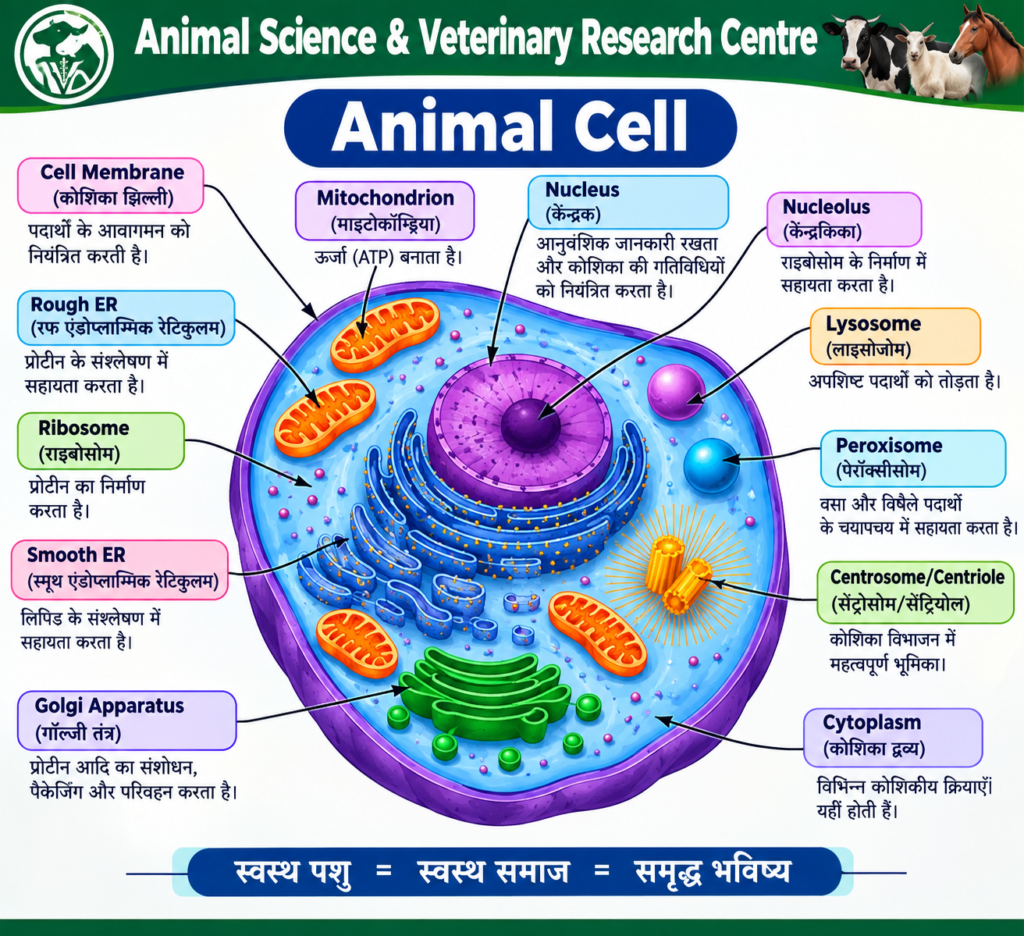
एक सामान्य Animal Cell में निम्न प्रमुख भाग पाए जाते हैं:
- Cell Membrane
- Cytoplasm
- Nucleus
- Nucleolus
- Mitochondria
- Ribosomes
- Rough Endoplasmic Reticulum
- Smooth Endoplasmic Reticulum
- Golgi Apparatus
- Lysosomes
- Peroxisomes
- Centrosome
- Centrioles
- Cytoskeleton
- Vesicles
इनमें से प्रत्येक component कोशिका के सामान्य जीवन और metabolism में योगदान देता है।
Animal Cell: पशु कोशिका की संरचना, कोशिकांग और कार्य – संपूर्ण Veterinary Exam Guide
Animal Cell की मुख्य विशेषताएँ
Animal Cell की कुछ महत्वपूर्ण विशेषताएँ निम्न हैं:
- Animal Cell एक eukaryotic cell है।
- इसमें membrane-bound nucleus पाया जाता है।
- इसमें अनेक membrane-bound organelles पाए जाते हैं।
- सामान्य Animal Cell में cell wall नहीं होती।
- सामान्य Animal Cell में chloroplast नहीं पाया जाता।
- Plasma membrane कोशिका की बाहरी सीमा बनाती है।
- Mitochondria cellular respiration और ATP production में महत्वपूर्ण है।
- Ribosome protein synthesis करता है।
- Nucleus में मुख्य genomic DNA पाया जाता है।
- Golgi apparatus proteins और lipids के modification, sorting तथा packaging में महत्वपूर्ण है।
- Lysosomes intracellular digestion और recycling में भूमिका निभाते हैं।
- Centrosome microtubule organization से संबंधित है।
Eukaryotic cells में organelles अलग-अलग cellular functions को compartmentalize करने में सहायता करते हैं। यही organization कोशिका के भीतर अनेक biochemical processes को व्यवस्थित तरीके से चलाने में मदद करती है।
Animal Cell की बाहरी संरचना
Animal Cell की बाहरी सीमा को plasma membrane या cell membrane कहा जाता है। यह membrane कोशिका के अंदर मौजूद cytoplasm और बाहर के environment के बीच boundary बनाती है।
Cell membrane को सामान्यतः fluid mosaic model के आधार पर समझाया जाता है। इसमें phospholipid bilayer के साथ विभिन्न proteins और अन्य components पाए जाते हैं।
Cell membrane का मुख्य कार्य केवल कोशिका को घेरना नहीं है। यह पदार्थों के प्रवेश और बाहर निकलने को नियंत्रित करती है तथा receptors और transport proteins के माध्यम से कोशिका को बाहरी signals के प्रति प्रतिक्रिया करने में मदद करती है।
Animal Cell: पशु कोशिका की संरचना, कोशिकांग और कार्य – संपूर्ण Veterinary Exam Guide
Cell Membrane के प्रमुख कार्य
- कोशिका को बाहरी environment से अलग करना।
- पदार्थों के selective transport में सहायता करना।
- Cellular signaling में सहायता करना।
- Cell recognition में भूमिका निभाना।
- Receptors को स्थान प्रदान करना।
- कोशिका के internal environment को बनाए रखने में सहायता करना।
इसलिए Animal Cell की cell membrane को केवल एक covering के रूप में नहीं, बल्कि एक selectively permeable functional boundary के रूप में समझना चाहिए।
Cytoplasm क्या है?
Cell membrane और nuclear envelope के बीच मौजूद cellular region को सामान्यतः cytoplasm कहा जाता है। इसमें cytosol, organelles और cytoskeletal components शामिल होते हैं।
Cytosol एक aqueous, gel-like cellular medium है जिसमें अनेक molecules और ions मौजूद होते हैं। कोशिका में कई metabolic reactions cytoplasm में होती हैं।
Cytoplasm का महत्व इसलिए अधिक है क्योंकि यह केवल organelles को रखने का स्थान नहीं है, बल्कि अनेक biochemical reactions के लिए environment उपलब्ध कराता है।
Animal Cell: पशु कोशिका की संरचना, कोशिकांग और कार्य – संपूर्ण Veterinary Exam Guide
Cytoplasm के प्रमुख कार्य
- Cellular reactions के लिए medium प्रदान करना।
- विभिन्न organelles को suspend करना।
- कई metabolic reactions में भाग लेना।
- Cellular transport में सहायता करना।
- Cytoskeleton के साथ मिलकर cell shape बनाए रखने में योगदान देना।
- Animal Cell: पशु कोशिका की संरचना, कोशिकांग और कार्य – संपूर्ण Veterinary Exam Guide
Nucleus – Animal Cell का महत्वपूर्ण नियंत्रण केंद्र
Nucleus (केंद्रक) Animal Cell के सबसे महत्वपूर्ण organelles में से एक है। यह nuclear envelope से घिरा होता है और इसमें मुख्य cellular genetic material अर्थात DNA पाया जाता है।
Nucleus में DNA proteins के साथ chromatin के रूप में organized होता है। DNA में मौजूद genetic information cellular structure और functions के लिए आवश्यक निर्देश प्रदान करती है।
Nucleus के अंदर nucleolus पाया जा सकता है। Nucleolus ribosomal components के निर्माण और assembly से संबंधित है।
Animal Cell: पशु कोशिका की संरचना, कोशिकांग और कार्य – संपूर्ण Veterinary Exam Guide

Nucleus के प्रमुख कार्य
- Genetic information को सुरक्षित रखना।
- Gene expression को नियंत्रित करने में भूमिका निभाना।
- RNA synthesis से संबंधित प्रक्रियाओं में भाग लेना।
- Ribosome assembly में सहायता करना।
- Cell activities के regulation में महत्वपूर्ण भूमिका निभाना।
Veterinary Exam Point
प्रश्न: Animal Cell में मुख्य genetic material कहाँ पाया जाता है?
उत्तर: Nucleus में।
हालाँकि mitochondria में भी अपना genetic material पाया जाता है, इसलिए अधिक सटीक उत्तर यह है कि nuclear DNA nucleus में और mitochondrial DNA mitochondria में पाया जाता है।
Nucleolus क्या है?
Nucleolus nucleus के अंदर मौजूद एक प्रमुख non-membrane-bound structure है। इसका प्रमुख संबंध ribosome biogenesis और ribosomal subunit assembly से है।
इसलिए veterinary और biology examinations में:
Nucleolus → Ribosome formation/assembly से संबंधित
एक महत्वपूर्ण याद रखने वाला तथ्य है।
Animal Cell: पशु कोशिका की संरचना, कोशिकांग और कार्य – संपूर्ण Veterinary Exam Guide
Mitochondria – कोशिका का ऊर्जा केंद्र
Mitochondria Animal Cell के अत्यंत महत्वपूर्ण organelles हैं। इन्हें सामान्यतः “powerhouse of the cell” कहा जाता है, हालांकि यह एक सरल mnemonic है; वैज्ञानिक रूप से mitochondria cellular respiration और ATP production में केंद्रीय भूमिका निभाते हैं।
Mitochondria में outer membrane और inner membrane होती है। Inner membrane पर folds को cristae कहा जाता है। Mitochondrial matrix inner membrane के अंदर का क्षेत्र है।
Cellular respiration की विभिन्न प्रक्रियाओं के माध्यम से mitochondria ATP production में महत्वपूर्ण योगदान देते हैं।
Mitochondria के प्रमुख कार्य
- Cellular respiration में भाग लेना।
- ATP production में योगदान देना।
- Energy metabolism में महत्वपूर्ण भूमिका निभाना।
- कुछ metabolic pathways में भाग लेना।
- अपनी genetic material और ribosomes रखने की क्षमता।
Veterinary Importance
पशु शरीर की muscle cells और अन्य metabolically active cells को पर्याप्त energy की आवश्यकता होती है। इसलिए mitochondria का उचित कार्य cellular metabolism के लिए अत्यंत आवश्यक है।
Ribosome – Protein Synthesis का स्थान
Ribosome protein synthesis के लिए आवश्यक cellular structure है। Ribosomes cytoplasm में free पाए जा सकते हैं या rough endoplasmic reticulum से जुड़े हो सकते हैं।
Ribosome messenger RNA की information को पढ़कर amino acids को उचित क्रम में जोड़ने में सहायता करता है और protein synthesis की प्रक्रिया को पूरा करता है।
Ribosome के मुख्य कार्य
- Protein synthesis।
- Polypeptide chain निर्माण।
- Cellular proteins के निर्माण में भूमिका।
Exam Point:
Ribosome = Protein synthesis
यह Veterinary, Biology और Zoology exams में बहुत बार पूछा जाने वाला तथ्य है।
Endoplasmic Reticulum क्या है?
Endoplasmic Reticulum या ER एक membranous network है जो cell के अंदर विभिन्न synthesis और transport functions में सहायता करता है।
ER को मुख्यतः दो प्रकार में बाँटा जाता है:
- Rough Endoplasmic Reticulum
- Smooth Endoplasmic Reticulum
Rough Endoplasmic Reticulum
Rough ER की surface पर ribosomes पाए जाते हैं, जिसके कारण यह rough दिखाई देता है।
Rough ER विशेष रूप से proteins के synthesis और processing से संबंधित है, विशेषकर वे proteins जो secretion, membranes या कुछ intracellular compartments के लिए destined होते हैं।
Smooth Endoplasmic Reticulum
Smooth ER पर ribosomes नहीं होते।
यह lipid synthesis और कुछ cellular metabolic functions में महत्वपूर्ण भूमिका निभाता है। विभिन्न cell types में Smooth ER के कार्य अलग-अलग महत्व रखते हैं।
Animal Cell: पशु कोशिका की संरचना, कोशिकांग और कार्य – संपूर्ण Veterinary Exam Guide
ER के महत्वपूर्ण कार्य
- Protein synthesis से संबंधित कार्य।
- Protein processing और transport।
- Lipid synthesis।
- Cellular membrane production में योगदान।
- Intracellular transport में सहायता।
Golgi Apparatus – Packaging और Sorting Center
Golgi apparatus flattened membranous sacs से बना cellular organelle है। यह ER से आने वाले proteins और lipids को modify, sort और package करने में महत्वपूर्ण भूमिका निभाता है।
इसे सरल भाषा में cell का processing और packaging center समझा जा सकता है।
Golgi Apparatus के प्रमुख कार्य
- Proteins का modification।
- Lipids का modification।
- Molecules की sorting।
- Packaging।
- Vesicle formation।
- Cellular secretion pathways में योगदान।
- Lysosome-related components के निर्माण में भूमिका।
ER और Golgi apparatus एक-दूसरे से functional रूप से जुड़े हुए हैं।
Animal Cell: पशु कोशिका की संरचना, कोशिकांग और कार्य – संपूर्ण Veterinary Exam Guide
Lysosome – Intracellular Digestion और Recycling
Lysosome membrane-bound organelle है जिसमें hydrolytic enzymes पाए जाते हैं। ये enzymes विभिन्न macromolecules तथा पुराने cellular components को breakdown करने में सहायता करते हैं।
Lysosomes का acidic internal environment उनके digestive enzymes के कार्य के लिए महत्वपूर्ण है।
Lysosome के कार्य
- पुराने cellular components का breakdown।
- कुछ macromolecules का digestion।
- Cellular waste processing।
- Recycling processes में सहायता।
- कुछ pathogens या foreign material के intracellular destruction में भूमिका।
इसी कारण lysosome को कभी-कभी कोशिका का digestive या recycling compartment कहा जाता है।
Peroxisome – Metabolism और Detoxification
Peroxisome छोटे membrane-bound organelles हैं जिनमें oxidative reactions से जुड़े enzymes पाए जाते हैं।
Peroxisomes fatty acids के metabolism और कुछ potentially harmful substances के detoxification में महत्वपूर्ण भूमिका निभाते हैं।
Peroxisomal reactions में hydrogen peroxide जैसे reactive products बन सकते हैं, जिन्हें catalase जैसे enzymes नियंत्रित करने में सहायता करते हैं।
Peroxisome के प्रमुख कार्य
- Fatty acid metabolism।
- Oxidative reactions।
- कुछ toxic substances के detoxification में सहायता।
- Reactive oxygen species से संबंधित cellular protection में भूमिका।
Animal Cell: पशु कोशिका की संरचना, कोशिकांग और कार्य – संपूर्ण Veterinary Exam Guide
Centrosome और Centrioles
Animal Cell में centrosome एक महत्वपूर्ण microtubule-organizing center है। इसमें सामान्यतः centrioles की एक जोड़ी पाई जाती है।
Centrioles एक-दूसरे के लगभग perpendicular orientation में व्यवस्थित हो सकते हैं।
Centrosome microtubules के organization में महत्वपूर्ण भूमिका निभाता है और cell division के दौरान spindle organization से संबंधित है।
Centrosome के कार्य
- Microtubule organization।
- Cell division में spindle formation से संबंधित भूमिका।
- Cellular architecture को support करना।
- Intracellular organization में योगदान।
Exam Point:
Animal Cell → Centrosome/centrioles से महत्वपूर्ण संबंध।
Cytoskeleton क्या है?
Cytoskeleton कोशिका के अंदर मौजूद protein-based structural network है। यह कोशिका के आकार, organization, intracellular movement और cellular division जैसे कार्यों में महत्वपूर्ण भूमिका निभाता है।
Cytoskeleton के प्रमुख components हैं:
- Microfilaments
- Intermediate filaments
- Microtubules

Microfilaments
Microfilaments मुख्यतः actin से बने होते हैं और cell shape, movement तथा membrane-related processes में भूमिका निभाते हैं।
Intermediate Filaments
Intermediate filaments mechanical strength और cellular structural stability में महत्वपूर्ण हैं।
Microtubules
Microtubules cell shape, intracellular transport, chromosome movement और cilia/flagella की संरचना में भूमिका निभाते हैं।
इस प्रकार cytoskeleton केवल कोशिका को आकार देने वाली structure नहीं है, बल्कि cell organization और movement के लिए भी आवश्यक है।
Vesicles क्या हैं?
Vesicles छोटे membrane-bound compartments होते हैं जो पदार्थों के transport और storage में सहायता करते हैं।
ER से Golgi और Golgi से अन्य cellular destinations तक molecules के transport में vesicles महत्वपूर्ण हो सकते हैं।
Vesicles के कार्य
- Intracellular transport।
- Protein transport।
- Lipid transport।
- Secretion में सहायता।
- Cellular storage।
Animal Cell: पशु कोशिका की संरचना, कोशिकांग और कार्य – संपूर्ण Veterinary Exam Guide
Animal Cell में Cellular Transport
Animal Cell को अपने environment से nutrients, ions और अन्य molecules लेने तथा waste products बाहर निकालने की आवश्यकता होती है।
Cell membrane इस transport को regulate करती है।
Transport के कुछ महत्वपूर्ण प्रकार हैं:
- Simple diffusion
- Facilitated diffusion
- Osmosis
- Active transport
- Endocytosis
- Exocytosis
Diffusion
Diffusion concentration gradient के अनुसार molecules की movement है।
Osmosis
Osmosis water की movement से संबंधित प्रक्रिया है।
Active Transport
Active transport में cellular energy का उपयोग करके molecules को gradient के विरुद्ध transport किया जा सकता है।
Endocytosis
Endocytosis में cell बाहरी material को membrane के माध्यम से अंदर लेती है।
इसके प्रमुख प्रकारों में phagocytosis और pinocytosis शामिल हैं।
Exocytosis
Exocytosis में intracellular vesicles plasma membrane के साथ fuse होकर अपना content cell के बाहर release कर सकती हैं।
Animal Cell: पशु कोशिका की संरचना, कोशिकांग और कार्य – संपूर्ण Veterinary Exam Guide
Animal Cell में Cell Division
Animal cells growth, development और tissue maintenance के लिए cell division करती हैं।
दो महत्वपूर्ण cellular division processes हैं:
Mitosis
Mitosis सामान्यतः somatic cell division से संबंधित है। इसमें एक parent cell से genetic material की duplication और chromosome segregation के बाद daughter cells बनती हैं।
Mitosis growth और tissue maintenance में महत्वपूर्ण है।
Meiosis
Meiosis reproductive cells के निर्माण से संबंधित specialized division है। इसमें chromosome number आधा हो जाता है और genetic variation उत्पन्न करने वाली प्रक्रियाएँ शामिल होती हैं।
Veterinary reproductive biology में meiosis का विशेष महत्व है।
Animal Cell और Plant Cell में अंतर
Animal Cell और Plant Cell दोनों eukaryotic cells हैं। इसलिए दोनों में nucleus, mitochondria, ribosomes, endoplasmic reticulum और Golgi apparatus जैसे कई common structures पाए जाते हैं।
लेकिन दोनों में कुछ महत्वपूर्ण structural differences हैं।
| विशेषता | Animal Cell | Plant Cell |
|---|---|---|
| Cell membrane | उपस्थित | उपस्थित |
| Cell wall | सामान्यतः अनुपस्थित | उपस्थित |
| Nucleus | उपस्थित | उपस्थित |
| Mitochondria | उपस्थित | उपस्थित |
| Chloroplast | अनुपस्थित | उपस्थित |
| Large central vacuole | सामान्यतः अनुपस्थित | प्रमुख रूप से उपस्थित |
| Centrosome | सामान्यतः उपस्थित | अधिकांश higher plant cells में typical centrosome नहीं |
| Lysosome | महत्वपूर्ण | सामान्यतः अलग lysosomal system नहीं; vacuolar compartments digestive roles निभाते हैं |
| आकार | अक्सर irregular/variable | अक्सर अधिक निश्चित/rigid |
| Photosynthesis | नहीं | chloroplast के कारण संभव |
Plant Cell में cell wall, chloroplast और large central vacuole जैसे प्रमुख structures होते हैं, जबकि सामान्य Animal Cell में ये structures नहीं होते।
Animal Cell: पशु कोशिका की संरचना, कोशिकांग और कार्य – संपूर्ण Veterinary Exam Guide
Animal Cell और Plant Cell में समानताएँ
दोनों में कई समान structures पाए जाते हैं:
- Cell membrane
- Cytoplasm
- Nucleus
- Mitochondria
- Ribosomes
- Endoplasmic reticulum
- Golgi apparatus
- Peroxisomes
- Cytoskeleton के कई components
इसलिए दोनों को eukaryotic cells कहा जाता है।
Animal Cell और Prokaryotic Cell में अंतर
Animal Cell eukaryotic है जबकि bacteria जैसे prokaryotes में membrane-bound nucleus नहीं होता।
| विशेषता | Animal Cell | Prokaryotic Cell |
|---|---|---|
| Cell type | Eukaryotic | Prokaryotic |
| True nucleus | उपस्थित | अनुपस्थित |
| Membrane-bound organelles | अनेक | सामान्यतः अनुपस्थित |
| Mitochondria | उपस्थित | अनुपस्थित |
| ER | उपस्थित | अनुपस्थित |
| Golgi apparatus | उपस्थित | अनुपस्थित |
| Ribosomes | उपस्थित | उपस्थित |
| DNA | मुख्यतः nucleus में | nucleoid region में |
| Cell size | सामान्यतः बड़ा | सामान्यतः छोटा |
इस अंतर को समझना Veterinary Microbiology और Cell Biology दोनों के लिए उपयोगी है।
Animal Cell में DNA और RNA
DNA यानी Deoxyribonucleic Acid genetic information का प्रमुख carrier है।
Nucleus में chromosomal DNA मौजूद होता है। इसके अतिरिक्त mitochondria में भी mitochondrial DNA पाया जाता है।
RNA कई cellular processes में महत्वपूर्ण भूमिका निभाता है। इसके प्रमुख प्रकारों में:
- mRNA
- tRNA
- rRNA
शामिल हैं।
mRNA genetic information को protein synthesis machinery तक पहुँचाने में मदद करता है। tRNA amino acids को ribosome तक लाने में भूमिका निभाता है। rRNA ribosome की संरचना और कार्य का महत्वपूर्ण हिस्सा है।
Animal Cell में Protein Synthesis
Protein synthesis एक महत्वपूर्ण cellular process है।
इसमें DNA की genetic information से RNA बनता है और RNA की information के आधार पर ribosome protein synthesis करता है।
सरल क्रम:
DNA → RNA → Protein
Protein synthesis में nucleus, RNA और ribosome के बीच coordinated function होता है।
Animal Cell: पशु कोशिका की संरचना, कोशिकांग और कार्य – संपूर्ण Veterinary Exam Guide
Animal Cell में Energy Metabolism
Animal Cell को अपने कार्यों के लिए लगातार energy चाहिए।
Energy metabolism में glucose और अन्य nutrients के breakdown से energy प्राप्त की जाती है। Cellular respiration में mitochondria महत्वपूर्ण भूमिका निभाते हैं और ATP का निर्माण cellular energy currency के रूप में होता है।
ATP का उपयोग कई cellular processes में होता है, जैसे:
- Active transport
- Muscle contraction
- Biosynthesis
- Cell movement
- Cellular signaling
- Cell division से संबंधित processes
इसलिए mitochondria और energy metabolism का अध्ययन Veterinary Physiology में महत्वपूर्ण है।
Animal Cell में Protein और Lipid का निर्माण
Protein synthesis में ribosomes और rough ER महत्वपूर्ण हैं, जबकि lipid synthesis में smooth ER महत्वपूर्ण भूमिका निभाता है।
ER से synthesized molecules आगे Golgi apparatus तक पहुँच सकते हैं। Golgi apparatus उन्हें modify, sort और package करने में सहायता करता है।
इस प्रकार cellular production pathway को सरल रूप में इस प्रकार समझ सकते हैं:
Ribosome/ER → Vesicle → Golgi Apparatus → Vesicle → Cellular Destination
यह pathway secretory और membrane proteins के लिए विशेष रूप से महत्वपूर्ण है।
Animal Cell में Lysosome और Autophagy
Cellular maintenance के लिए पुराने या damaged cellular components को हटाना आवश्यक है।
Autophagy ऐसी cellular process है जिसमें कोशिका अपने कुछ components को lysosomal degradation pathways के माध्यम से recycle कर सकती है।
इससे cellular components का turnover और recycling संभव होता है।
इसलिए lysosome केवल “waste disposal” organelle नहीं है, बल्कि cellular maintenance और recycling में भी महत्वपूर्ण है।
Animal Cell में Cell Signaling
Animal cells अपने environment और अन्य cells से signals प्राप्त करती हैं।
Cell membrane पर मौजूद receptors बाहरी molecules को पहचान सकते हैं। Signal मिलने के बाद cell के अंदर molecular pathways activate हो सकते हैं।
Cell signaling का महत्व:
- Growth
- Metabolism
- Differentiation
- Immune response
- Reproduction
- Tissue coordination
जैसी प्रक्रियाओं में होता है।
Veterinary medicine में cell signaling की समझ endocrine system, immunology, pharmacology और pathology को समझने में उपयोगी होती है।
Animal Cell: पशु कोशिका की संरचना, कोशिकांग और कार्य – संपूर्ण Veterinary Exam Guide
Veterinary Science में Animal Cell का महत्व
Veterinary Science में Animal Cell की basic knowledge बहुत महत्वपूर्ण है क्योंकि पशु शरीर की लगभग सभी physiological और pathological processes cellular level पर समझी जा सकती हैं।
Veterinary Anatomy
Tissues और organs की microscopic structure समझने में cell structure आधार प्रदान करता है।
Veterinary Physiology
Energy production, membrane transport, nerve impulse और muscle contraction जैसी प्रक्रियाएँ cellular mechanisms से जुड़ी होती हैं।
Veterinary Pathology
Disease के दौरान cellular injury, degeneration, necrosis, apoptosis और inflammation जैसे processes cellular level पर होते हैं।
Veterinary Pharmacology
कई drugs cell receptors, ion channels, enzymes या intracellular pathways पर कार्य करती हैं।
Veterinary Microbiology
Bacteria, viruses और parasites के host-cell interactions को समझने के लिए cell biology आवश्यक है।
Veterinary Immunology
Immune cells जैसे lymphocytes, macrophages और neutrophils के कार्य cellular mechanisms पर आधारित हैं।
Animal Cell से संबंधित महत्वपूर्ण Veterinary Exam Facts
- Animal Cell एक eukaryotic cell है।
- Animal Cell में membrane-bound nucleus पाया जाता है।
- Cell membrane कोशिका की selective boundary है।
- Cytoplasm में अनेक organelles पाए जाते हैं।
- Nucleus में मुख्य genomic DNA पाया जाता है।
- Nucleolus ribosome biogenesis से संबंधित है।
- Ribosome protein synthesis करता है।
- Mitochondria ATP production में महत्वपूर्ण है।
- Mitochondria में अपना DNA पाया जाता है।
- Rough ER पर ribosomes पाए जाते हैं।
- Smooth ER पर ribosomes नहीं होते।
- Smooth ER lipid synthesis से संबंधित है।
- Golgi apparatus proteins और lipids की modification तथा sorting करता है।
- Lysosomes hydrolytic enzymes रखते हैं।
- Lysosomes intracellular digestion में भूमिका निभाते हैं।
- Peroxisomes oxidative metabolism से संबंधित हैं।
- Centrosome microtubule organization में महत्वपूर्ण है।
- Centrioles centrosome से जुड़े होते हैं।
- Cytoskeleton cell shape और intracellular organization में महत्वपूर्ण है।
- Animal Cell में सामान्यतः cell wall नहीं होती।
- Animal Cell में chloroplast नहीं होता।
- Plant Cell में cell wall होती है।
- Plant Cell में chloroplast photosynthesis के लिए महत्वपूर्ण है।
- Plant Cell में large central vacuole पाया जाता है।
- Animal Cell और Plant Cell दोनों eukaryotic cells हैं।
Animal Cell: पशु कोशिका की संरचना, कोशिकांग और कार्य – संपूर्ण Veterinary Exam Guide
Animal Cell के प्रमुख Organelles की Quick Revision Table
| Organelle | याद रखने योग्य मुख्य कार्य |
|---|---|
| Cell Membrane | Selective transport |
| Cytoplasm | Metabolic reactions का cellular medium |
| Nucleus | DNA और gene regulation |
| Nucleolus | Ribosome biogenesis |
| Ribosome | Protein synthesis |
| Mitochondria | Cellular respiration और ATP production |
| Rough ER | Protein synthesis/processing |
| Smooth ER | Lipid synthesis और अन्य metabolic functions |
| Golgi Apparatus | Modification, sorting और packaging |
| Lysosome | Digestion और recycling |
| Peroxisome | Oxidative metabolism और detoxification |
| Centrosome | Microtubule organization |
| Cytoskeleton | Shape, organization और movement |
| Vesicles | Transport और storage |
Animal Cell से जुड़े महत्वपूर्ण प्रश्न Animal Cell: पशु कोशिका की संरचना, कोशिकांग और कार्य – संपूर्ण Veterinary Exam Guide
प्रश्न 1: Animal Cell किस प्रकार की कोशिका है?
उत्तर: Eukaryotic cell।
प्रश्न 2: Animal Cell में genetic material मुख्य रूप से कहाँ पाया जाता है?
उत्तर: Nucleus में।
प्रश्न 3: Protein synthesis किस organelle का मुख्य कार्य है?
उत्तर: Ribosome।
प्रश्न 4: ATP production में कौन-सा organelle महत्वपूर्ण है?
उत्तर: Mitochondria।
प्रश्न 5: Animal Cell की बाहरी सीमा क्या बनाती है?
उत्तर: Plasma membrane/Cell membrane।
प्रश्न 6: Ribosome assembly किस structure से संबंधित है?
उत्तर: Nucleolus।
प्रश्न 7: Protein और lipid modification तथा packaging में कौन-सा organelle महत्वपूर्ण है?
उत्तर: Golgi apparatus।
प्रश्न 8: Intracellular digestion में कौन-सा organelle महत्वपूर्ण है?
उत्तर: Lysosome।
प्रश्न 9: Lipid synthesis में कौन-सा ER महत्वपूर्ण है?
उत्तर: Smooth Endoplasmic Reticulum।
प्रश्न 10: Animal Cell में cell wall होती है?
उत्तर: सामान्य Animal Cell में cell wall नहीं होती।
Animal Cell की संरचना को याद रखने की आसान Trick
Veterinary examination की तैयारी करने वाले विद्यार्थी निम्न sequence को याद रख सकते हैं:
Membrane → Cytoplasm → Nucleus → Mitochondria → Ribosome → ER → Golgi → Lysosome → Peroxisome → Centrosome
इसके बाद प्रत्येक organelle के सामने उसका मुख्य function याद करें:
Membrane → Transport
Nucleus → DNA
Mitochondria → ATP
Ribosome → Protein
ER → Synthesis/Transport
Golgi → Packaging
Lysosome → Digestion/Recycling
Peroxisome → Oxidation/Detoxification
Centrosome → Microtubules
यह sequence quick revision के लिए काफी उपयोगी है।
Animal Cell का महत्व पशु स्वास्थ्य में
पशु स्वास्थ्य केवल organ level पर नहीं बल्कि cellular level पर भी निर्भर करता है। यदि कोशिकाओं को पर्याप्त oxygen, nutrients और energy मिलती है तथा cellular waste उचित तरीके से remove होता है, तो cells सामान्य functions कर सकती हैं।
Disease conditions में cellular injury हो सकती है। उदाहरण के लिए oxygen की कमी, toxins, infections, metabolic abnormalities या physical damage के कारण cells की normal functioning प्रभावित हो सकती है।
Cellular injury को समझना veterinary pathology में अत्यंत महत्वपूर्ण है क्योंकि tissue और organ level पर दिखाई देने वाले अनेक pathological changes का आधार cellular alterations में होता है।
Animal Cell: पशु कोशिका की संरचना, कोशिकांग और कार्य – संपूर्ण Veterinary Exam Guide
निष्कर्ष
Animal Cell (पशु कोशिका) पशु शरीर की मूल संरचनात्मक और क्रियात्मक इकाई है। यह एक highly organized eukaryotic cell है जिसमें nucleus और अनेक specialized organelles पाए जाते हैं।
Cell membrane कोशिका को environment से अलग रखते हुए selective transport में सहायता करती है। Cytoplasm में अनेक organelles और metabolic reactions पाए जाते हैं। Nucleus genetic information को व्यवस्थित करता है। Mitochondria energy metabolism और ATP production में महत्वपूर्ण है। Ribosomes protein synthesis करते हैं। Endoplasmic reticulum synthesis और transport में सहायता करता है। Golgi apparatus modification, sorting और packaging में महत्वपूर्ण है। Lysosomes digestion और recycling में भूमिका निभाते हैं। Peroxisomes oxidative metabolism में और centrosome microtubule organization में महत्वपूर्ण है।
Animal Cell और Plant Cell दोनों eukaryotic हैं, लेकिन दोनों में महत्वपूर्ण structural differences हैं। सामान्य Animal Cell में cell wall और chloroplast नहीं होते, जबकि Plant Cell में ये structures पाए जाते हैं।
Veterinary students के लिए Animal Cell का अध्ययन केवल एक basic biology topic नहीं है, बल्कि anatomy, physiology, histology, pathology, microbiology, immunology और pharmacology जैसे अनेक subjects की foundation है।
इसलिए Animal Cell के प्रत्येक organelle की structure + function + veterinary importance को समझना examination और professional veterinary education दोनों के लिए उपयोगी है।
याद रखें:
Cell → Tissue → Organ → Organ System → Animal Body
और cellular level पर:
Structure → Function → Metabolism → Tissue Health → Animal Health
Animal Cell: पशु कोशिका की संरचना, कोशिकांग और कार्य – संपूर्ण Veterinary Exam GuideAnimal Cell: पशु कोशिका की संरचना, कोशिकांग और कार्य – संपूर्ण Veterinary Exam GuideAnimal Cell: पशु कोशिका की संरचना, कोशिकांग और कार्य – संपूर्ण Veterinary Exam GuideAnimal Cell: पशु कोशिका की संरचना, कोशिकांग और कार्य – संपूर्ण Veterinary Exam GuideAnimal Cell: पशु कोशिका की संरचना, कोशिकांग और कार्य – संपूर्ण Veterinary Exam Guide
1 thought on “Animal Cell: पशु कोशिका की संरचना, कोशिकांग और कार्य – संपूर्ण Veterinary Exam Guide”